
The CCC Compliance Chaos in Lighting: It’s Not That It Can’t Be Done—It’s That Companies Aren’t Willing to Do It
Introduction: Market inspections in the lighting industry repeatedly reveal non‑compliant lighting products. Many people wonder: Is it truly technically impossible to obtain CCC mandatory certification for lighting fixtures? A large number of non‑standard decorative lamps and custom‑made project lights frequently come under scrutiny for using fake, falsified, or improperly obtained certificates. What lies behind this troubling trend? As a distributor, simply claiming “the goods were manufactured by the factory” does not absolve you of liability; once you fall into this trap, administrative penalties and civil compensation will follow swiftly. This article provides an in-depth analysis of the industry’s realities and offers channel operators a practical compliance framework.
I. CCC Certification for Lighting Fixtures: Technically Feasible, But Challenged by Business Realities
From a technical standpoint, standardized products such as downlights, spotlights, and ceiling lights are fully capable of meeting all requirements for CCC testing and factory inspections.
However, many companies fail to secure genuine, valid CCC certificates—not because their hardware cannot meet standards, but due to the complex interplay of industrial models, cost structures, product forms, and intense price competition.
1. Product Form vs. the CCC System: An Inherent Conflict
The CCC certification system is designed for standardized, mass‑produced items, with each certificate tied to a specific housing design, structural configuration, key components, and driver power supply. Any modification requires an application to amend or extend the certificate; otherwise, the certificate becomes invalid.
In the lighting industry, decorative lanterns, artistic chandeliers, and custom‑made project lights often feature numerous SKUs, rapid iterations, and short life cycles—many styles see only small production runs before being phased out entirely.
Obtaining separate CCC certifications for each individual model would make testing and factory audits far more costly than the profit margin on any single item. Customized lamp housings, light distribution patterns, and dimensions can easily fall outside the scope of existing certificates.
Standardized, mass‑produced lighting fixtures are relatively easy to certify; however, multi‑style, low‑volume, customized lighting presents the industry’s biggest compliance challenge.

2. Cost Pressures: Small and Medium‑Sized Factories Struggle to Afford Full‑Chain Compliance Costs
A single CCC certification package includes testing fees, application fees, initial factory inspection costs, and a five‑year certificate validity period, along with annual surveillance inspections and random sampling tests. While major manufacturers can spread compliance costs across massive sales volumes, small and medium‑sized factories face significantly higher cost burdens relative to their limited production runs.
In a market characterized by cutthroat price competition, even adopting compliant key components and safe insulation designs can drive up material costs. Some companies meticulously prepare test samples while substituting lower‑cost parts during mass production, leading directly to failed factory inspections and consistency audits.
3. Factory Quality Management Systems Fall Short of Initial Inspection Thresholds
CCC certification does not simply require passing sample tests; robust factory quality assurance capabilities are an essential prerequisite.
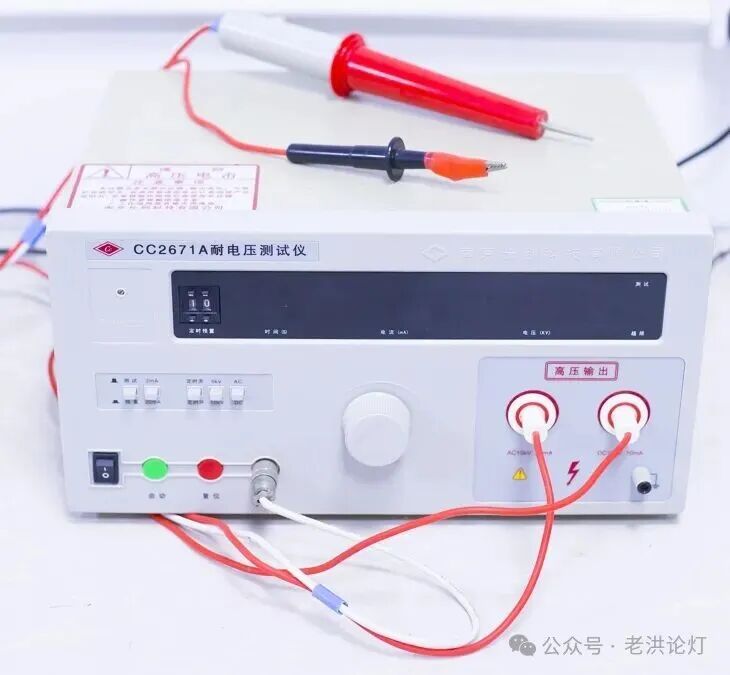
Many small workshops lack critical testing equipment such as high‑voltage testers and ground resistance meters, and often fail to maintain proper records for incoming material inspections, key component controls, process checks, and final product inspections. The risks are especially pronounced in ODM/OEM manufacturing: when a brand commissions a factory to produce goods, the manufacturer may secretly replace key components like power supplies or capacitors without notifying the certification body, resulting in a situation where “the sample passes, but the bulk fails.” Even if the sample meets standards, a subpar factory management system still prevents certification.
4. Common Misconceptions in the Industry: Component Certifications Cannot Replace Whole‑Lamp CCC
A frequent misconception holds that if the driver power supply has CCC certification, the LED chips pass inspection, and the housing is purchased separately for assembly, then the entire fixture automatically qualifies for CCC certification.
The regulations clearly state: Independent driver power supply CCC ≠ whole‑lamp CCC. Each complete lighting fixture constitutes an independent certification unit, requiring verification of overall insulation, electrical clearances, wiring configurations, and EMC compatibility. Component‑level certificates cannot substitute for full‑fixture certification.
5. Compliance Pressure from Standard Iterations
Effective January 1, 2026, the new national standard GB/T 7000.1‑2023 for lighting fixtures will become mandatory, rendering older‑version certificates gradually invalid. Companies must revise their products and undergo retesting; some older models cannot adapt to the new standards, further intensifying compliance pressures.
II. Unveiling Common Industry Loopholes: Certificate Swapping, Falsification, Fake Certificates, and Non‑Compliant Workarounds
Regulators have evolved from merely checking certificate numbers to conducting market‑based sampling and unannounced line inspections, focusing on verifying the consistency between certificates and actual products. A simple screenshot of a certificate no longer suffices to evade scrutiny.
1. Certificate Swapping (Certificate Transfer): The Most Prevalent Practice
After obtaining a genuine certificate for one product model, companies reuse the same certificate number across other models whose structures, power supplies, or key components have been altered. By merely changing the model suffix, internal safety structures may change, rendering the certificate invalid.
Some companies even Photoshop brand and manufacturer information onto certificates before delivering them. When discovered by regulators, the certificates are revoked, companies face fines of 50,000–200,000 yuan, confiscated products, and immediate removal from e‑commerce platforms, with store closures.
2. Fake Certificates: A Disconnect Between Paperwork and Reality
Certificates can be verified as genuine and valid on the CNCA website, yet the actual batch of products shipped differs from the test samples. During mass production, key components are secretly replaced without reporting these changes. This is the primary cause of不合格灯具 detected in national and provincial sampling programs.
3. Completely Forged Certificates
Directly forging CCC certificates and test reports—with no record on the CNCA platform—and printing counterfeit CCC labels to affix onto products. Online intermediaries claim they can issue certificates quickly without sending samples; most of these are outright forgeries, constituting serious violations of the law.
4. Exploiting Regulatory Loopholes to Avoid CCC Obligations
Claiming a product operates at 36V low voltage while actually incorporating a 220V adapter; breaking finished lamps into components for sale and assembling them on site; marketing project lamps as “custom prototypes” while flooding the market with mass‑produced units.
Regulatory Guidelines Clarify: Any finished lighting fixture with a rated voltage exceeding 36V but not surpassing 1,000V, whether sold domestically or circulated, falls under the CCC catalog and cannot be exempted under the guise of customization or project use.
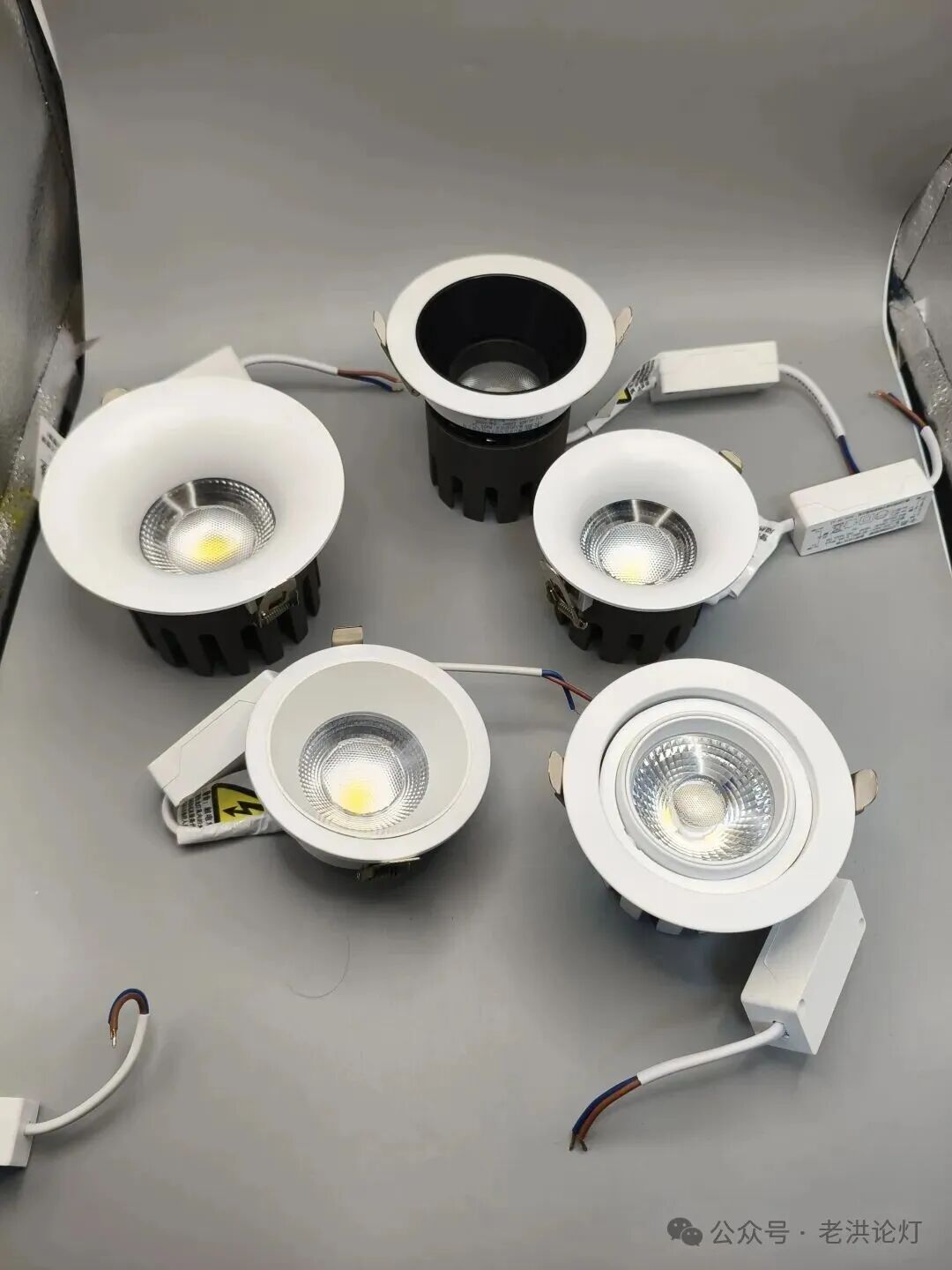
III. Legal Risks for Distributors: Don’t Assume You’re Off the Hook Simply by Selling Products—Joint Liability Is Real
Many distributors harbor a lucky mindset: “The product was manufactured by the factory, and the certificate was issued by the factory—so if anything goes wrong, we should hold the manufacturer accountable.” However, legally speaking, distributors are also liable parties and cannot claim third‑party exemption.
1. Administrative Liability
Under the Regulations on Certification and Accreditation, selling products listed in the catalog without CCC certification carries penalties including orders to rectify, confiscation of illegal gains, and fines ranging from 50,000 to 200,000 yuan. If the value of the goods is less than 10,000 yuan, a fine of up to twice the value of the goods may be imposed.
Even if the certificate is genuine, selling products with “certificate‑product mismatch,” “certificate swapping,” or “fake certificates” while failing to fulfill the obligation of inspecting incoming goods will also result in penalties. Online stores, live streams, and community‑based sales are all subject to oversight, with a dual‑investigation approach that traces back upstream to the original factory.
2. Civil Joint Liability for Compensation
If a lighting fixture causes fire or electric shock due to electrical defects, resulting in personal injury or property damage, and the distributor knowingly or ought to have known that the product was non‑compliant yet still sold it, the distributor shares joint liability with the manufacturer for repair, rework, and compensation for customer losses. At the same time, the company’s reputation suffers, leading to blacklisting in bidding processes and project contracts.
Key Points for Exemption: Distributors are not unconditionally liable; fully and truthfully fulfilling the duty of inspecting incoming goods and retaining complete documentation serves as the core defense against penalties. Failure to conduct any verification and merely accepting a certificate screenshot sent by the factory does not constitute completion of the incoming goods inspection.
IV. Practical Guide for Distributors: How to Safely Avoid Risks Associated with Non‑CCC Product Agency and Sales
1. Verify Certificates—Refuse to Rely Solely on a Single Screenshot
1) Request the complete certificate and log in to the National Public Service Platform for Certification and Accreditation to verify the certificate number. Confirm that the certificate is valid, not suspended or revoked, and cross‑check the manufacturer, production plant, and product model against the physical nameplate—do not rely solely on similar model numbers.
2) Pay special attention to distinguishing between power supply CCC and whole‑lamp CCC, and verify whether older‑version certificates have expired (e.g., GB/T 7000.1‑2023).
3) Remember that certificates are dynamic—do not assume a single verification will remain valid indefinitely. It is recommended to reconfirm the certificate status with each new batch of incoming goods.
2. Implement Incoming Goods Inspection and Maintain Comprehensive Purchase‑Sale Records
Request and retain: supplier business licenses, valid CCC certificates, key test reports, and purchase receipts. Keep detailed records of suppliers, product models, batches, purchase dates, and certificate numbers. Retain supporting documents for at least three years to ensure traceability of origins and destinations.
Should regulatory authorities conduct subsequent inspections, complete records and verification logs serve as crucial evidence for distributor exemption from liability.
3. Conduct Regular Inventory Self‑Audits and Remove High‑Risk Products
Periodically inventory stock, identifying products lacking CCC markings, missing manufacturer information, abnormal certificate statuses, or models not covered by the certificate. Cease selling such items and avoid relying on luck.
4. Add Compliance Clauses to Contracts
When signing supply contracts with upstream factories, include clauses stating: “The supplier guarantees that all supplied lighting fixtures possess valid CCC certification and maintain consistency with the certificate”; if certificate forgery, swapping, or mismatches lead to administrative penalties or civil compensation, the supplier shall bear full responsibility. All contract terms and communication records must be retained.
5. Exercise Special Caution with Non‑Standard Project‑Based Orders
For custom‑made project lighting, any finished product delivered directly to customers falls within the CCC catalog and still requires compliance certification. Do not trust claims that “project‑specific customization exempts you from CCC requirements.”
V. Conclusion
CCC certification represents only the minimum threshold for market access—it is not a guarantee of superior quality. Amidst fierce competition in the lighting industry, rampant certificate swapping and falsification reflect a race to the bottom driven by price wars.
On the production side, the challenge is not technological impossibility but rather the delicate balance between cost constraints and business models. On the distribution side, distributors cannot shift all responsibility to upstream factories; incoming goods inspection is not a mere formality but a vital firewall safeguarding their own operational security.
As regulatory oversight evolves from “checking certificates” to “verifying consistency,” the era of evading compliance with a single screenshot is drawing to a close. Upholding compliance standards remains the cornerstone of long-term business success.
The images above are sourced from the internet. This article is intended solely for industry education and does not target any specific company nor constitute legal advice.
Article authored by Director Yao of the Light Research Market Think Tank.