
Lidarxin posted double-digit growth in both revenue and profit in the first half of the year—what signals does this performance report send?
Latest financial report: In the first half of 2026, Lite-On Technology posted revenue of RMB 3.068 billion and net profit attributable to shareholders of RMB 69.79 million, achieving double-digit growth in both revenue and profitability.
Amid a complex economic environment, how has Lite-On managed to maintain its core business while driving simultaneous growth in operating revenue and total profits?

On August 21, Lite-On Technology released its semi‑annual report for 2026. During the first six months, the company reported operating revenue of approximately RMB 3.068 billion, up 0.95% year over year, and net profit attributable to shareholders of about RMB 69.79 million, up 0.93% year over year. Against the backdrop of a challenging domestic and international economic landscape, Lite-On adopted the theme “Reconstruction and Evolution,” implementing multi‑dimensional measures to ensure stable and resilient overall operations.
During the reporting period, Lite-On continued to pursue a dual‑business model that balances brand development with OEM/ODM manufacturing, while deepening its presence in both domestic and international markets. On the OEM front, the company proactively optimized its product and customer mix, phasing out low‑margin offerings and concentrating resources on key clients and high‑value orders. Meanwhile, in the brand segment, Lite-On intensified investment in its own brands, driving product innovation and upgrades around smart lighting and healthy light environments, while actively expanding external partnerships to accelerate the shift from scale‑driven growth toward value‑oriented expansion.
In terms of manufacturing, Phase I of the production base in Chachoengsao, Thailand, has been completed and put into operation, with Phase II construction steadily progressing; completion of civil works is expected in 2026, with formal commissioning slated for 2027. Currently, Lite-On operates a dual‑base production system linking Zhangzhou, Fujian, China, and Chachoengsao, Thailand. The Thai facility primarily serves U.S. market orders, while the Chinese site handles non‑North American demand and brand‑related business. This “dual‑base” division of labor represents a proactive strategic adjustment aimed at mitigating trade tensions and safeguarding supply chain resilience.
On the product R&D front, Lite-On maintains robust investment, focusing on intelligent and scenario‑specific solutions to build differentiated competitive advantages. At the same time, the company’s digital operations platform has been fully deployed, covering critical areas such as cost management, expense control, order processing, and inventory management, enabling a shift from post‑event accounting to real-time monitoring and proactive risk early warning, thereby further enhancing operational efficiency.
According to Lao Hong, the most noteworthy aspect of Lite-On’s latest semi‑annual report is not the magnitude of growth, but rather the company’s ability to stabilize both revenue and profit amid industry-wide headwinds—proof that its “brand‑OEM dual‑business” strategy remains effective. By streamlining OEM operations while strengthening brand initiatives, Lite-On has maintained a well‑balanced pace across its two pillars. However, one challenge deserves attention: financial expenses surged year over year due to exchange rate fluctuations, partially offsetting the gains achieved through operational efforts.
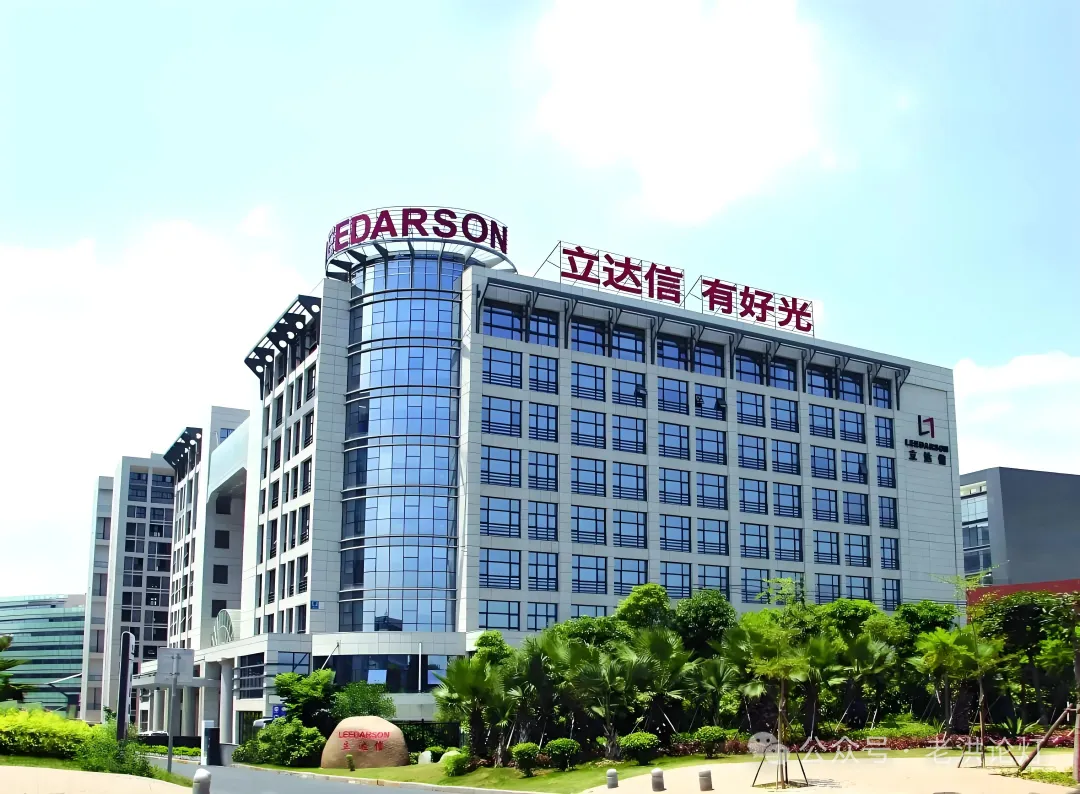
Lao Hong also notes that the commissioning of the Thai production base and the full rollout of the digital platform reflect long‑term strategic positioning. For export‑oriented enterprises navigating a complex trade environment, overseas manufacturing capabilities are increasingly evolving from optional considerations to essential requirements. Lite-On’s investment in Thailand is thus a proactive move to secure future supply chain stability.
With revenue and profit growing simultaneously, a dual‑base production network now firmly in place, and digital transformation fully implemented, Lite-On delivered a solid performance in the first half of 2026. In an industry mired in downturn, stability trumps speed. Lite-On’s semi‑annual report demonstrates that proactively reshaping the supply chain and preparing for uncertainty is, in itself, a form of evolution.
Do you agree with Lao Hong’s perspective? Feel free to share your thoughts in the comments.
Follow Lao Hong on “Lao Hong Discusses Lighting” to illuminate your path forward.
Original article reprinted from the “Lao Hong Discusses Lighting” official account; author: Hong Bing.
About the author, Hong Bing:
Hong Bing currently serves as Editor-in-Chief of China Light Network and Agricultural Lighting Network—the official websites of the China Illuminating Electrical Appliances Association—as well as Executive Dean of Ming Classroom. He also holds positions as Deputy Director of the Talent Training Committee of the China Illuminating Electrical Appliances Association, Secretary-General of the Agricultural Lighting Professional Committee of the same association, Secretary-General of the Lighting Alumni Association under Fudan University, and a board member of the Ecological Environment Alumni Association at CEIBS. Graduating from the Department of Light Sources and Lighting Engineering at Fudan University in 1991, he earned an MBA from CEIBS in 2003. Over the years, he has worked in R&D, product planning, and marketing at institutions including the China Building Materials Academy, Panasonic, GE, and OSRAM. In 2008, he received Siemens’ Global Top Plus Award and Siemens China’s Excellence in Performance Award, and in 2009 founded China Light Network.