
The "Luminance Code" in Lighting design — A Deep Dive from Concept to Implementation
On May 29, the China Light Network · Bright Classroom [Era Hong Liu] program welcomed a thematic sharing session by lighting industry veteran expert Teacher Feng Jian.
As an expert in the Urban Lighting Expert Database of the Henan Provincial Department of Housing and Urban-Rural Development and a trainer for the Lighting Designer Professional Competency Evaluation System of the China Illuminating Electrical Appliances Association, Teacher Feng Jian took “The Relationship Between Illuminance and Luminance, and the Application of Luminance in Lighting Design” as the core theme. Combining industry trends, technical concepts, and practical experience, he unveiled to lighting designers the key yet often overlooked design principle of “luminance”.
Industry Status Quo: The “Involution” and Persistence of Lighting Designers
In recent years, as demand for lighting at large-scale events (such as the G20 Summit and the Military World Games) has cooled, the lighting industry has entered an “adjustment period.” Teacher Feng Jian stated bluntly: “Currently, designers are facing the most intense competition—cultural and tourism projects are bypassing intermediaries to directly hire designers, intensifying narrow-scope rivalry, while luminaire manufacturers can instead break through via exports.”
However, challenges also present opportunities. Taking the 2019 Ethnic Minority Games in Zhengzhou as an example, the expert panel of the Henan Lighting Association conducted comprehensive technical oversight throughout the entire process (“before, during, and after” events), including luminaire testing and rectification of excessive luminance, thereby helping the government improve lighting quality. This confirms that: professional expertise and effective implementation control are key for designers to break the deadlock.
Illuminance vs. Luminance: The Overlooked Visual Truth
“Many designers cannot distinguish between illuminance and luminance, and even after years of design work, they still confuse the two.”
Teacher Feng Jian used two everyday examples to highlight the core issue:
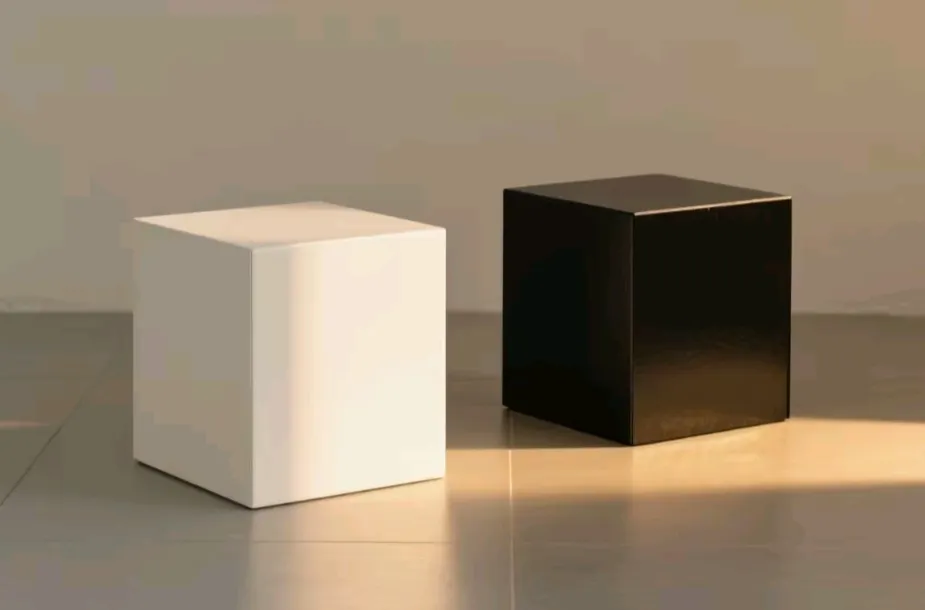
· White Box vs. Black Box: At the same illuminance level, a white box appears “brighter” than a black box because white has higher reflectivity, allowing more light to enter the eye—this is a direct manifestation of “luminance.”
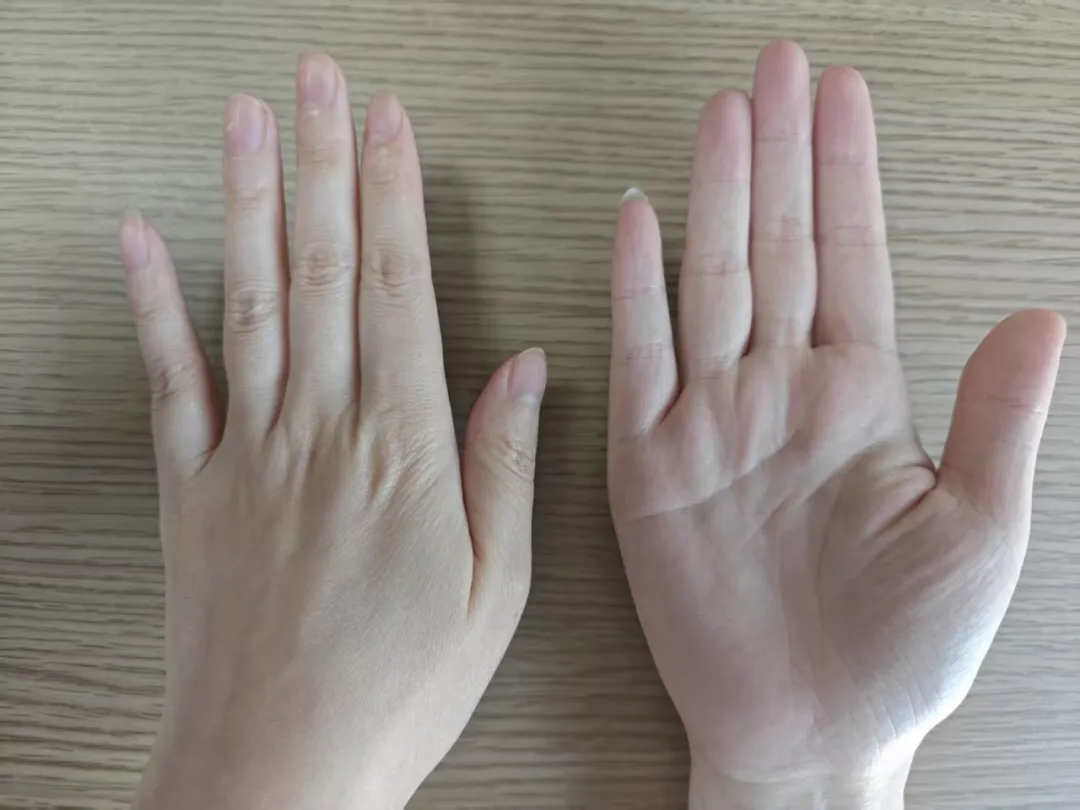
· Palm vs. Back of Hand: Under the same light source, the palm (with higher skin reflectivity) appears brighter than the back of the hand—again determined by differences in luminance.
Scientific Definitions:
· Illuminance (lux, lx): The density of luminous flux incident on an object’s surface, an objective physical quantity (regardless of object color, data measured by an illuminance meter remains similar).
· Luminance (candela per square meter, cd/m²): The intensity of light reflected from an object’s surface into the human eye, directly related to reflectivity (what the human eye perceives as “brightness” is essentially luminance).
Why Do National Standards Often Use Illuminance as the Benchmark?
Teacher Feng Jian explained: “An illuminance meter costs only a few hundred yuan, whereas a professional luminance meter can cost between 50,000 and 200,000 yuan, making luminance data difficult to popularize due to high measurement costs. However, human perception of luminance is central to design—meeting the illuminance standard does not guarantee visual comfort, which is why many designs pass the illuminance test yet appear glaring.”
Luminance Design: The Key Link from Standards to Implementation
Luminance not only affects visual experience but also involves hard metrics such as light pollution and energy consumption.
Combining multiple national standards, Teacher Feng Jian emphasized luminance’s “triple constraints” in design:
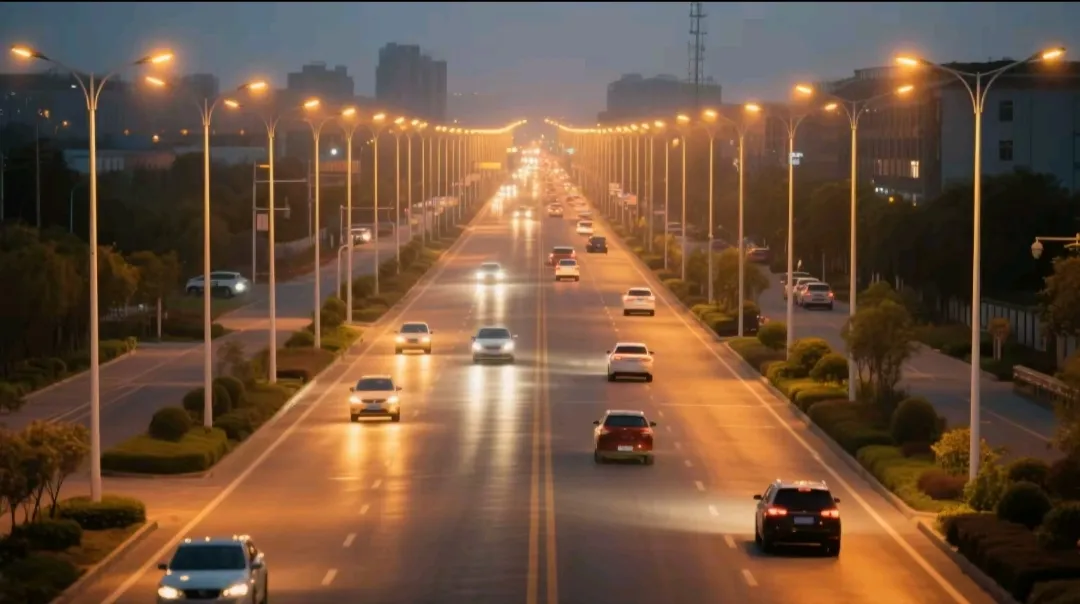
1. Road Lighting: The average luminance standard for first-class arterial roads and expressways is 1.5–2 cd/m² (higher values in city centers, lower in suburbs), which is more scientifically sound than using illuminance alone.
2. Buildings and Advertising: Building facades, billboards, media screens, etc., must strictly control maximum luminance levels (e.g., city-center billboards ≤1000 cd/m², media facades ≤600 cd/m²) to prevent light pollution.
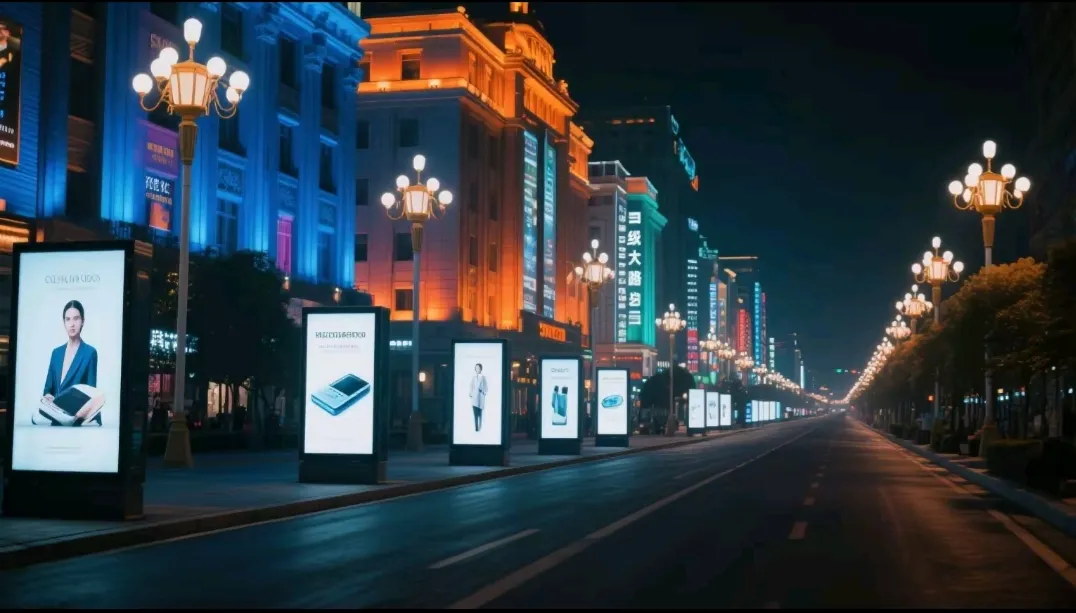
3. Mandatory Compliance: The General Code for Building Environment (GB-55016) is a mandatory standard that explicitly requires measures such as “no flashing signs near residential windows” and “spill light from floodlighting ≤20%,” with luminance being a core assessment item.
Practical Implementation Tips:
· Before design, use specialized software (such as Koolux or DIALux) to simulate luminance distribution, avoiding areas that are “too bright” or “too dark”;
· Before construction, conduct “test lighting”—adjust luminaire power (e.g., change from 36W to 24W) and angles to ensure precise luminance;
· During acceptance, combine luminance measurements (rather than relying solely on illuminance) to let the data speak for itself.
Practical Tool: Even Smartphones Can Measure Luminance—A Boon for Designers
To address the pain point of high luminance measurement costs, Teacher Feng Jian recommended a “game-changing tool”—a mobile spectral imaging luminance meter developed by Professor Yao Qi’s team at Fudan University.
Accurate One-Click Measurement, Instant Understanding of Light Environments
Simply take a photo with your smartphone camera to generate a pseudocolor map of luminance and automatically calculate luminance values, uniformity, and other data for selected points.
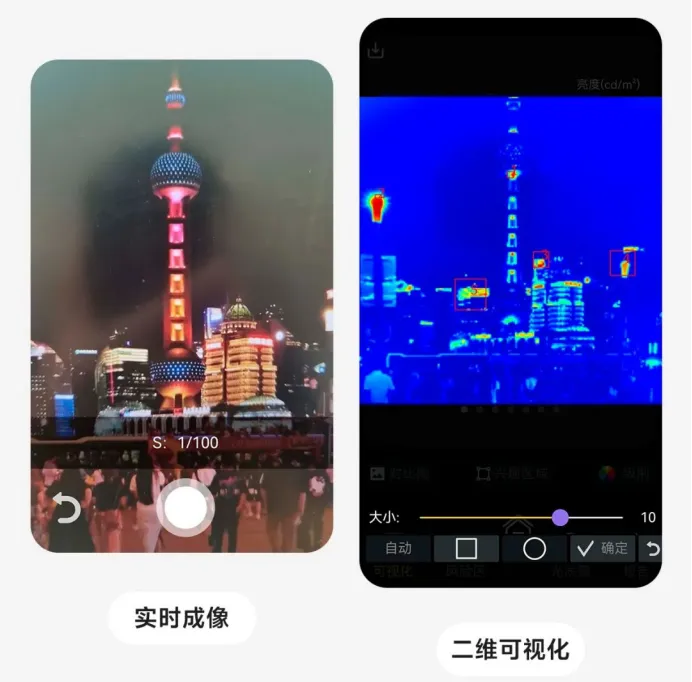
Core Advantages:
· Portability: Your smartphone serves as the device, eliminating the need to carry professional instruments;
· Precision: After calibration, accuracy reaches 80%–95%, meeting daily design needs;
· Multifunctionality: Supports dynamic screen display, light health assessment, and generates visual reports.
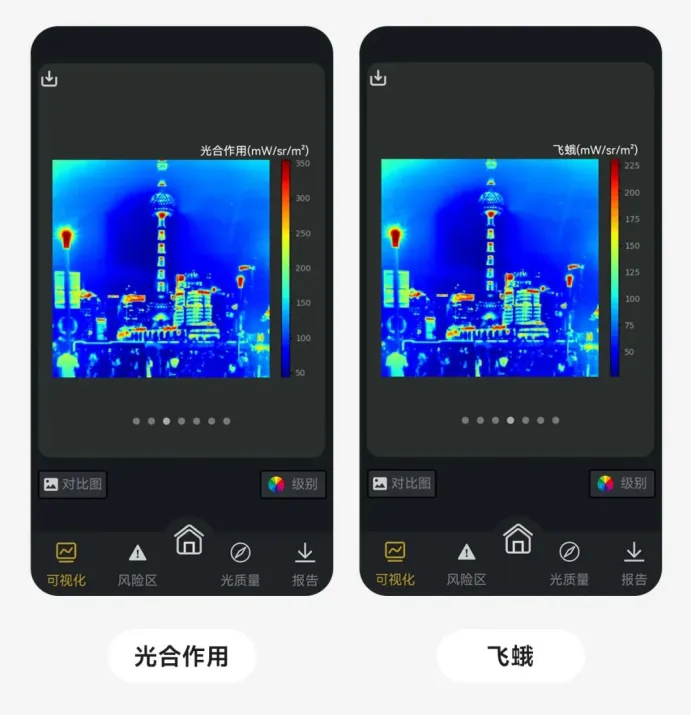
Light Pollution Analysis and Feedback
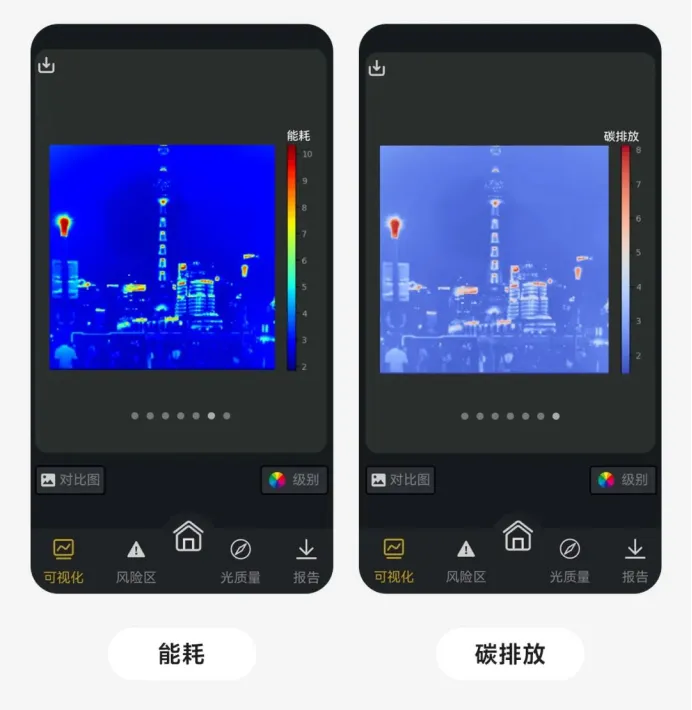
One-Click Generation of Analysis Reports
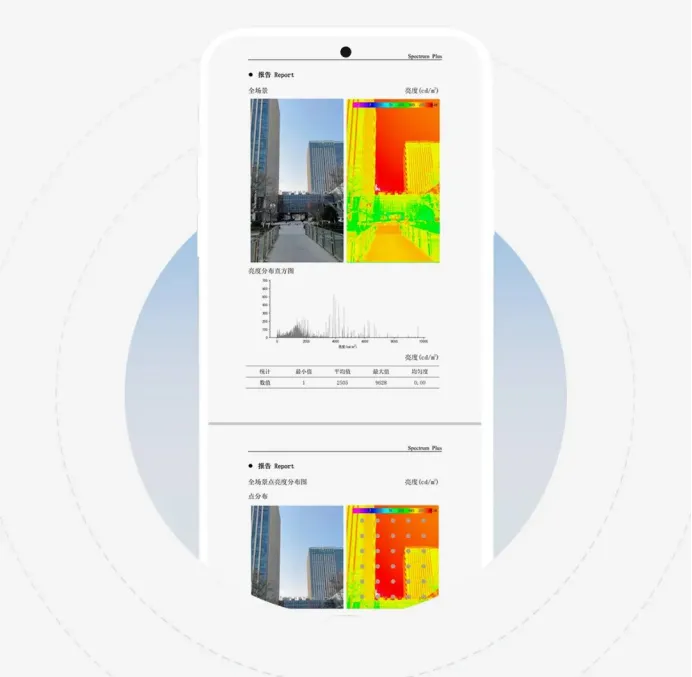
“In the past, measuring luminance required borrowing equipment and waiting for testing; now, you can measure it simply by pulling out your phone—this is a significant advancement for the industry,” said Teacher Feng Jian. He added, as these tools become more widespread, luminance standards may assume an even more central role in design going forward.
Design Philosophy: Balancing the Art and Technology of Light
“Excellent lighting design is the fusion of technology and art.”
Teacher Feng Jian summarized his design philosophy through the perspectives of renowned masters:
· Le Corbusier: “Space exists because of light; atmosphere is shaped by light”;
· Richard Kelly: “Focused light, ambient light, and shimmering light” create layers of light and shadow;
· Local Practice: Avoid “colorful chaos”; select light colors based on architectural attributes (culture, climate, function) to pursue “orderly brightness and darkness”—“only by dimming what should be dimmed can one truly demonstrate design mastery.”
Conclusion
From clarifying concepts to recommending tools, from interpreting standards to sharing implementation insights, Teacher Feng Jian’s presentation filled in the crucial missing piece of “luminance” for lighting designers. As he put it: “Design is not about ‘looking at lamps,’ but about ‘seeing light’—using technology to support art and conveying warmth through luminance; this is the essence of lighting.”
Disclaimer: The content of this article aims to share information and maintain a neutral stance. Some images in this article were generated by AI; if there are any issues involving infringement, please contact us promptly, and we will address or remove them as soon as possible. Thank you for your understanding!
Bonus Time: Experience the “Black Tech” of Light
Want to personally experience the scientific charm of light? Professor Yao’s team, in collaboration with China Light Network, is offering a limited-time trial of their mobile luminance meter measurement software!
How to Obtain It
Follow the “Bright Classroom” WeChat official account, reply with the keyword 【Light Code】 to receive the full replay of this salon session; reply with the keyword 【Luminance Meter】 to access the luminance meter software introduction and APP download link, allowing you free access to explore the light environment around you using your smartphone camera!
You can also scan the QR code below to add our customer service WeChat directly for consultation and related materials.

Spectral + Imaging Luminance Meter──
Technology Empowers Productivity, Making Spectral Measurement More Convenient!
China Light
The official website of the China Association of Lighting Industry and a full-media platform for the lighting sector. We provide authoritative and timely lighting information while striving to be a growth partner for businesses. From brand promotion and channel expansion to consulting, talent training and participation in standards development, we provide comprehensive professional services to help businesses improve quality and efficiency and jointly advance the high-quality development of the lighting industry.
Business Contacts
仇纯 (Ms.): 158 6155 3579
顾君 (Mr.): 137 7157 5253