
Exclusive Interview | Signify’s New Global Strategy! Yin Kang Provides an In-Depth Analysis
Recently, Signify released its financial results for the second quarter of 2026. This is the company’s first quarterly report disclosing operational performance under the BUILD (Cultivation) and HARVEST (Harvesting) dual‑business portfolio framework, following the launch of its new global strategy in June.
As a global leader in the lighting industry with a 135‑year legacy inherited from Philips, Signify’s strategic choices have always attracted close attention. Although the new strategy was unveiled some time ago, many domestic industry insiders remain unfamiliar with this entirely new business segmentation logic. Therefore, a few days ago, Hong Bing (Old Hong), Editor-in-Chief of China Light Media, conducted an exclusive interview with Yin Kang, CEO of Signify Greater China, asking him to provide an in-depth analysis of the industrial rationale behind this strategy and its implications for China.

Yin Kang, CEO of Signify Greater China
Q
At Capital Markets Day, Signify introduced the strategic theme of “greater focus, greater efficiency.” In your view, what industry insights underpin this strategy? What is the core essence of this strategy?
A: Over the past few years, the industry has faced multiple challenges—macroeconomic volatility, price competition, and rapid technological advancement. The market landscape for traditional product categories has gradually consolidated, while high‑value segments such as connected lighting and specialized scenario‑based solutions continue to expand. We clearly perceive that the growth paradigm has shifted from “universal scale expansion” to “structural value upgrading.” Against this backdrop, we believe that only by concentrating resources on areas where we possess core strengths and adopting differentiated strategies tailored to each business’s lifecycle can we maintain operational resilience throughout market cycles.
The proposed “greater focus, greater efficiency” is not about reinventing Signify; rather, it aims to help us become even better—closer to customer needs, more focused on our business portfolio, and with enhanced operational capabilities—so that we can seize future opportunities more effectively. The core lies in two key aspects:
First, focusing our business portfolio: we have clearly delineated two major business pillars—BUILD (Cultivation) and HARVEST (Harvesting)—and defined six distinct business portfolio decisions. Resource allocation now strictly adheres to this framework.
Cultivation: includes the growth of consumer lighting, prioritizing the digital and intelligent transformation of professional lighting sectors, and breakthroughs in emerging high‑value niche markets—areas where we hold significant competitive advantages and will continue to ramp up investment;
Harvest: refers primarily to mature but slowing‑growth traditional categories, such as conventional light sources and technologies entering saturation. Signify will maximize cash flow through value engineering to reinvest in cultivation initiatives.
Second, enhancing operational efficiency: we match different business attributes with tailored operational strategies—for example, maximizing operating leverage in growth‑potential areas while strengthening execution through organizational flattening—to continuously improve operational quality and create long‑term value for customers, partners, and the broader industry.
Q
The new strategy places “connected lighting” at its core, stating that it “is approaching a turning point in market growth.” What evidence supports this assessment?
A: This judgment stems from our long‑term monitoring of global markets and our own business performance. Key data points include: in the professional segment, connected lighting currently accounts for only 10%–15% of installed base; among consumers, penetration remains even lower. However, leveraging Philips’ century‑long expertise in optics and smart connectivity, Philips‑branded smart lighting products are experiencing robust growth. For instance, in the Dutch market alone, the average number of Philips Hue smart home lighting devices per household has risen from 11 in 2022 to 17 by 2026. Additionally, over 40% of Signify’s professional sales now come from connected products, with comparable sales growth exceeding 10% between 2024 and 2025—clear signs of strong momentum.
This indicates that connected lighting is transitioning from the exploratory “0 to 1” phase to the scaling “1 to 10” stage. The entire sector is indeed at a critical inflection point toward widespread adoption, with a solid foundation for large‑scale market expansion.
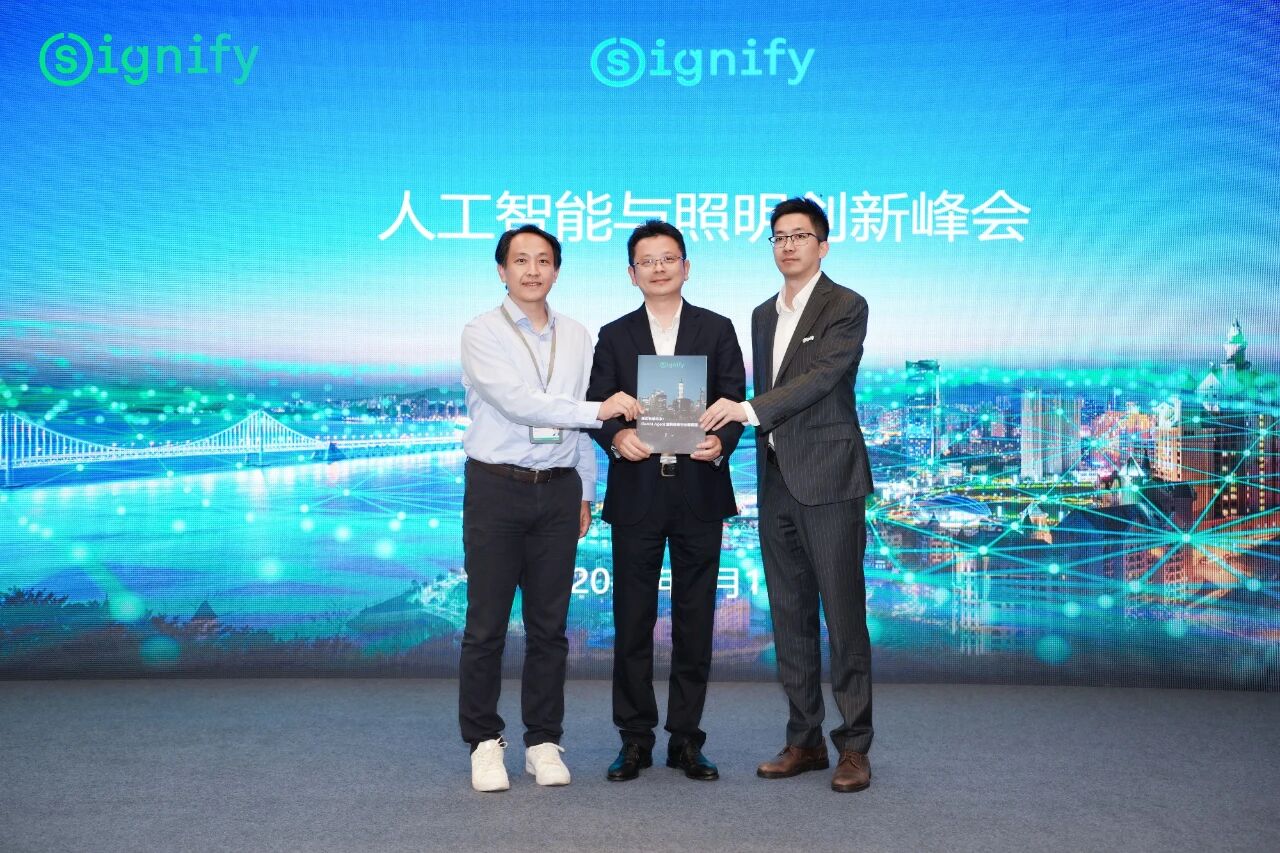
Signify releases the white paper “Illuminating the Future of Intelligence: GenAI Agent Reshapes the Lighting Industry Blueprint”
Accordingly, the new strategy positions connected lighting as the central pillar across both professional and consumer lines: on the professional side, it leverages smart interconnected lighting systems and integrates with certified system integrators; on the consumer side, it expands user access and lifetime value through the smart home ecosystem. This will be the primary growth driver over the next few years.
Q
In the new strategy, what role does the Chinese market play? And how will the global strategy be implemented in China?
A: Philips‑branded lighting entered China as early as the 1920s, and China has always been a pivotal core market in Signify’s global strategy—indeed, it ranks among the 35 core countries explicitly targeted in this latest plan. Our top priority in China is growth through cultivation. With its massive scale and vibrant innovation, China boasts one of the world’s most complete supply chains and leading digital application scenarios. Accordingly, we will tailor our approach to local conditions, implementing finely tuned strategies that align with China’s unique characteristics.
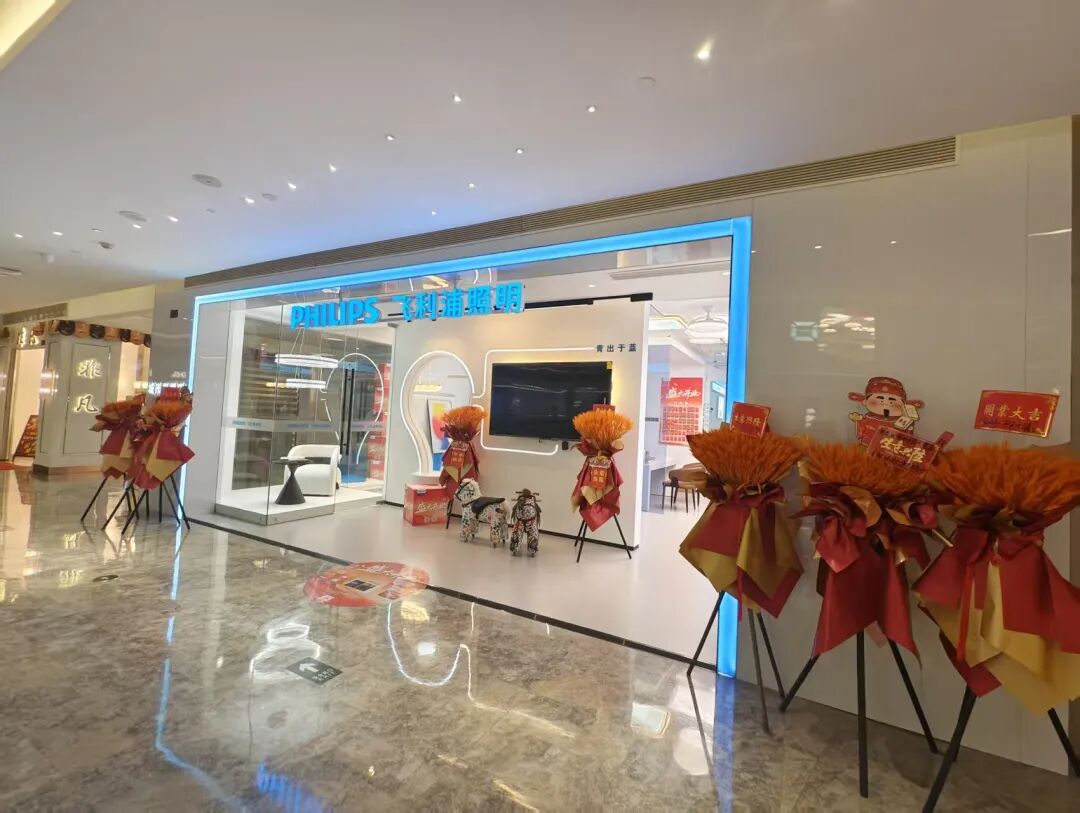
Philips Lighting City Flagship Store
We will prioritize several key areas:
First, consumer‑oriented connected lighting and premium luminaires—leveraging the Philips brand’s influence to further expand its smart lighting ecosystem while introducing more products that resonate with Chinese consumers’ aesthetics and usage habits, delivering services in ways they prefer;
Second, the intelligent transformation of professional lighting—integrating AI into operations and maintenance to reduce end‑user lifecycle costs and environmental impact;
Third, developing high‑value niche markets, such as smart city applications—scenarios that demand not only superior lighting quality but also advanced system integration and on‑site service capabilities—fields where Signify excels thanks to its technology and brand strength.
Fourth, fostering synchronized development with manufacturers and partners. From Philips to Signify, our growth in China has always relied on collaboration across various sectors, and the new strategy emphasizes a customer‑centric approach.
Q
As CEO of Greater China, could you share Signify’s plans for prioritizing future innovations, and how will these efforts empower the Chinese market?
A: At its core, innovation exists to create value for customers—not for technology’s sake. Signify’s innovation roadmap revolves around two main axes: pioneering cutting‑edge technologies that lead the industry, and enhancing efficiency and user experience in close alignment with customer needs.
Going forward, our innovation efforts will focus on four key areas:
First, deep integration of AI and connected technologies—for example, following the 2025 launch of the world’s first generative AI agent specifically designed for lighting applications, which was first integrated into the Interact smart connected lighting system, we are embedding this AI agent deeply across the entire value chain—from R&D and supply chain to production and customer service. On the R&D side, AI accelerates product iteration; on the customer side, it delivers smarter lighting experiences and maintenance services.

The Interact City Flex system equipped with the GenAI agent has been successfully deployed in the Dalian High‑Tech Zone street lighting project
Second, continuing to deepen value engineering—we allocate a significant portion of R&D resources to optimizing existing products through material innovation, structural improvements, and process upgrades, enhancing cost‑effectiveness without compromising quality;
Third, expanding the value of light—exploring health‑focused lighting, human‑centric illumination, and the integration of light with space, uncovering additional benefits of light in areas like health, mood, and productivity.
Finally, strengthening indigenous innovation capacity—innovation extends beyond products to business models. We will collaborate even more closely with partners, delivering agile, efficient services that meet the needs of consumers and end‑users.
China is an integral part of Signify’s global innovation network. Our R&D team in China not only adapts global technologies for local implementation but also develops customized innovations tailored to China’s unique market demands. In fact, many projects are first validated by Chinese teams before being rolled out globally—a “Made in China, for China, then radiating worldwide” innovation model that has become a key asset of our new strategy.
Conclusion
Through an in‑depth conversation with Mr. Yin Kang, we gained a clear understanding of the steadfastness and thoughtful planning behind Signify’s new strategy. Amidst industry turbulence and adjustments, this global lighting leader has refused to be swept away by short‑term fluctuations. Instead, with clearer self‑awareness, more precise resource allocation, refined business management, and pragmatic execution, it has firmly anchored itself in a long‑term development trajectory. This reflects the enduring trust, innovative spirit, and global vision cultivated over Philips’ 135‑year history.
Notably, in this round of the global strategy, the Chinese market has evolved far beyond merely contributing scale—it has become a crucible for innovation and a thriving ecosystem hub. Signify is weaving together global technological expertise with China’s specific market needs. This “global vision, local roots” approach ensures that China’s supply chain, channel partners, and end‑customers can directly benefit from the company’s strategic upgrades.
For China’s lighting industry, Signify’s latest strategy offers an important lesson: when incremental markets transition to stock‑based ones, and general‑purpose lighting approaches saturation, companies need not blindly chase every emerging trend. Instead, they should return to the fundamentals of business—assessing their own competitive advantages.
China Light
The official website of the China Association of Lighting Industry and a full-media platform for the lighting sector. We provide authoritative and timely lighting information while striving to be a growth partner for businesses. From brand promotion and channel expansion to consulting, talent training and participation in standards development, we provide comprehensive professional services to help businesses improve quality and efficiency and jointly advance the high-quality development of the lighting industry.
Business Contacts
仇纯 (Ms.): 158 6155 3579
顾君 (Mr.): 137 7157 5253