
After the Scottish Premiership became a hit, we uncovered the “Lighting Truth” of community pitches: it turns out the lights used for playing soccer hide these clever little tricks.
Recently, Jiangsu’s “Su Chao” has become incredibly popular, with Changzhou team’s “five-game losing streak meme” flooding social media feeds, even spurring a surge in nighttime soccer activity at community fields—
At six o’clock in the evening, makeshift goals are set up on an open space next to the residential complex. After work, young people chase after the ball, while elderly spectators sit on small stools under the streetlights.
But have you noticed? Some fields have lighting so glaring it’s hard to keep your eyes open, while other corners are so dark you “can’t see the ball”; even when playing soccer, the lighting feels completely different between professional training and casual games… Behind these “oddities” lies the “lighting truth” of community fields—
This Tuesday, at a “Lighting Designer Crash Course” salon, Teacher Song from Qunhe Technology’s Kujiale used the buzz around “Su Chao” as a hook to reveal all the “little tricks hidden in the lighting.”
“Non-standard Fields” Beyond Su Chao: The More “Wild” the Dimensions, the Smarter the Lighting Needs to Be
FIFA’s standard field measures 105 meters by 68 meters—the “golden ratio”—but Teacher Song shattered this “stereotype” right from the start: “Community fields and school pitches are constrained by terrain, making their dimensions very ‘wild’!”
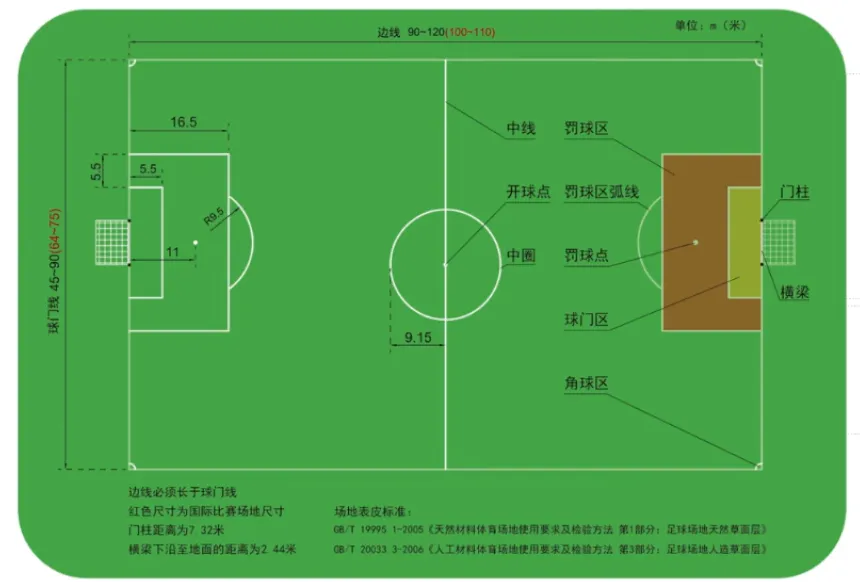
For example, the long side of an amateur soccer field can range from 90 to 120 meters, with the width between 45 and 90 meters; seven-a-side and five-a-side pitches are even smaller, with goal dimensions shrinking accordingly (a full-size goal is 7.3m × 2.4m, while a five-a-side goal is only 3.2m × 2.1m).
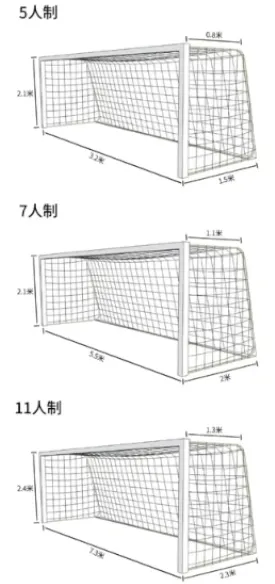
This “non-standard” nature actually becomes the first challenge for lighting design—the more irregular the field, the more tailored the lighting needs to be.
“Some corners are narrow, requiring poles to be angled; in areas with tight margins, pole heights must be increased to avoid glare,” Teacher Song said with a smile. “Designing lights for amateur fields is much ‘more flexible’ than for professional arenas.”
From “Just Bright Enough” to “Comfortable Play”: Lighting Is Not as Simple as “Turning Up the Lights”
Many people assume that lighting a soccer field simply means installing a few high-mast lights and turning them on. But Teacher Song debunked this notion with data: “The most common complaints from amateur fields are ‘the lights are too dazzling’ and ‘you can’t see the ball while running’—all stemming from issues with ‘uniformity’ and ‘glare control.’”
It turns out there’s a set of “hidden standards” for recreational soccer field lighting:
● Illuminance Levels: Sports venues are divided into six levels based on usage scenarios. The first three levels include: I Recreational / II Amateur Training / III Professional Training. For these three tiers on soccer fields, only horizontal illuminance Eh is required to ensure adequate visibility. Recreational games need only “basic brightness,” while professional training demands “sufficient brightness.”
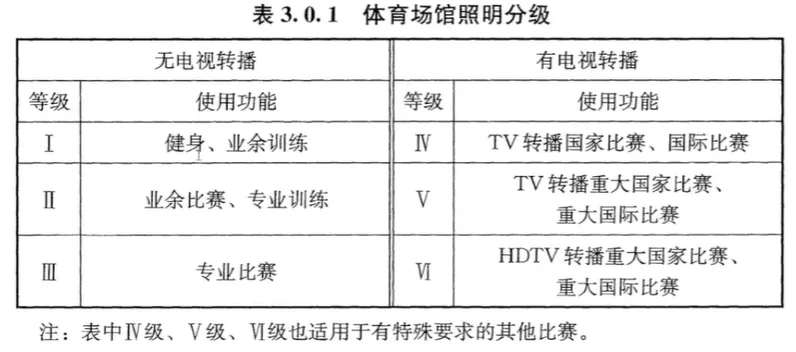
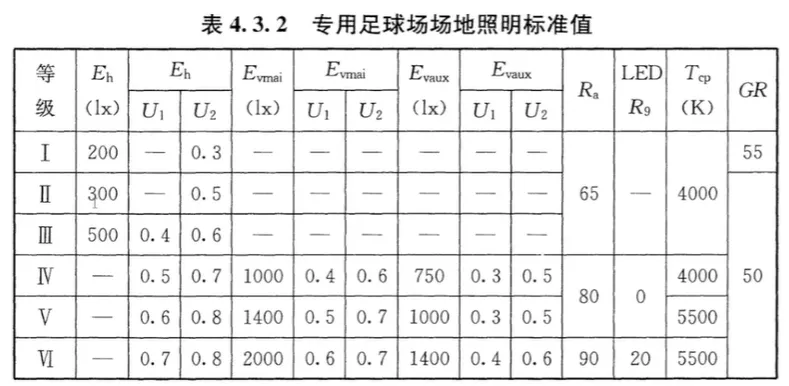
If competitions are involved, the latter three levels include: IV Major Matches / V National-Level Major Matches / VI International-Level Major Matches. These higher tiers have TV broadcast requirements, necessitating vertical illuminance Ev. This includes vertical illuminance requirements for main cameras (typically along the long side) and auxiliary cameras. As sports events evolve, aerial suspended mobile cameras are also factored in, beyond ground-based camera positions.
● Uniformity of Illuminance Matters More Than Brightness: Level 1 venues require a minimum-to-maximum illuminance ratio ≥ 0.3, while Level 2 requires ≥ 0.5. “It’s like a ceiling light at home—you don’t want one half blindingly bright and the other half pitch black,” Teacher Song illustrated.
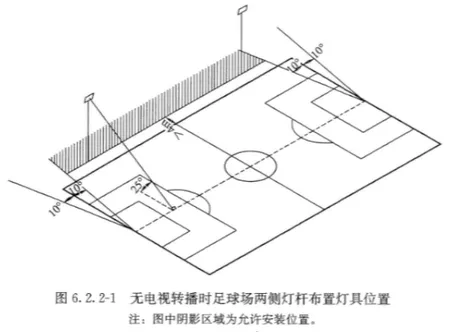
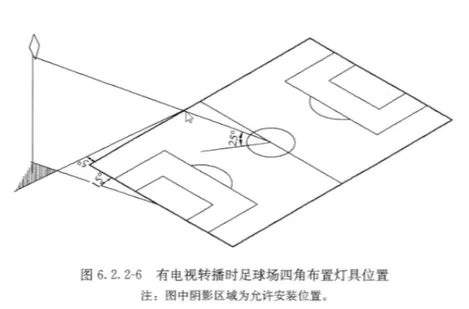
● Pole Height Matters: For recreational venues, pole height is determined within the angle where the lamp’s beam normal to the penalty spot is less than 25° (as shown), dynamically adjusted according to field size.
Too high causes “light spot gaps,” while too low directs light straight into players’ eyes, causing glare. “Many community fields have poles only 15 meters tall; when players look up at the lights, it’s like ‘staring directly at the sun.’”
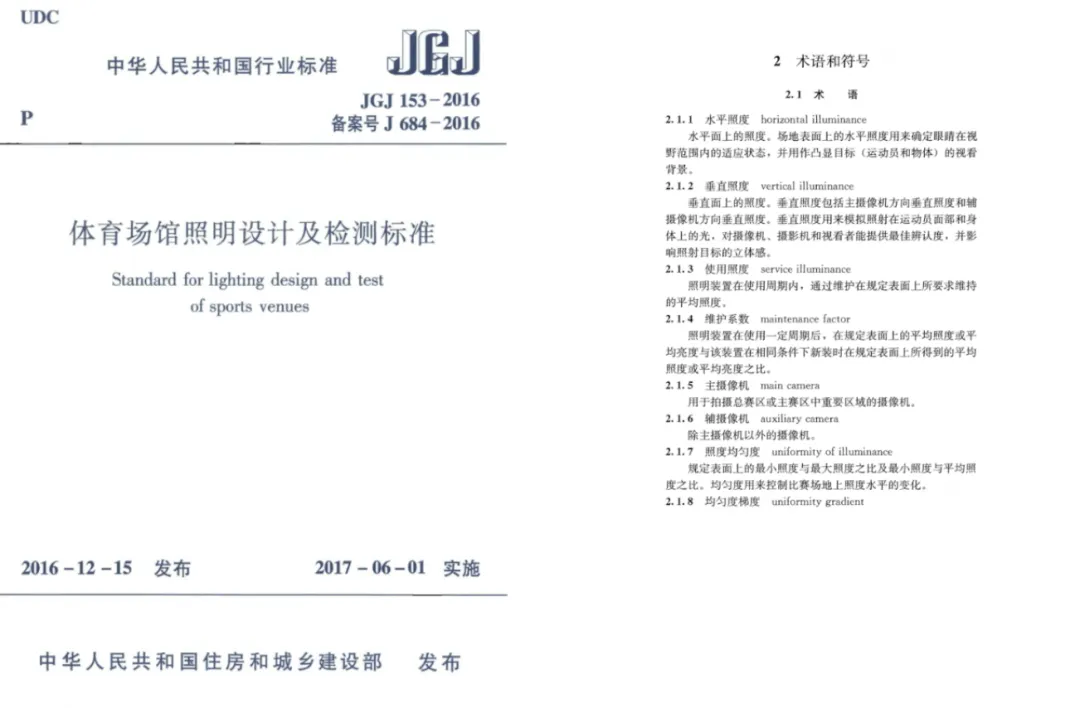
Standard Reference: Design and Testing Standards for Sports Venue Lighting
From “Fumbling with Light Adjustments” to “Data-Driven Decisions”: The Designer’s “Magic Touch”
How do these seemingly complex parameters translate into actual lamp placements? Teacher Song demonstrated a “hardcore operation” on-site—using professional software (such as Koolux) for modeling and debugging.
Hands-On Demonstration
“First import the CAD drawing, outlining the field boundaries, penalty area, and penalty spot; then simulate lamp positions, angles, and wattages to generate a real-time ‘illuminance heatmap.’” On the screen, red indicates bright areas, blue represents dark zones. By adjusting the lamps’ “rotation angle” and “beam width,” the heatmap gradually shifts from a “patchwork of red and blue” to a “uniform, soft glow.”
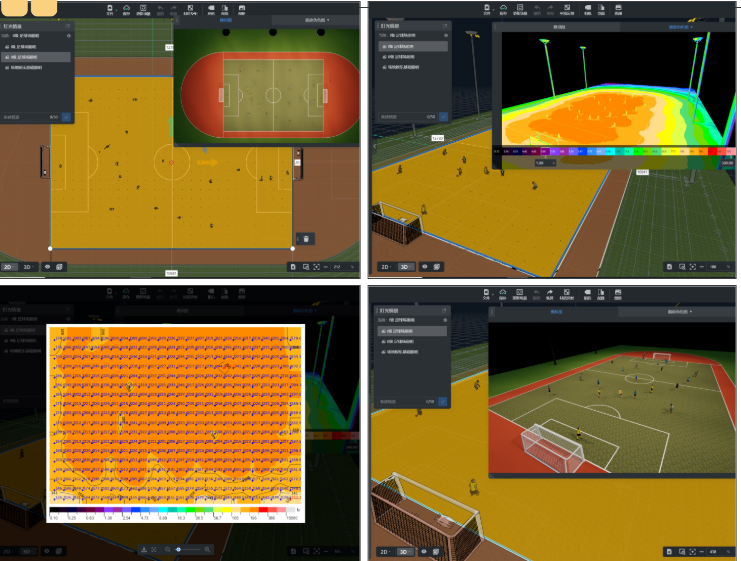
Even more practical is the “Scene Mode”: Recreational games run at 30% brightness (about 200 lux), amateur training at 60% (around 300 lux), and professional training maxes out at 100% (500 lux).
“In the past, we relied on adding more lamps and circuits; now a single lamp can serve multiple purposes, saving costs while enhancing the experience.”
Case Demonstration
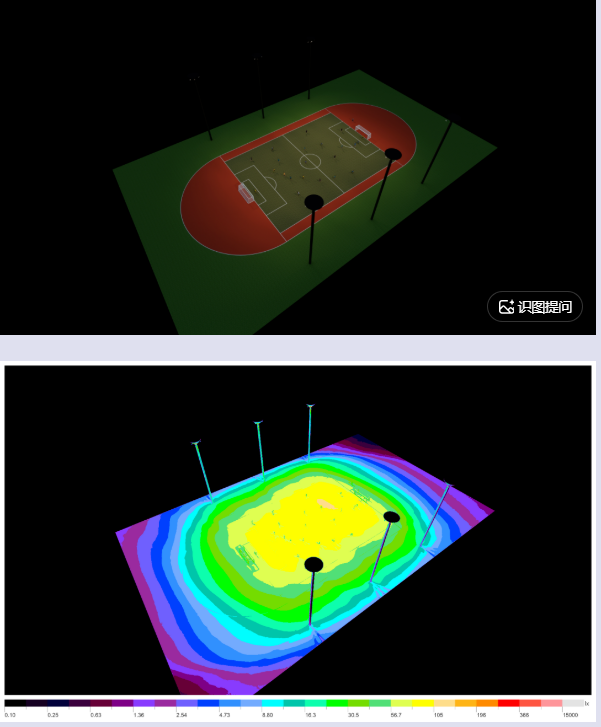
Easily adjust parameters and generate pseudo-color maps
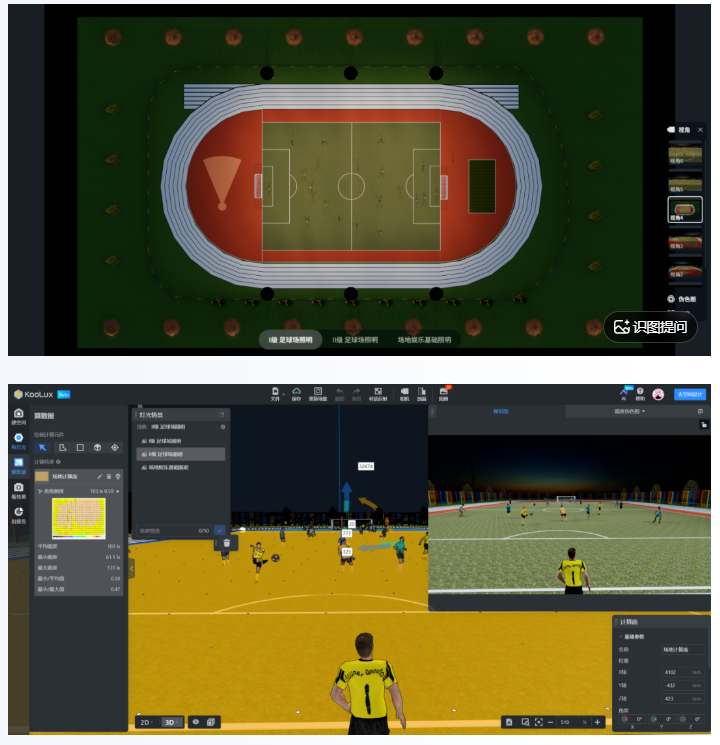
Clearly visualize the effects
Scan the QR code to view more
Smart Lighting Effects + Pseudo-Color Maps for Fields – Interactive Scenarios

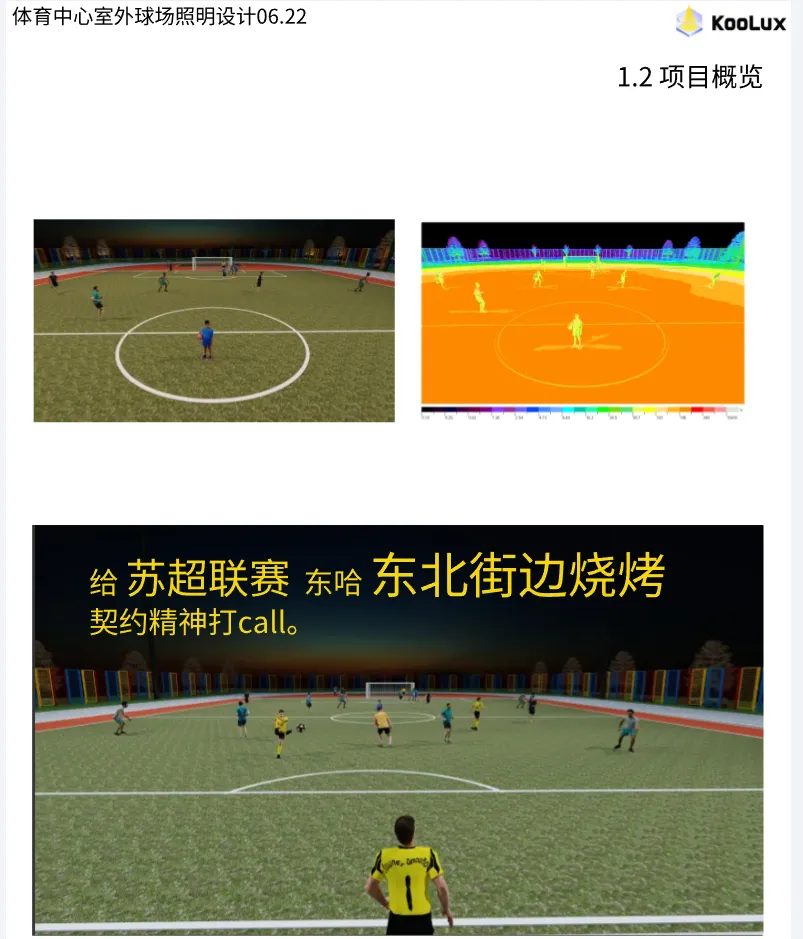
Quick report generation
Scan to Try It Out Quickly

The “Football Temperature” Beyond Su Chao: Everyday Details Hidden in the Lighting
Finally, Teacher Song summarized with the excitement surrounding Su Chao: “Professional arena lighting is ‘high-end precision,’ but community field lighting carries ‘everyday warmth’—it must allow seniors to take walks, kids to play soccer, fans to watch, and withstand rain, snow, and dust.”
This may well be the significance of this salon: as we cheer for the passion of Su Chao, those “small details” hidden in the lighting quietly support the joy of more people being able to “kick a ball anytime, anywhere.” Next time you visit a community field, try looking up—those lights that aren’t glaring and have no dark spots may conceal designers’ “careful tweaks” refined dozens of times.
After all, the charm of soccer never lies solely under the spotlight of professional arenas; every lamp illuminating a community field represents an ordinary person’s “mutual pursuit” with soccer.
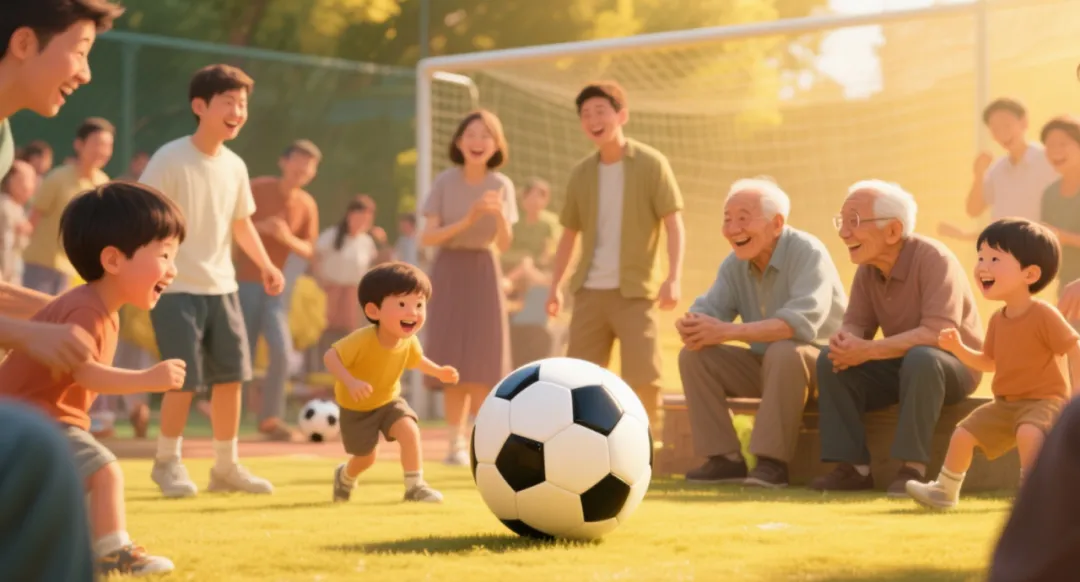
Soccer with Warmth, Soccer Field Lighting Design with Warmth
China Light
The official website of the China Association of Lighting Industry and a full-media platform for the lighting sector. We provide authoritative and timely lighting information while striving to be a growth partner for businesses. From brand promotion and channel expansion to consulting, talent training and participation in standards development, we provide comprehensive professional services to help businesses improve quality and efficiency and jointly advance the high-quality development of the lighting industry.
Business Contacts
仇纯 (Ms.): 158 6155 3579
顾君 (Mr.): 137 7157 5253