
US-Portugal Joint Study: LED Light "Snipes" Cancer Cells, 92% Eradication Rate!
Recently, a research team from the University of Texas at Austin (UT Austin) and the University of Porto in Portugal developed a revolutionary cancer treatment method. This innovative therapy uses common near-infrared LED light combined with tiny tin oxide nanosheets to precisely kill up to 92% of skin cancer cells while completely sparing healthy surrounding tissue.
This breakthrough discovery provides a safer, cheaper, and more accessible alternative for cancer treatment, promising to bring photothermal therapy from hospitals into patients' homes.
Emerging Photothermal Therapy (PTT)
Cancer is the second leading cause of death globally, claiming millions of lives each year. Traditional treatments such as surgery, chemotherapy, and radiation therapy are effective but often involve high invasiveness, significant side effects, and damage to healthy tissues. Although laser phototherapy is precise, it requires expensive equipment and specialized facilities, limiting its application in developing countries or remote areas.
To overcome these challenges, scientists have turned to Near-Infrared Photothermal Therapy, a technology that uses light energy to selectively heat and kill cancer cells. However, existing photothermal therapies typically rely on lasers and high-cost materials, posing safety risks and accessibility issues.
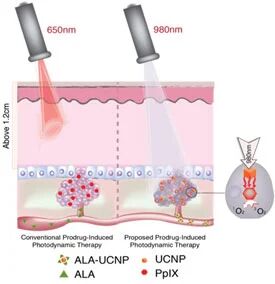
Schematic diagram of using near-infrared LED light to irradiate cancer cells in near-infrared photothermal therapy, demonstrating how the photothermal effect selectively kills tumor cells. Image source: UMass Chan Medical School
LED light-activated tin oxide nanosheets
The collaborative project between UT Austin and the University of Porto aims to address these barriers by using affordable LED lighting and novel nanomaterials, enabling more efficient and safer treatments.
The core of this therapy is tin oxide (SnOx) nanosheets, a cancer cell-targeting material synthesized from electrochemically oxidized SnS2 powder. These nanosheets are tiny in size and can selectively attach to the surface of cancer cells without affecting healthy cells.
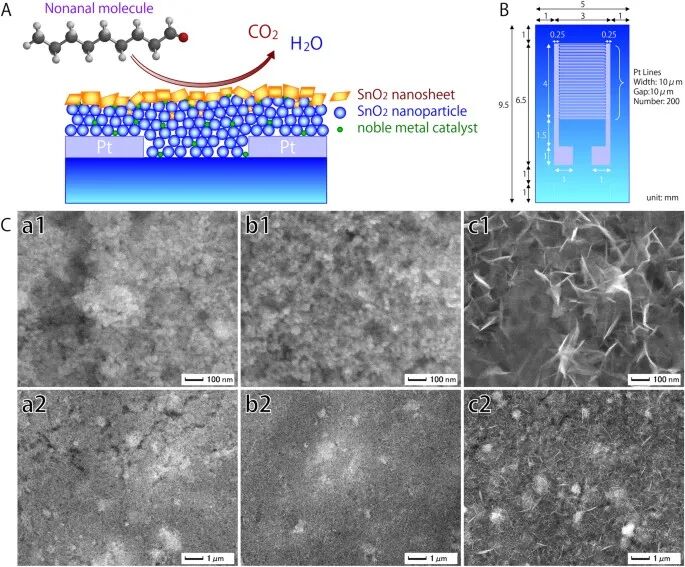
Schematic diagram of the microstructure of tin oxide nanosheets, showing their sheet-like morphology at the nanoscale, used for selective attachment to cancer cells. Image source: Nature
Unlike traditional lasers, LED Light is safer, cheaper, and more compact, making it easy to integrate into portable devices.The research team developed a custom near-infrared LED heating system. When exposed to LED light, the nanosheets absorb light energy and convert it into heat, raising the temperature of cancer cells to the death threshold, thereby achieving precise killing.
In the experiment, cancer cells were exposed to LED light for 30 minutes, and the results were observed using fluorescent staining: live cells appeared green, while dead cells appeared red.This method avoids burns to healthy tissue that lasers might cause and reduces material costs.
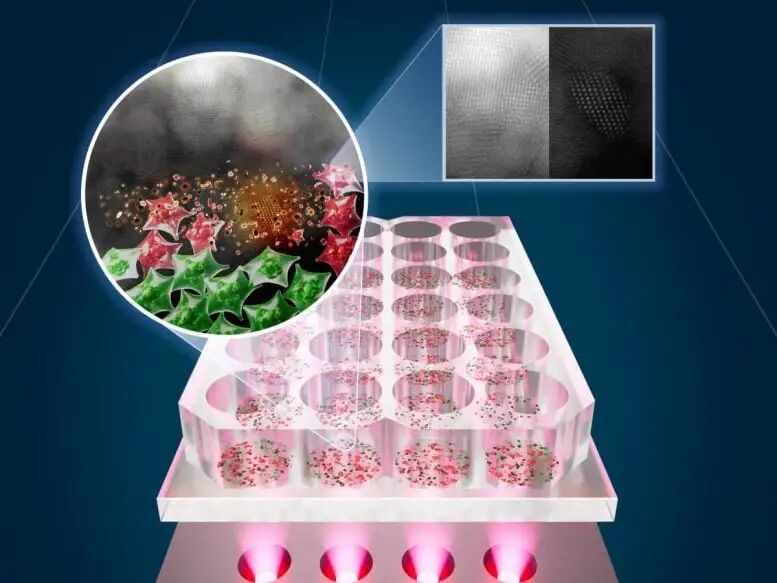
The custom near-infrared LED heating system developed by researchers can activate SnOx nanosheets to heat and neutralize cancer cells (green: live cells; red: cells killed by photothermal therapy). Image source: University of Texas at Austin
The study was published in the prestigious journal ACS Nano, with the paper titled “SnOx Nanoflakes as Enhanced Near-Infrared Photothermal Therapy Agents Synthesized from Electrochemically Oxidized SnS2 Powders” (DOI: 10.1021/acsnano.5c03135, published on September 16, 2025).
Efficiently kills cancer cells while sparing healthy tissue
In laboratory tests, this therapy demonstrated remarkable performance: for skin cancer cells (such as melanoma cells), it killed up to 92% of cancer cells within 30 minutes; for colon cancer cells, the kill rate reached 50%. More importantly, it had no harmful effects on healthy human skin cells, demonstrating its high selectivity.
The research team used in vitro cell culture models for validation, and the results showed that the mechanism by which nanoflakes preferentially attach to cancer cells stems from unique biomarkers on the surface of cancer cells and the surface properties of the nanoflakes. This selectivity ensures that heat is released only inside cancer cells, avoiding “spillover” damage.
Professor Jean Anne Incorvia of the Cockrell School of Engineering at UT Austin stated: “Our goal is to create a treatment that is not only effective but also safe and accessible. By combining LED light and SnOx nanoflakes, we have developed a technology that precisely targets cancer cells without affecting healthy cells.”
Researcher Artur Pinto from the Faculty of Engineering of the University of Porto stated: "Our ultimate goal is to make this technology accessible to patients worldwide, especially in regions with limited medical equipment, to reduce side effects and costs. For skin cancer, we envision a future where treatment can move from hospitals to patients' homes. With just a portable device placed on the skin for post-surgical irradiation, residual cancer cells can be eliminated, reducing the risk of recurrence."
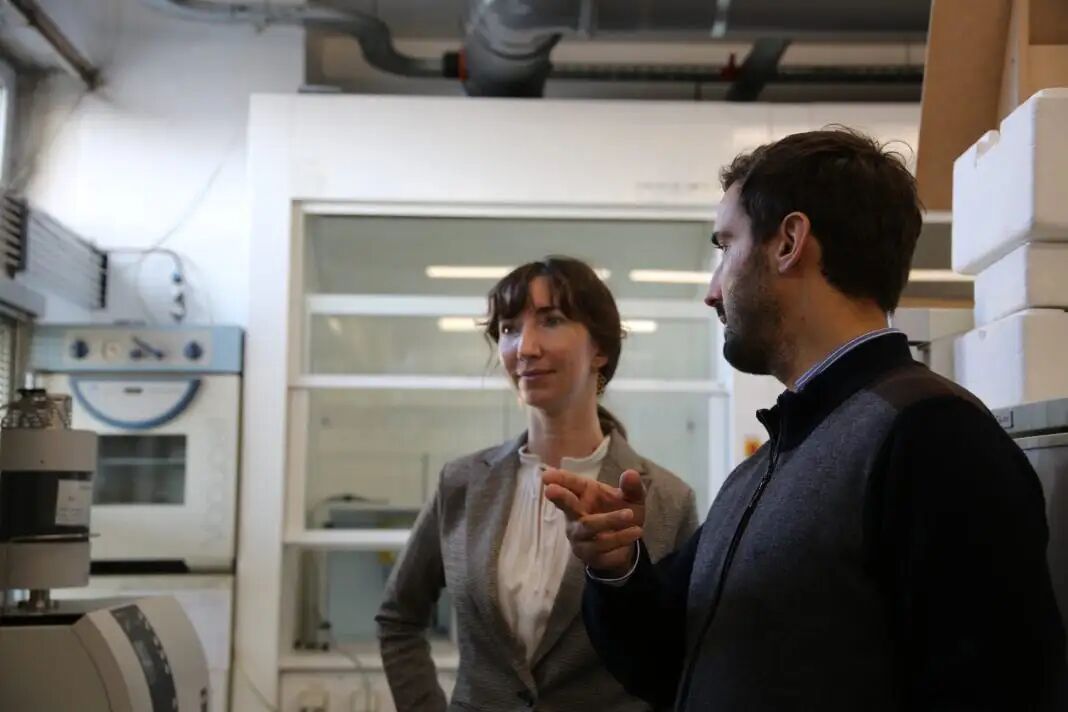
Professor Jean Anne Incorvia and researcher Artur Pinto in a laboratory in Portugal. Image credit: University of Texas at Austin
Future Outlook
This therapyopens new pathways for the application of LED and nanomaterials in the medical field,with the potential to revolutionize the landscape of cancer treatment. By replacing lasers and using inexpensive materials, it makes photothermal therapy more accessible, particularly suitable for surface or accessible tumors such as skin cancer and colon cancer.
Although still in the laboratory stage, experts believe its high safety profile and low side effects give it great potential in clinical trials.If successfully promoted, it will bring benefits to millions of cancer patients worldwide, especially in resource-poor regions.
China Light
The official website of the China Association of Lighting Industry and a full-media platform for the lighting sector. We provide authoritative and timely lighting information while striving to be a growth partner for businesses. From brand promotion and channel expansion to consulting, talent training and participation in standards development, we provide comprehensive professional services to help businesses improve quality and efficiency and jointly advance the high-quality development of the lighting industry.
Business Contacts
仇纯 (Ms.): 158 6155 3579
顾君 (Mr.): 137 7157 5253