
What are the new changes as the two new national standards for motorcycle lighting take effect in 2026?
With the continuous increase in the number of motorcycles on the road, issues such as insufficient performance of lighting devices and non-standard installation have become major safety hazards for road traffic. Data shows that in night-time and low-visibility conditions, accidents involving motorcycles and electric vehicles caused by lighting failure or improper installation account for more than 15% of all incidents. Current standards can no longer adequately adapt to technological advancements and user needs in terms of optical performance, environmental adaptability, and installation compliance.
To systematically improve the road safety level of motorcycles and promote technological innovation in the lighting industry, the Ministry of Industry and Information Technology has issued "Road Lighting Devices for Motorcycles and Mopeds" (GB19152-2025) and "Installation Regulations for Road Lighting and Light Signal Devices for Motorcycles and Mopeds" (GB18100-2025). These two new national standards will officially take effect on January 1, 2026.
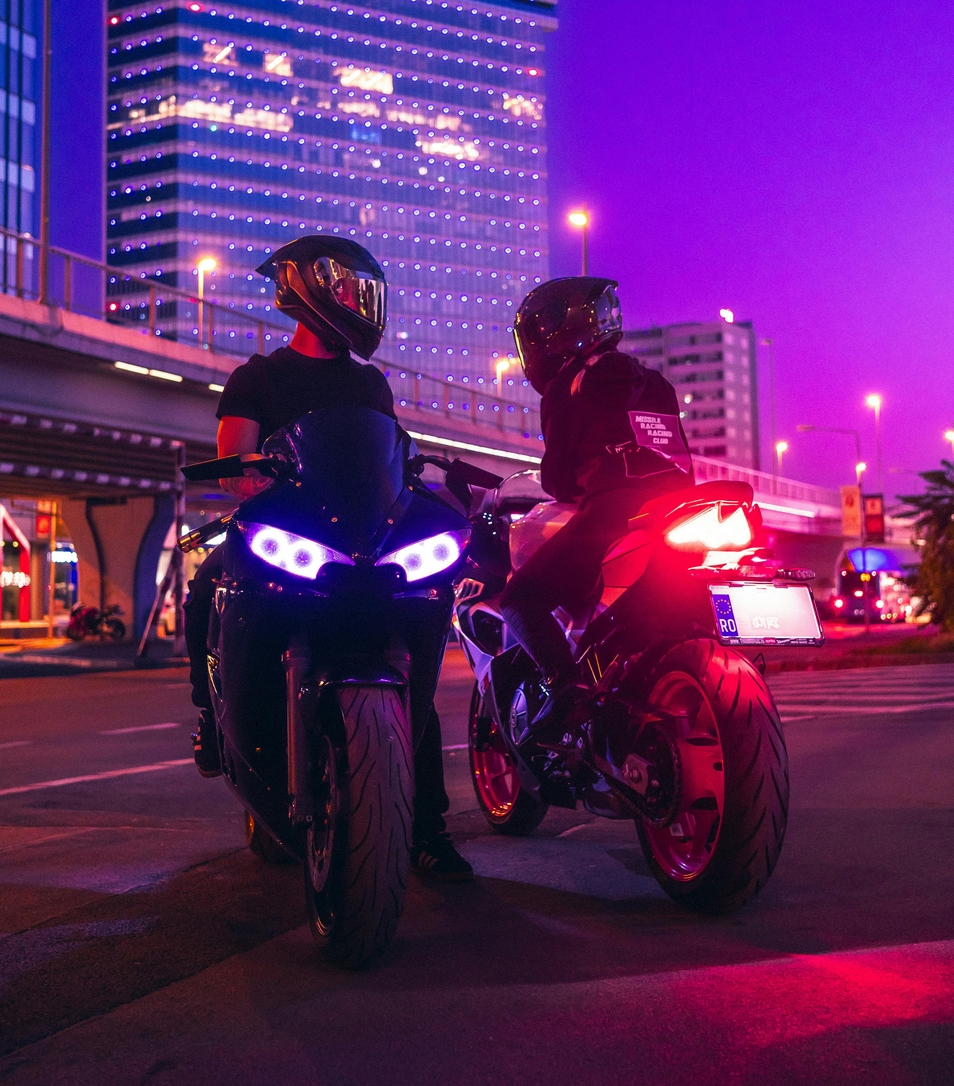
"Road Lighting Devices for Motorcycles and Mopeds"
Core technology requirements comprehensively upgraded
This standard replaces GB19152-2016 'Motor vehicle headlamps emitting symmetrical near and/or far beam' and GB5948-1998 'Headlamp photometric performance for motorcyclists with incandescent filament light sources', focusing on three dimensions: 'optical performance, environmental adaptability, and functional scalability'. It adds multiple key technical requirements to drive the transformation of lighting devices from 'basic function type' to 'intelligent safety type'.
Asymmetric low-beam technology: First time clearly defining technical indicators for asymmetric low-beam headlamps, optimizing low-beam light distribution, and improving anti-glare effects during oncoming traffic.
ADB function adaptation: New adaptive driving beam (ADB) technical requirements added, supporting dynamic adjustment of beam range based on driving environment to reduce blind spots.
Precision of Luminous Flux in Zone: Add requirement for "Target Luminous Flux in Zone", specifying the minimum luminous flux for specific illuminated areas (e.g., 50m, 100m ahead) to ensure adequate illumination intensity in critical zones.
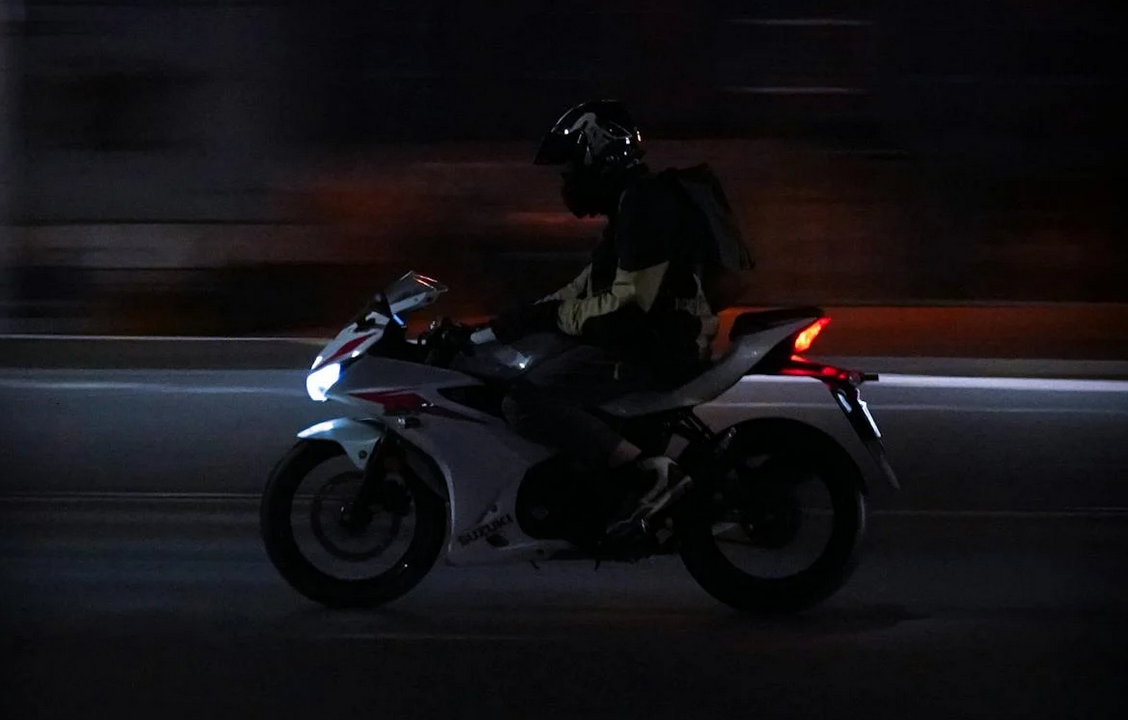
Consistency of Photometric Performance: Adjust the wording and limits for production consistency of low-beam and high-beam photometric performance, clarifying control standards for beam pattern deviations in mass production.
Light Source and Marking Requirements: New requirement for target luminous flux in zone; refine voltage marking content to avoid usage risks due to unclear labeling; add headlight level markings to facilitate quick identification of product performance levels by users and regulatory authorities.
Cutoff line quality: For asymmetric low-beam headlamps, new requirements have been added for the aiming (position accuracy) and quality (edge sharpness) of the cutoff line to prevent light scattering from interfering with oncoming vehicles.
"Regulations on the Installation of Road Lighting and Light Signal Devices for Motorcycles and Mopeds" installation standards fully cover all scenarios.
Intelligent lighting system: New requirements have been added for HIAS (High-level Intelligent Headlamp System), clarifying its coordination rules with the vehicle control system; new installation adaptation specifications for ADB function luminaires have also been added to ensure effective implementation of dynamic beam adjustment functions.
Special luminaire types: New general requirements for Type D luminaires and interdependent lighting systems (multi-source collaborative lighting), specifying technical parameters for composite lighting scenarios; clarifying the mandatory provision that "Type D rear position lights must not be mixed with brake lights" to avoid signal confusion and accidents; adding a method for recognizing single luminaires based on the "minimum convex polygon ", unifying compliance criteria for complex-shaped luminaires.

Photometric and appearance symmetry: For paired installed luminaires (such as left and right headlamps, turn signals), new quantitative requirements for "consistent photometric characteristics" and "symmetrical light-transmitting surfaces" have been added to prevent lighting blind spots or misleading signals due to left-right differences.
03 Upgrades to testing and measurement methods
Geometric visibility and luminous intensity detection:
Add a measurement benchmark for 'reduced geometric visibility with adjustable ground clearance' (based on the luminaire H-plane) to adapt compliance determination for vehicles with different chassis heights;
Clarify the 0.25 cd luminous intensity test method for invisible front red light and rear white light, enhancing night-time risk warning capabilities for invisibility;
Revise the spacing requirements between high beam and low beam lights (adjusted from "200 mm" to "spatial distance") to better fit actual installation scenarios.
三轮摩托车:强制安装远光灯接通指示器;放宽前轮距≤460mm正三轮(对轮摩托车)的远近灯光间距限制(按L3类车辆要求);新增后雾灯仅允许安装在主车的规定,避免多灯干扰。
Two-wheeled/Sidecar motorcycles: New requirements for the lateral position of rear fog lamps on two-wheeled vehicles; sidecar rear fog lamps are prohibited from being installed on the sidecar and must be uniformly installed on the main vehicle.
Reverse three-wheeled motorcycles: Reverse three-wheelers with front wheel track >460mm must install rear reflectors according to L3 class vehicle requirements, improving visibility in complex road conditions.
Steering and braking signals: New requirement for "automatic activation of turn signals when the vehicle is used without authorization"; mandatory installation of work indicators for steering signal lights on three-wheeled motorcycles to provide real-time system status feedback; new rear-end collision warning signal function added to improve rear vehicle warning capability.
Brake light upgrade: L2-L5 class vehicles permitted to optionally install S3 class high-mounted brake lights; when installing two brake lights on three-wheeled motorcycles, geometric visibility requirements inward are relaxed; brake light indicator changed from "prohibited installation" to "optional", adapting to diverse design needs.
Editor's Note
The implementation of the new national standard will have a profound impact on the motorcycle industry and consumers:
For the industry: On one hand, it forces enterprises to increase R&D investment in smart lighting (such as the application of adaptive headlamps, LED matrix headlights, etc.), eliminating backward production capacity; on the other hand, by unifying technical specifications, it guides industry resources to concentrate on leading high-quality component enterprises, promotes collaborative innovation across the supply chain, and helps China's motorcycle industry transform from 'manufacturing' to 'intelligent manufacturing'.
For consumers: New vehicles will come standard with lighting devices that significantly optimize brightness (improved coverage), stability (enhanced anti-interference capability), reducing night riding blind spots by about 40% and potentially greatly reducing accident rates in rainy and foggy weather. At the same time, the mandatory implementation of standardized installation will eliminate the phenomenon of 'private modifications and improper installations', allowing consumers to obtain lighting systems that meet safety standards without additional payment, significantly improving driving safety and experience.
The new national standard is not only an improvement in technical thresholds, but also a concentrated embodiment of the motorcycle industry's development philosophy of 'safety first', building a strong technical defense line for road traffic safety.
China Light
The official website of the China Association of Lighting Industry and a full-media platform for the lighting sector. We provide authoritative and timely lighting information while striving to be a growth partner for businesses. From brand promotion and channel expansion to consulting, talent training and participation in standards development, we provide comprehensive professional services to help businesses improve quality and efficiency and jointly advance the high-quality development of the lighting industry.
Business Contacts
仇纯 (Ms.): 158 6155 3579
顾君 (Mr.): 137 7157 5253