
Short circuits, flickering, false specifications, leakage... Is the furniture lighting market a mess? When will this chaos end?
In the dark depths of the wardrobe, beloved clothes are always hard to find; in exquisite display cabinets, collections lose their luster in the shadows; on kitchen countertops, body shadows often inappropriately block the line of sight...When the first LED strip was carefully embedded into the shelf, this seemingly simple attempt quietly ignited the spark for the revolution in furniture lighting,completely rewriting the history of furniture lighting—from sporadic decorative elements to an indispensable key component of modern homes.
Spark Ignites the Prairie:The Rise of Furniture Lighting
The rise of furniture lighting stems from the demand for functional lighting and light effects in modern home design. If the furniture lighting of the 20th century was the 'era of supporting roles', then today it has long since been promoted to the 'soul of the scene', bringing higher visual and emotional experiences to home spaces.
Looking back at history, the relationship between furniture and lighting has undergone three critical turning points:
Phase 1: Functional Substitution Period (Early 20th Century - 1980s)
At this time, furniture lighting was more like an 'emergency supplement'—old-style table lamps used light bulbs to provide local light sources; incandescent lamps were stuffed into wardrobes to make it easier to find clothes, but the light source had almost no connection to the furniture itself. Exposed bulbs, messy wiring, and glaring brightness were the norm; users' most intuitive feelings were 'unsafe' and 'ugly'.
Phase 2: Embedded Emergence Period (1990s - 2010)
With the upgrade of home aesthetics and the rise of custom furniture, the design concept of 'hiding lights within cabinets' began to gain popularity. LED strips were embedded in wardrobe shelves, induction lights were hidden in bedside tables, and footlights were added under entryway cabinets... Light sources began to be 'bound' to furniture structures, solving the problem of exposed wiring, but also exposing new contradictions: different materials (wood, metal, glass) have different requirements for the heat resistance and heat dissipation of light sources; random installation led to short circuits or even fires.
Phase III: Intelligent Integration Era (2010–Present)
When "scenario-based home living" became a keyword, furniture lighting entered its true golden age. LED, with advantages of low energy consumption, high color rendering, and dimmable/tunable capabilities, completely replaced traditional light sources;In the smart home era, LED lighting has deeply integrated into whole-house smart systems, achieving scenario-based lighting via smartphone apps and voice control to deliver unprecedented personalized experiences for users.Furniture is no longer a "dead container" but has become a "life partner" capable of sensing needs and proactively serving.
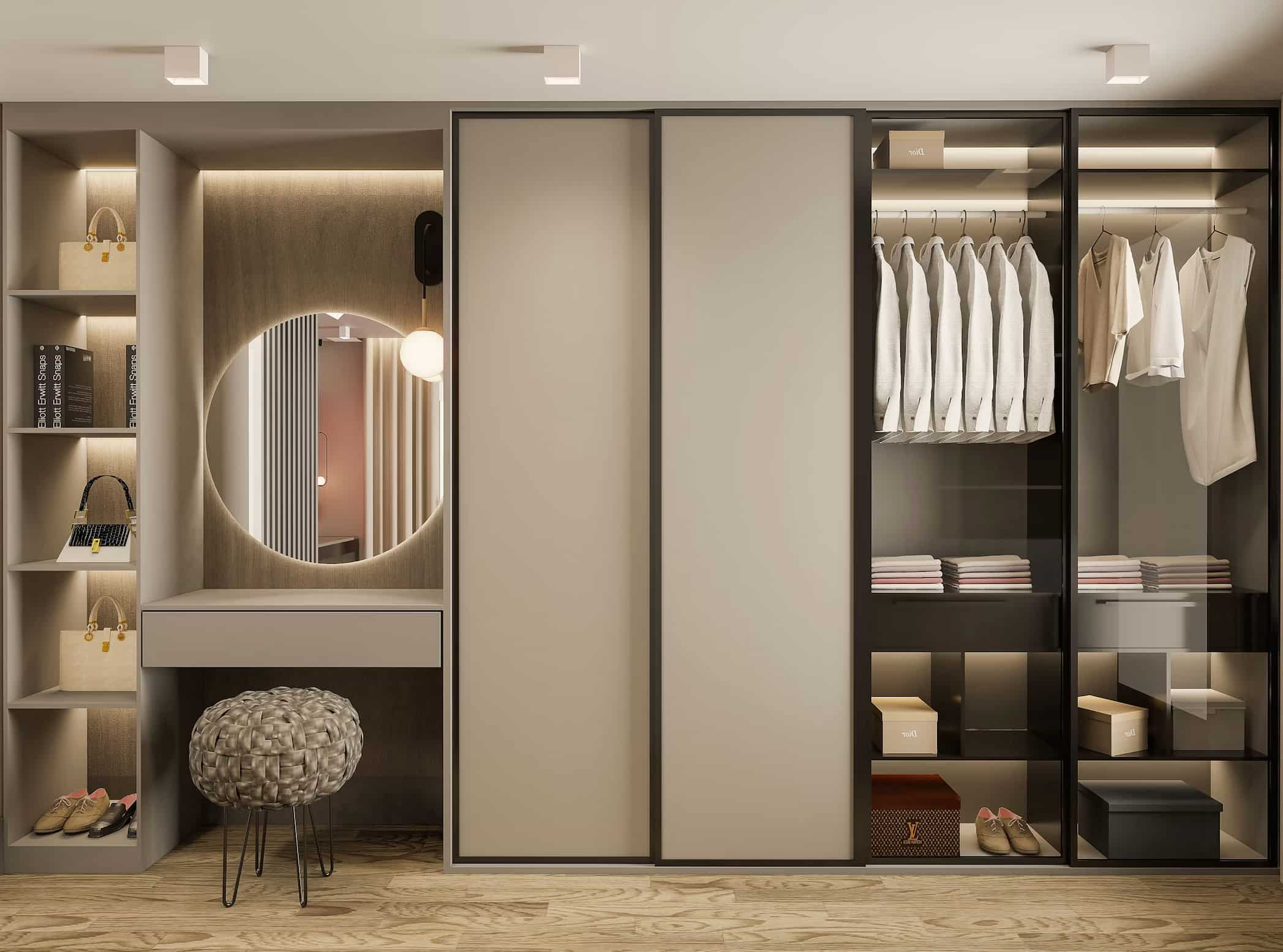
Relevant data shows that,in China's custom furniture market over the past five years, the application rate of embedded LED lighting has surged from less than 15% to 62%. In the high-end custom segment,more than 95% of overall cabinet designs have already reserved integration solutions for lighting systems. In the mid-range market, embedded lighting is rapidly transitioning from an optional feature to a standard configuration.
This not only enhances the functionality of furniture but also endows spaces with unique aesthetic value, becoming a key factor in brand differentiation competition,foreshadowing the explosion of a market worth billions or even trillions of yuan.
Hidden Concerns Behind the Prosperity
Market research shows that over 40% of consumers report flickering light and color temperature deviation issues in furniture with lighting functions purchased; 30% have experienced faults such as circuit short circuits and poor contact. The main reasons are that some companies use inferior LED chips and power drivers to cut costs, resulting in luminaire lifespans less than one-third of the industry standard; different brands have non-uniform interfaces and protocols, leading to poor system compatibility and difficulty in achieving whole-house linkage. More worrying is that lighting furniture produced by some small workshops has not passed 3C certification, posing serious leakage hazards.
These chaotic phenomena not only harm consumer rights but also constrain the long-term development of the industry. The lack of unified standards leads to disorderly market competition, making it difficult for high-quality enterprises to build brand advantages and resulting in insufficient motivation for industry innovation.
In a Small Space: Application Specifications for Furniture Lighting
The application of furniture lighting systems involves the standardization of safety, performance, and design criteria. Currently, there are some international standards that cover electrical systems in furniture, including lighting systems. For example, the UK BS6396:2022 "Specification for Electrical Systems in Furniture" clearly defines the safety requirements for electrical systems in furniture, including power connections, cable routing, and protection measures. This standard applies to all types of furniture and emphasizes the requirement for single-phase power systems (up to 250V AC) to be connected via plugs and sockets compliant with BS 1363 standards.
In China, although there is no national standard specifically for furniture lighting systems, there are relevant standards involving the electrical safety of furniture. For example, GB18584-2024 "Limits of Hazardous Substances in Furniture" regulates the limit values of hazardous substances in furniture, indirectly involving the safety of furniture electrical systems.
The rapid development of furniture lighting systems has exposed deficiencies in existing standards, particularly regarding specifications for the design, production, inspection, and installation of lighting devices within indoor furniture.
Existing lighting standards mostly target independent Luminaire products, whereas furniture-embedded lighting, as a cross-border integrated product, is not simply a 'Luminaire+Movable Furniture', but involves a multidisciplinary intersection of optics, materials, electronics, and structure. Without unified technical specifications, the industry can only engage in low-level repetitive internal friction.
Path to Breakthrough: National Standard Launches
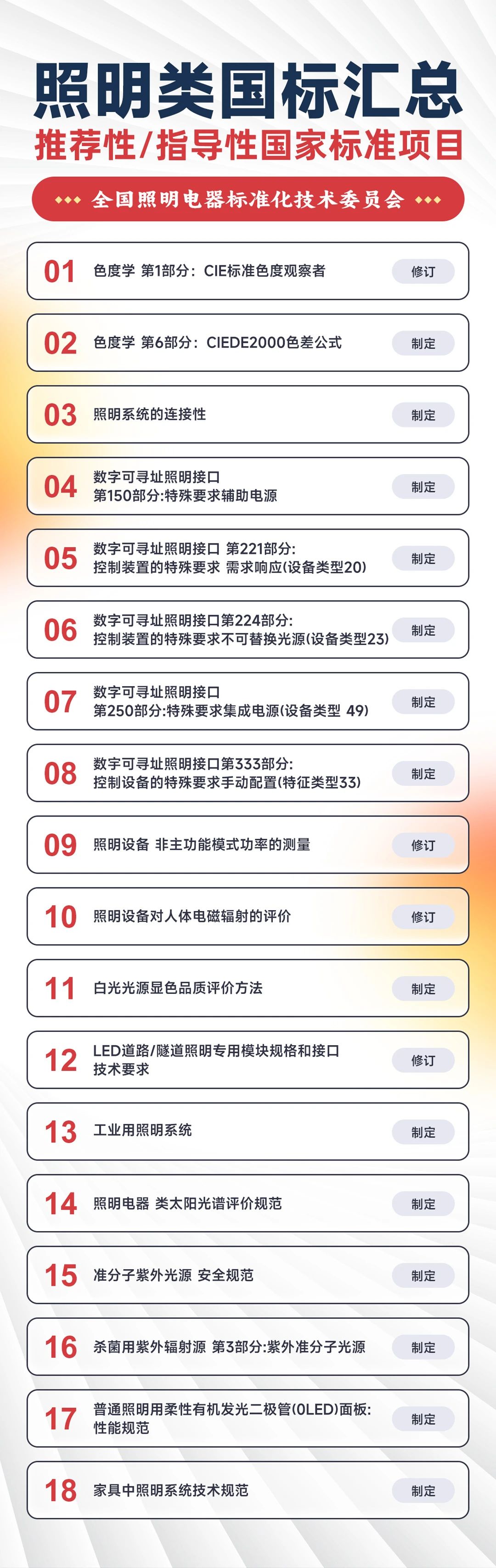
To standardize the design, installation, and use of furniture lighting systems, the national standard project "Technical Specifications for Lighting Systems in Furniture," jointly under the administration of SAC/TC 224 and the National Technical Committee on Furniture Standardization, has officially launched the call for drafting organizations.
This call targets LED lighting enterprises, furniture manufacturing companies, research institutes, industry associations, and other entities, aiming to gather wisdom from the entire industry chain to formulate comprehensive standards covering design, production, testing, and installation. By unifying technical parameters, standardizing interface protocols, and clarifying safety indicators, it provides solid normative support for industry development, offers consumers safer and more efficient furniture lighting solutions, and thereby enhances the overall quality level of China's furniture industry.
To every "light chaser"
The formulation of the National Standard (mandatory / recommended) "Technical Specification for Lighting Systems in Furniture" is a "collective upgrade" for the industry and, more importantly, a solemn commitment to "beautiful homes". Participating in the drafting of standards is not only an opportunity for enterprises to enhance their technical capabilities and seize market opportunities, but also a social responsibility to drive industry progress.
We look forward to industry colleagues actively participating to jointly draw up the blueprint for the Technical Specification for Lighting Systems in Furniture, so that every beam of light can illuminate a quality life.
China Light
The official website of the China Association of Lighting Industry and a full-media platform for the lighting sector. We provide authoritative and timely lighting information while striving to be a growth partner for businesses. From brand promotion and channel expansion to consulting, talent training and participation in standards development, we provide comprehensive professional services to help businesses improve quality and efficiency and jointly advance the high-quality development of the lighting industry.
Business Contacts
仇纯 (Ms.): 158 6155 3579
顾君 (Mr.): 137 7157 5253