
Beijing's "Multi-Pole Integration Construction and Management Specification" Officially Released!
Recently, the Beijing Municipal Administration for Market Regulation officially released DB11/T2327-2024 "Multi-Pole Integration Construction and Management Specification", setting a new standard for the integration of urban road poles and cabinets, and powerfully driving urban infrastructure towards refinement and intelligence.
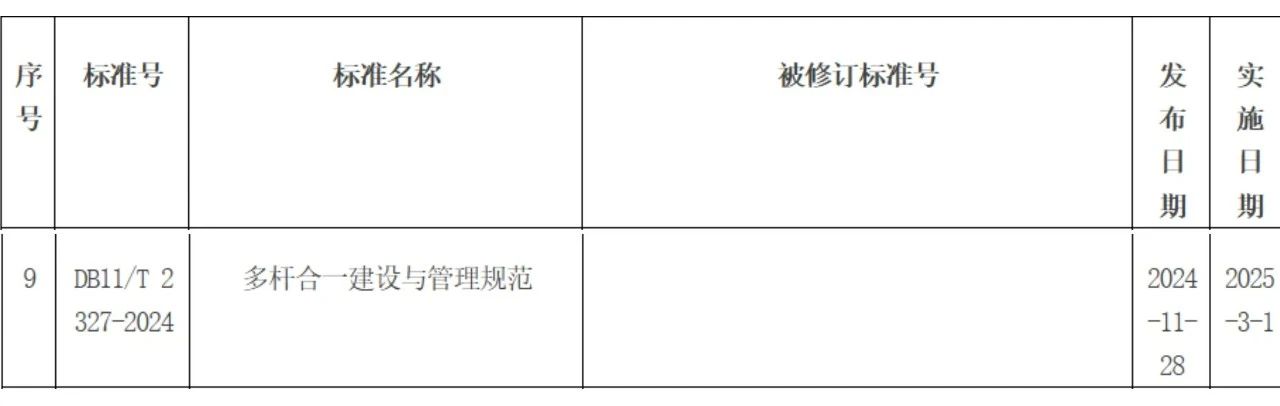
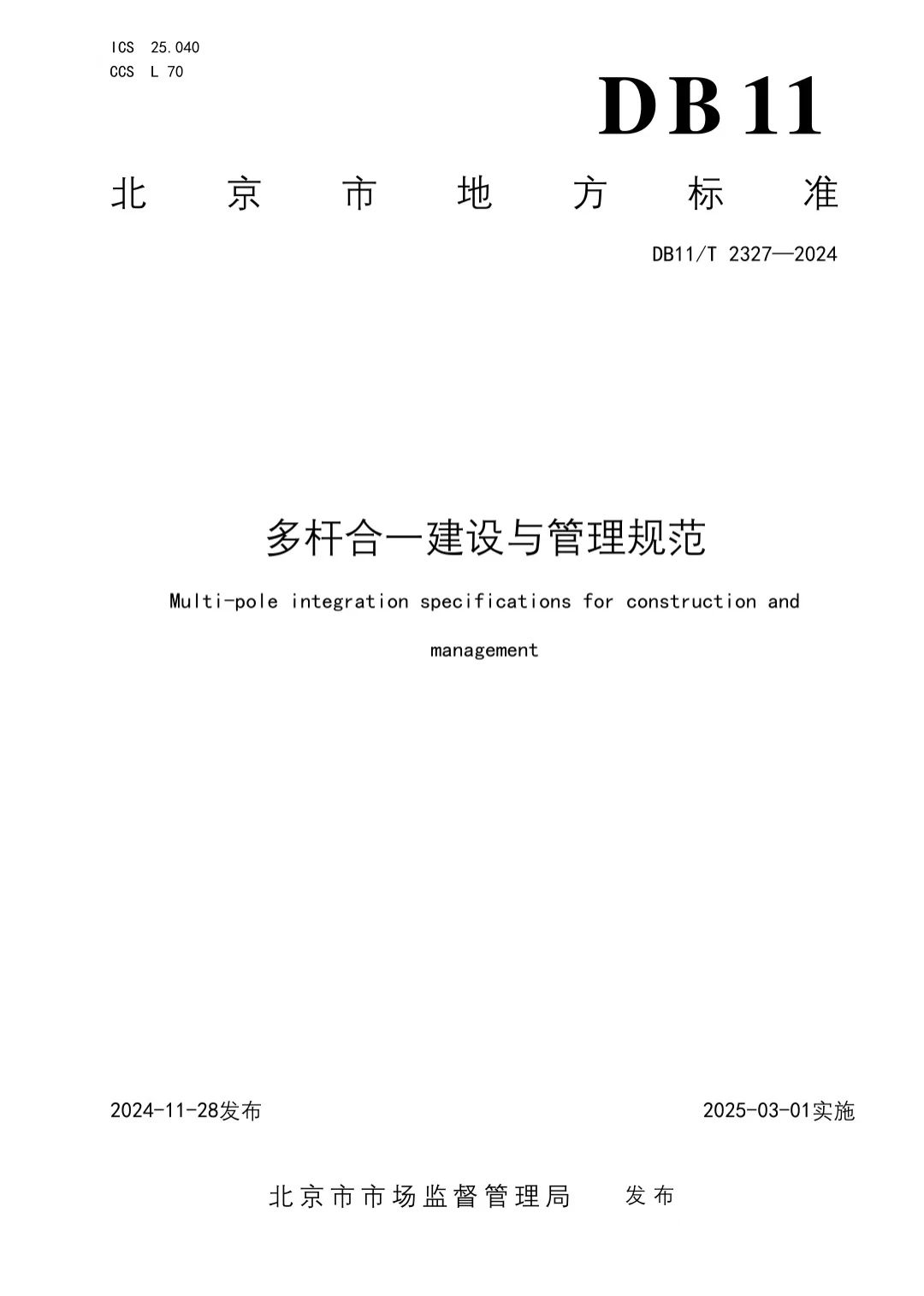
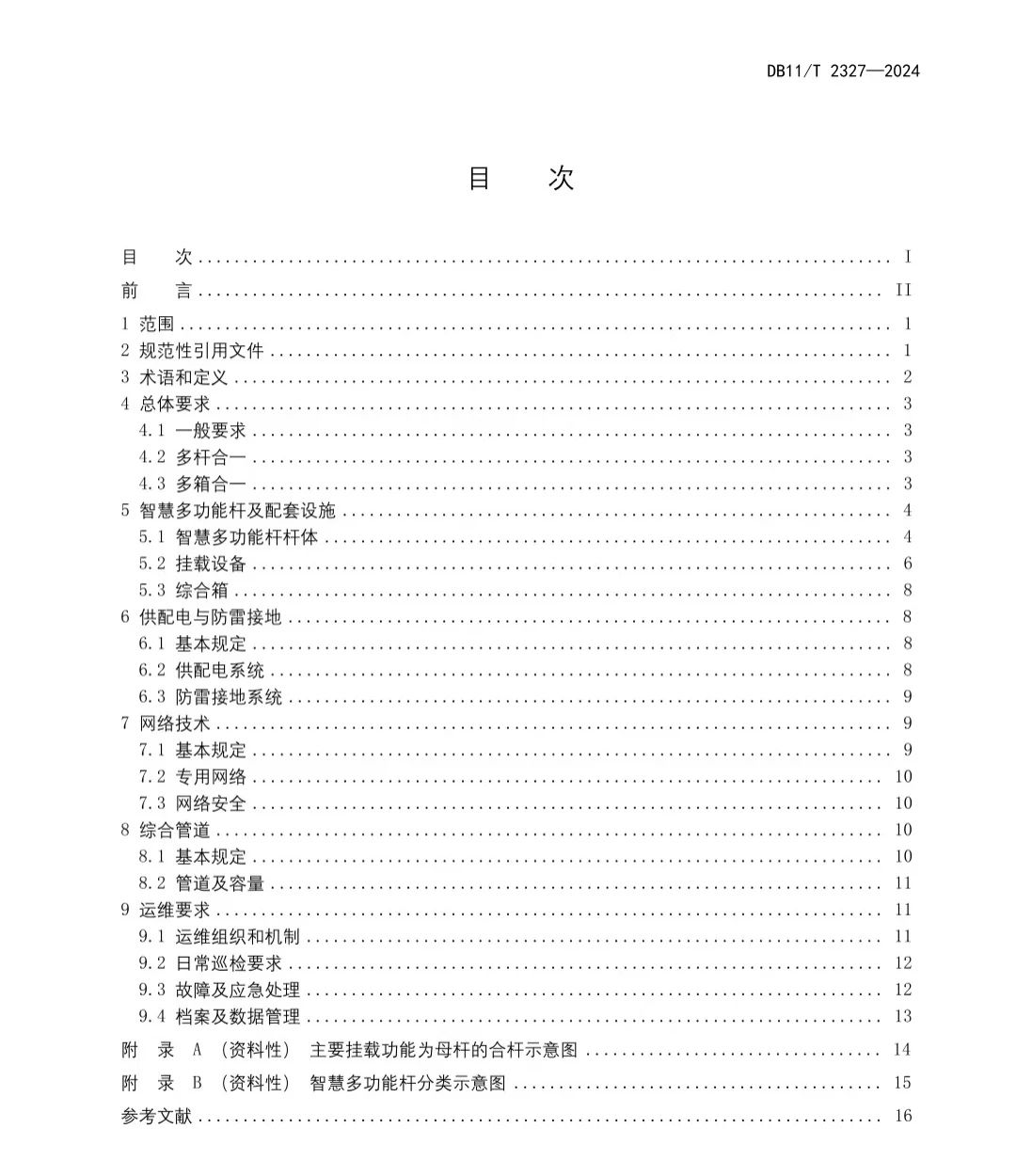
According to relevant specification requirements, Beijing will follow the "integration where possible" principle, selecting mother poles in the priority order of street light poles and traffic facility poles, and using technical measures such as multi-box integration and pole-box integration to intensively integrate various types of poles, equipment, and cabinets.
1
Integrated Pole Construction: Coordinated Advancement Based on Multiple Principles
The integrated pole construction is closely aligned with actual road conditions, adhering to principles that prioritize safety, compliance, and aesthetics. During integration, ensure the pole structure is stable and equipment installation follows standards, complying with regulations. The pole and cabinet styles must blend with surrounding landscapes to enhance urban image. Emphasis is placed on forward-looking reservations and resource integration; smart multi-function poles and supporting facilities create conditions for future device mounting by planning reserved load capacity and interfaces, avoiding secondary renovations. Through technologies such as integrated cabinets and pole-cabinet integration, various poles are consolidated to reduce waste, improve space utilization, lower costs, and achieve optimized resource allocation.
Construction also emphasizes synchronous planning and coordinated design, advancing in synergy with multiple road engineering projects. In the early planning stage, integrated poles are incorporated, considering factors such as mother pole locations, road cross-sections, and underground pipelines. When constructing new roads, pole positions and functional layouts are determined; during reconstruction, expansion, or major repairs, plans are adjusted based on existing conditions, utilizing current pole foundations to minimize impact on traffic and the environment, ensuring seamless project integration, avoiding redundant investment, and enhancing the efficiency and benefits of urban construction.
2
Implementation of Integrated Poles: Comprehensive Detailed Planning
1. Selection and Integration Scope of Main Poles: Following the principle of 'combine where possible', street light poles and traffic facility poles are prioritized as main poles due to their widespread distribution and critical functional importance. Street light poles can mount public WLAN equipment, while traffic facility poles integrate devices such as traffic signal controllers, expanding pole functions and enabling centralized management. Multi-pole integration covers various pole types including lighting, traffic signal control, traffic violation monitoring and recording, road traffic signs, public transport passenger signs, network communication, and public signage. Each pole type mounts different equipment; for example, lighting poles mount luminaires and controllers, while traffic signal control poles mount signal lights and detection equipment.
2. Integrated Design and Functional Assurance: Conduct integrated design in accordance with regulations, balancing diverse functional requirements such as lighting, traffic, security, environmental protection, and communication to ensure device compatibility and synergy. Pole structure design precisely calculates strength, stiffness, and stability based on the weight, distribution, and wind load of mounted equipment, ensuring safety and reliability in complex environments. After pole integration, device functionality remains uncompromised, strictly adhering to standards for luminaire brightness, traffic signal display, and monitoring image acquisition and transmission, achieving functional integration and performance optimization to build an efficient and intelligent road facility system.
3. Flexible Disposal of Special Facilities: Facilities with special construction management requirements may be mounted on independent poles. Large power or communication cabinets, due to specific spatial or environmental needs, may be set up independently. When mounting on independent poles, attention must be paid to coordination with surrounding multi-pole integration facilities, optimizing layout and appearance to reduce negative impacts on landscape and space utilization.
3
Multi-Cabinet Integration Planning: Optimizing Efficiency through Integration
1. Integration of cabinets and integrated design: In addition to large independent power supply cabinets and communication cabinets, the required cabinets for roadside supporting equipment such as security prevention, traffic management, and urban management are also included in the integration scope, implementing "multi-cabinet integration" and achieving cabin management and unified maintenance. Comprehensive cabinets can integrate supporting cabinets for security monitoring, traffic monitoring, optical cable handover, wireless communication, etc. Where conditions permit, pole bodies and comprehensive cabinets should prioritize the integrated design of "pole-cabinet integration". Independent comprehensive cabinets should be set at key locations such as road intersections and should preferably have smart management functions. The design concept of pole-cabinet integration can effectively reduce the land area occupied by road facilities, improve overall aesthetics. At the same time, it facilitates centralized management and maintenance of equipment, allowing remote monitoring, control, and warning of equipment inside the cabinet, such as real-time monitoring of equipment status, battery level, temperature, etc. In case of abnormalities, timely alarms can be issued and control measures such as power off or restart can be taken, improving equipment management efficiency and intelligence levels, ensuring stable operation of road facilities.
2. Principles and technical requirements for cabinet integration: Comprehensive cabinets follow the principle of prioritizing integration of cabinets of the same industry and voltage level, conforming to technical standards and avoiding electromagnetic interference and electrical safety issues. Cabinets that do not meet the conditions for integration can be set up independently, but must follow the principles of overall layout and aesthetic coordination. When there are many mounting functions on the pole body, an independent comprehensive cabinet is often set up to avoid equipment crowding and poor heat dissipation. In terms of installation environment, avoid areas with chemical corrosion and severe vibration; if necessary, apply anti-corrosion treatment to ensure good ventilation and extend the life of the cabinet and equipment. Comprehensive cabinets pursue miniaturization, concealment, and landscaping, with waterproof, dustproof, and anti-theft features, with an ingress protection rating of not less than IP55, complying with GB/T 4208 regulations, perfectly blending into the urban road landscape.
4
Specification for mounted equipment: Scientific configuration promotes efficiency
1. Diverse adaptation of mounted equipment: Smart multifunctional poles support the mounting of various devices, including municipal power distribution, USB interface charging, one-touch calling, touch screens, lighting luminaires, traffic signals and monitoring, network communication, public signage, environmental and meteorological monitoring, etc., selected flexibly according to city road service functions and smart multifunctional pole application scenarios, with performance indicators strictly adhering to relevant standard specifications. Traffic signal equipment follows national standards, lighting luminaires conform to road lighting norms, environmental monitoring equipment ensures monitoring accuracy and stable data transmission, providing solid support for multiple needs of city roads.
2. Hierarchical configuration for orderly layout: Mounted devices are configured in four layers based on type and function. The first layer, below 2.5 meters, hosts municipal power distribution and USB charging interfaces, along with equipment close to citizens' daily lives and pole maintenance; the second layer, from 2.5 to 5.5 meters, focuses on urban rail transit guidance and public bus/electric vehicle station signage; the third layer, from 5.5 to 8 meters, carries route signs, motor vehicle traffic signals, and other traffic control and data collection equipment; the fourth layer, above 8 meters, primarily includes lighting luminaires and meteorological sensors for high-altitude adaptation. This hierarchical configuration maximizes device efficiency, facilitates maintenance management, and ensures an orderly visual layout.
The issuance of DB11/T2327-2024 "Code for Construction and Management of Multi-Pole Integration" marks a major breakthrough in Beijing's urban infrastructure construction and management, effectively promoting the integration of urban pole resources and smart upgrades, enhancing refined management levels, creating a convenient, aesthetically pleasing, and intelligent urban living environment for citizens, providing clear technical guidelines and normative basis for the lighting industry and related fields participating in urban construction, and fostering orderly development and technological innovation in the multi-pole integration sector.
China Light
The official website of the China Association of Lighting Industry and a full-media platform for the lighting sector. We provide authoritative and timely lighting information while striving to be a growth partner for businesses. From brand promotion and channel expansion to consulting, talent training and participation in standards development, we provide comprehensive professional services to help businesses improve quality and efficiency and jointly advance the high-quality development of the lighting industry.
Business Contacts
仇纯 (Ms.): 158 6155 3579
顾君 (Mr.): 137 7157 5253