
Shenzhou-19 to launch tomorrow! Join astronauts for an immersive tour of the 'Space Vegetable Garden'
The press conference for the Shenzhou-19 manned flight mission was held this morning (October 29) at the Jiuquan Satellite Launch Center. The spokesperson announced that, following a decision by the Mission Command Headquarters, the Shenzhou-19 manned spacecraft will be launched at 04:27 Beijing Time on October 30.
The Shenzhou-18 crew's schedule for returning to Earth has also entered countdown mode. Just a few days ago, the three astronauts who have been working and living in space for nearly half a year, amidst their busy schedules, carefully recorded a video to take everyone on a virtual visit to our Chinese home in space.
The astronauts conducted multiple space science experiments and trials in space. In the video, Li Guangsu proudly showed everyone his 'vegetable garden' in space—a 'space vegetable garden' full of vitality and hope. In this special garden, vegetables are growing vigorously, providing fresh ingredients for the astronauts while also becoming a beautiful sight in their space life.
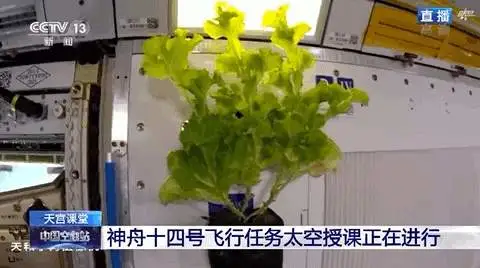
"We grew two types of plants in the space vegetable garden. One is cherry tomatoes, which are growing quite well, and we will soon enjoy their sweet and delicious fruits. The other is lettuce, where the yellowed areas on the root and stem indicate the parts we previously harvested for consumption. Being able to eat fresh vegetables in space is a delightful experience, and these green plants also bring us a refreshing mood amidst our busy work," said astronaut Li Guangsu.
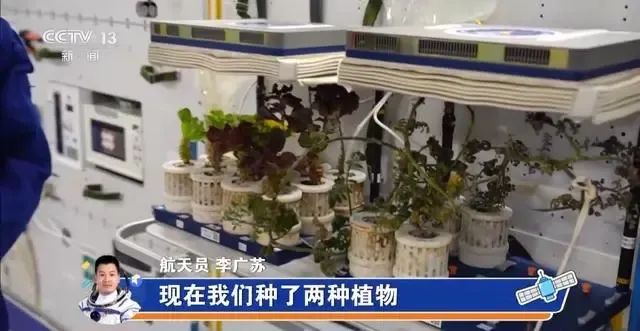
In the video, you can see that these vegetables are thriving, with lush green leaves and plump, tempting fruits. Cherry tomatoes hang from every branch, their red fruits seemingly showcasing their abundant harvest to the astronauts. Meanwhile, lettuce covers the entire planting area, with tender green leaves sparkling in the sunlight.
It is reported that all these vegetables adopt soilless cultivation and drip irrigation technology , precisely controlling environmental factors such as light, temperature, and humidity , ensuring they can thrive here.
Growing these vegetables is not easy. Chinese researchers have conducted extensive studies on space plant cultivation.
In the microgravity environment of space, plant growth faces many challenges. For example, the supply of water and nutrients is a difficult problem. Due to weightlessness, water and nutrients cannot automatically flow into plant roots as they do on Earth. Therefore, researchers developed a special irrigation system that precisely controls the amount and rate of water supply, ensuring plants can fully absorb the required water and nutrients.
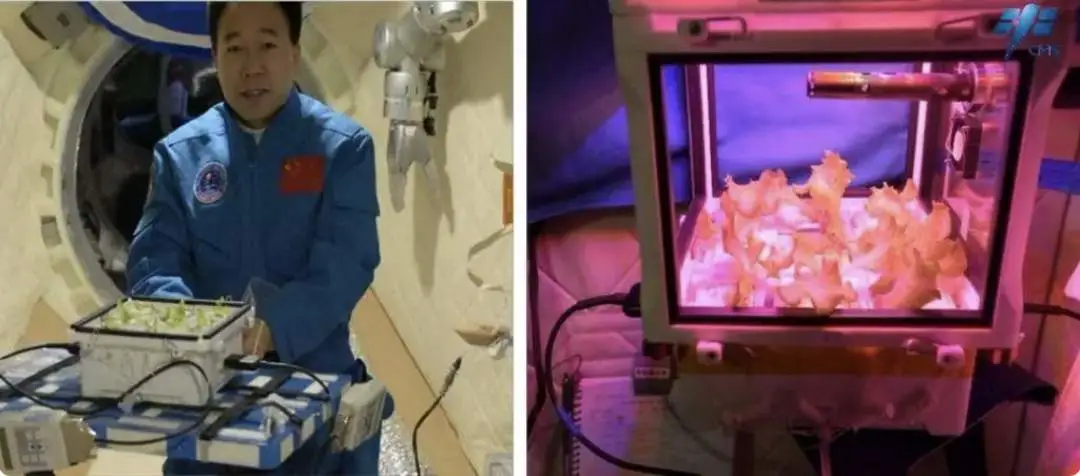
For example, lighting is also a key factor. In space, without natural light, plants cannot perform photosynthesis. Therefore, researchers have installed artificial light sources in the "Space Vegetable Garden" and adjusted the wavelength and intensity of the light to provide optimal growing conditions for the plants. These light sources not only meet the plants' growth needs but can also simulate light changes at different times of day, allowing plants to carry out normal physiological activities just as they do on Earth.
The "Space Vegetable Garden" is also equipped with various monitoring devices that can monitor plant growth status and environmental parameters in real time.
It is reported that there are mainly three purposes for planting plants in space:
01 First, use the space laboratory platform to study the effects of special environments such as microgravity in space on plant growth, development, physiology, biochemistry, etc.
02 Second, provide food, oxygen, and water for astronauts. Plants can absorb carbon dioxide produced by astronauts through photosynthesis, produce oxygen, purify the enclosed cabin environment to some extent, and obtain fresh air; produce food to provide astronauts with fresh vegetables and fruits, supplement vitamins and dietary fiber, and enrich the astronaut's diet; in addition, through the transpiration of plants, water purification within the closed system can be achieved, providing astronauts with pure water.
03 Plants can provide astronauts with a green and vibrant environment. Caring for plants helps alleviate astronaut stress and positively regulates their psychological emotions.
China Light
The official website of the China Association of Lighting Industry and a full-media platform for the lighting sector. We provide authoritative and timely lighting information while striving to be a growth partner for businesses. From brand promotion and channel expansion to consulting, talent training and participation in standards development, we provide comprehensive professional services to help businesses improve quality and efficiency and jointly advance the high-quality development of the lighting industry.
Business Contacts
仇纯 (Ms.): 158 6155 3579
顾君 (Mr.): 137 7157 5253