
Important Statement Regarding Mercury-Added Lighting Products!
LightingEurope statement on mercury-added projection and
stage use ultra-high performance discharge lamps statement
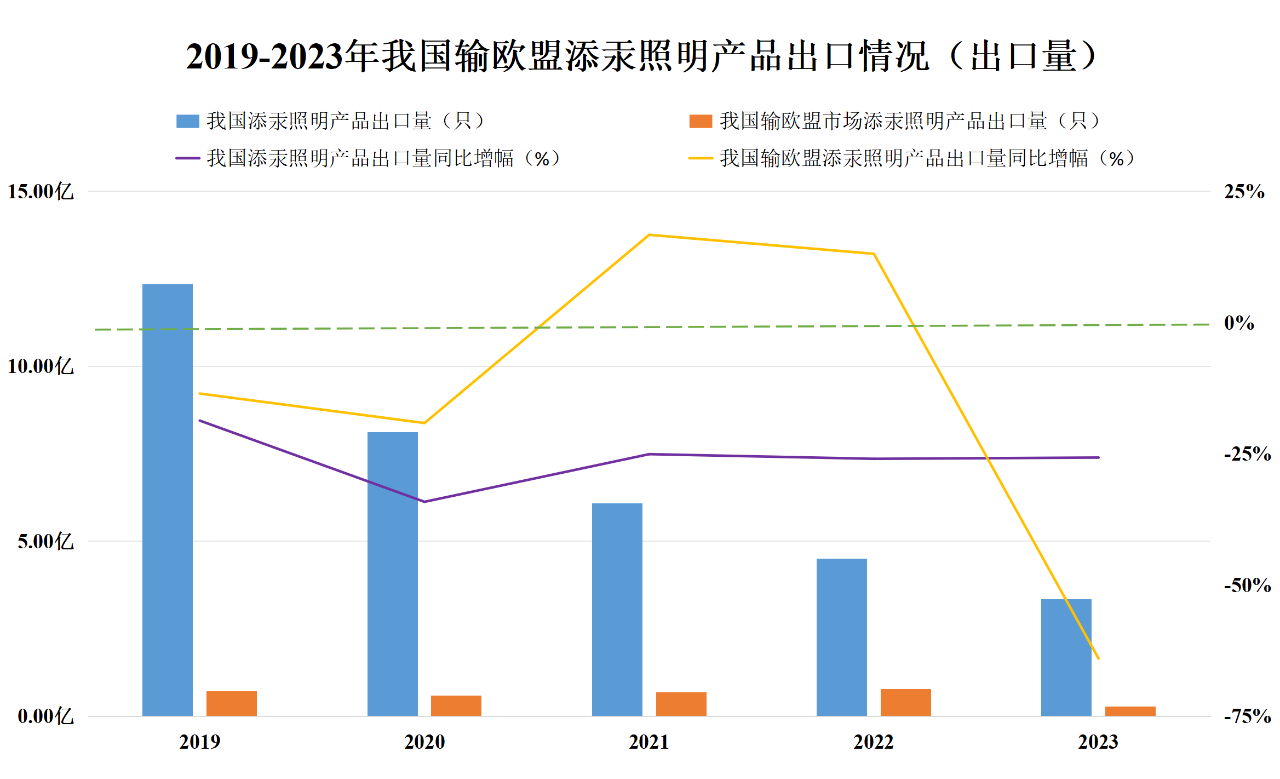
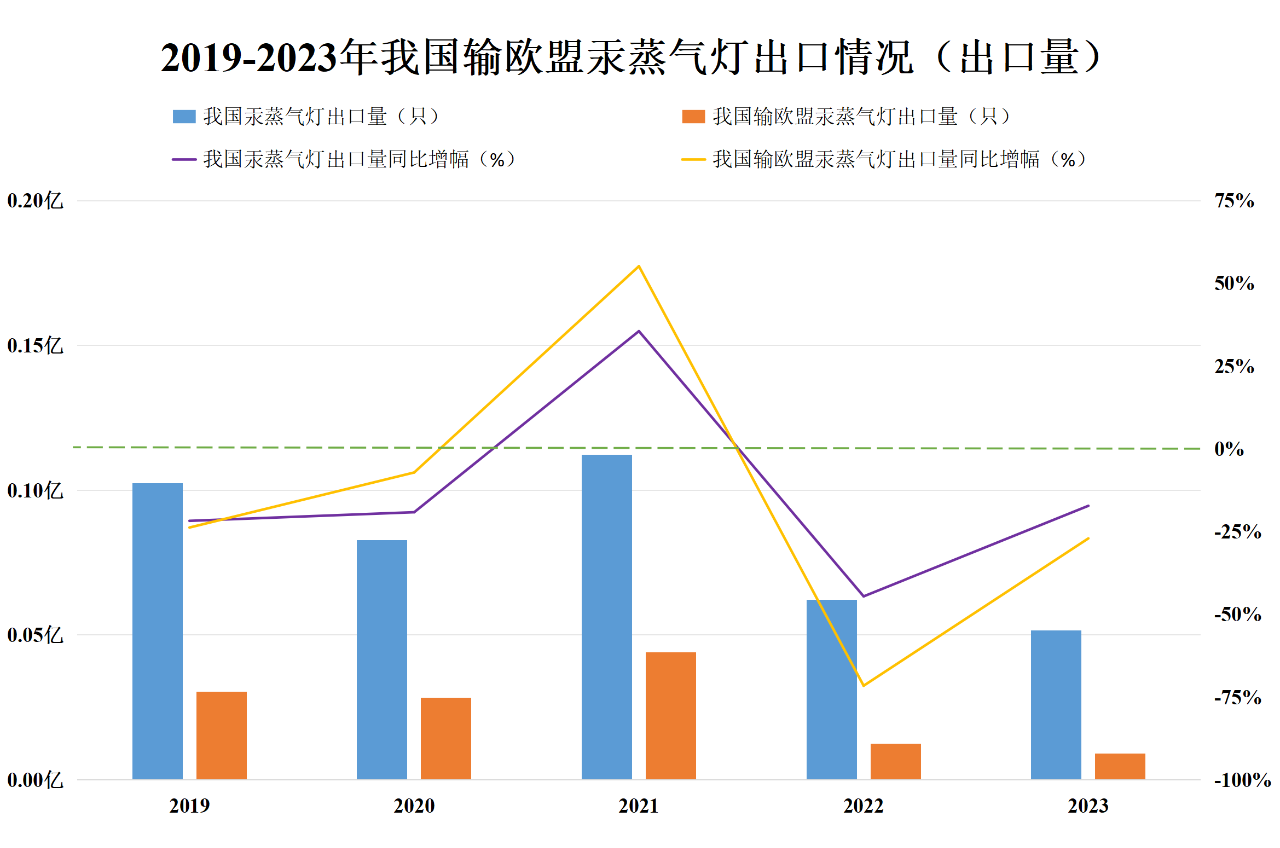

EU regulations allow the continued use of ultra-high performance discharge lamps
Mercury-added products are regulated by the EU Mercury Regulation (EU 2017/857) and the RoHS Directive (2011/65/EU). In recent weeks, misleading claims have caused confusion in the market, suggesting that mercury-added ultra-high performance discharge lamps for projection and stage use are already restricted by the latest review of the aforementioned EU rules. This statement is intended to clarify these rumors.
EU Mercury Regulation (EU 2017/857)
In accordance with the requirements of the Minamata Convention on Mercury, the EU Mercury Regulation restricts the manufacture, export and import of certain mercury-added products, including certain mercury-added lighting products. These items are listed in the annexes to the regulation, as shown in the figure below.
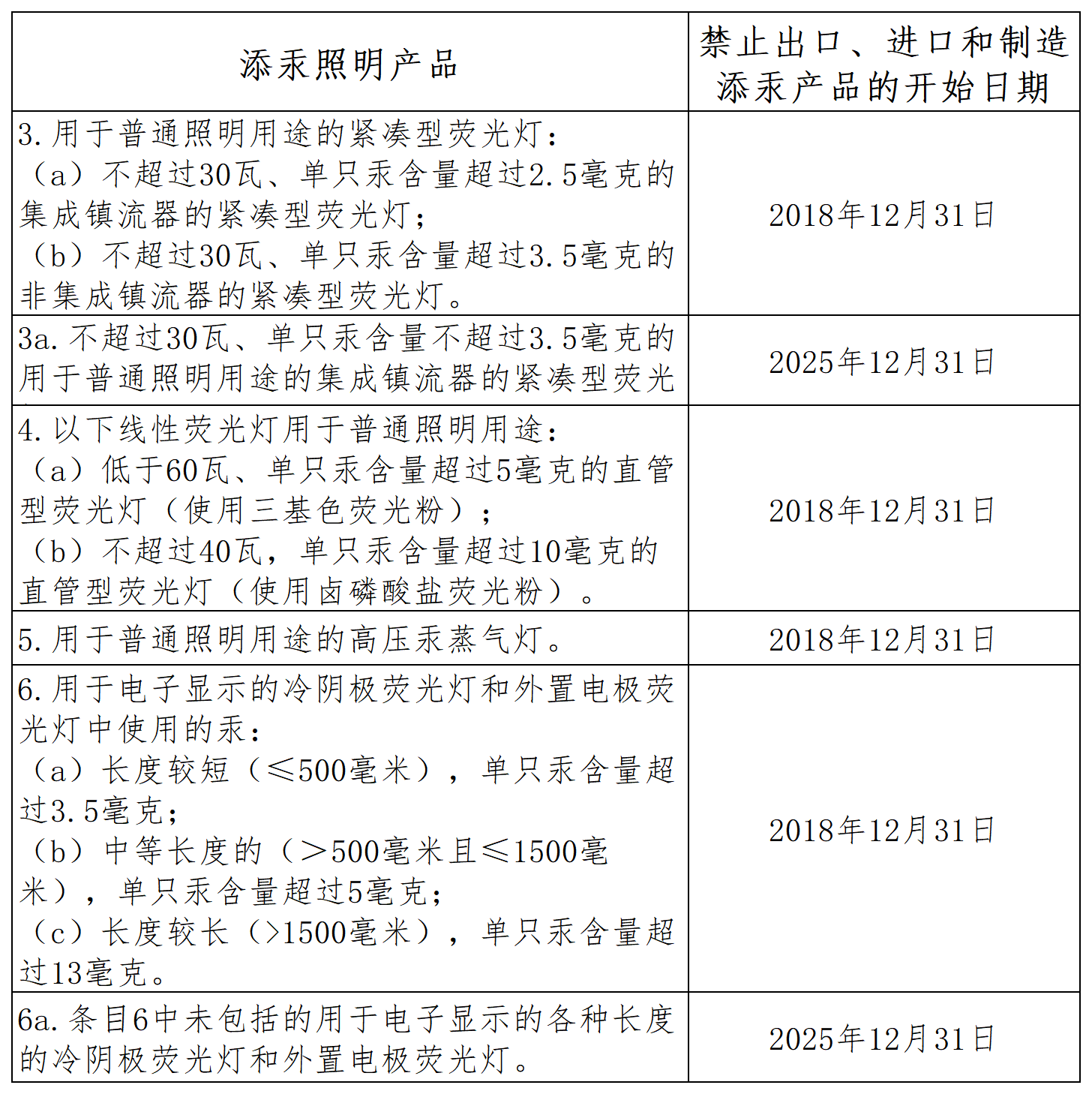
The European Commission expanded this list in October 2023 (EU 2023/2049), and policymakers proposed new additional restrictions in early 2024, focusing on certain types of low-pressure fluorescent lamps (tri-color phosphor/halophosphate phosphor) and certain types of high-pressure sodium lamps.
In the latest revisions of the Minamata Convention on Mercury and the EU Mercury Regulation, HID lamps for special purposes (such as projection lamps) are not restricted.
EU RoHS Directive (2011/65/EU)
The EU RoHS Directive sets out requirements for placing electrical and electronic equipment containing certain hazardous substances on the EU market. Relevant legislation stipulates that, except for lighting products explicitly exempted by this Directive, other mercury-added lighting products will be prohibited. These exemptions are granted by the European Commission for a limited period. However, the listed expiry dates are usually not the final prohibition dates, as these exemptions can be extended for a certain period upon application. During the assessment period for such renewal applications, existing exemptions remain valid, potentially even beyond the listed expiry dates. If renewal is not approved, the European Commission must still grant a transition period of 12–18 months to allow time for final phase-out in the market.
Current RoHS exemptions for mercury-added projection lamps:
RoHS exemption 4(f)-II allows use until February 24, 2027, for high-luminance projection lamps (>2000 ANSI lumens). Since projector manufacturers anticipate that mercury-added projection lamps will still be needed after February 2027, the lighting industry is expected to apply again in 2025 for a 5-year exemption renewal.
RoHS exemption 4(f)-I includes low-luminance projection lamps (<2000 ANSI lumens) and stage lights. LightingEurope and several relevant industry associations jointly applied to extend this exemption by 5 years.The current exemption will remain valid after February 24, 2025, until the European Commission makes a decision on the new renewal or transition period.
Click to view the original policy text
Sample Preparation for Mercury Content Testing of Discharge Lamps
National standard to be implemented
According to information released by the National Public Service Platform for Standards Information, the national standard "Sample Preparation for Mercury Content Testing of Discharge Lamps" will be implemented starting June 1. This national standard is under the jurisdiction of SAC/TC 224.
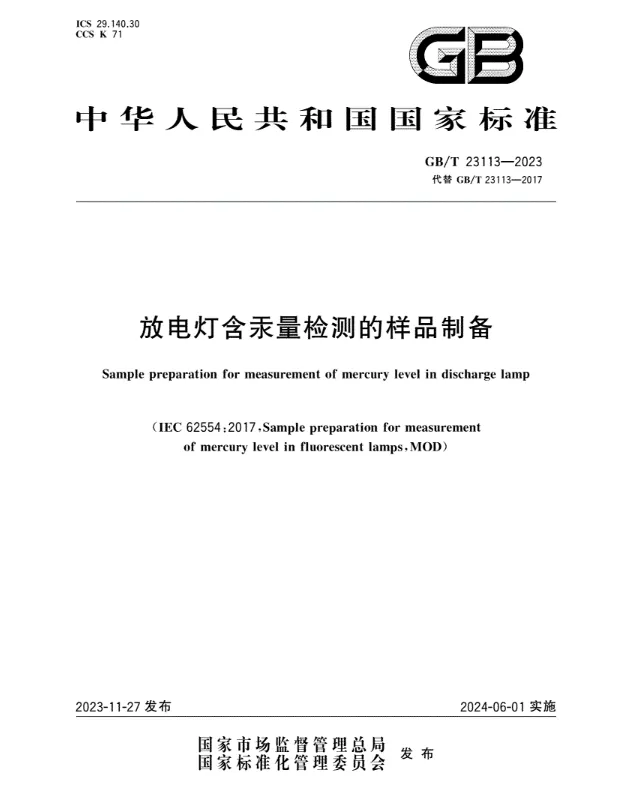
Standard number: GB/T 23113-2023
Implementation date: 2024/6/1
Responsible unit: SAC/TC 224 (SAC/TC224)
Main drafting units: Quality and Metrology Supervision and Testing Institute of Zhongshan City, Guangdong Province; Shenzhen Lighting and Display Engineering Industry Association; Beijing Electric Light Source Research Institute Co., Ltd.
Significance of the standard:In certainGas discharge lamp, such as Fluorescent lamp (including single-capped, double-capped, self-ballasted and cold cathode fluorescent lamps) tubes and UV-CGas discharge lamp sources, mercury is an essential substance for the normal operation of discharge lamps. According to the requirements of the Minamata Convention on Mercury, the state encourages and promotes the production of low-mercury products and promotes the application of Green lighting products. Therefore, how to accurately measure the mercury content in Gas discharge lamp, so that the mercury content can meet the standard requirements while the Gas discharge lamp meets the performance requirements, is very important.
Due to continuous technological development, the current usage of ultraviolet germicidal lamp tubes has increased significantly. Compared with other Gas discharge lamp tubes, ultraviolet germicidal lamp tubes require more mercury to be injected into the tube, but the original standard lacked preparation methods for measuring the mercury content in such discharge lamps. The revision of this standard will fill the gap in the sample preparation methods for measuring the mercury content in discharge lamps such as ultraviolet germicidal lamps in China's current standards, and at the same time make China's testing technology level in this field lead the international level.
The standard includes: Scope, Normative references, Terms and definitions, Overview, Procedure for collecting mercury from discharge lamps, Testing.
Compared with the replaced standard, apart from structural adjustments and editorial changes, the main technical changes in the new version are as follows:
— Changed the scope of the document;
— Added a chapter on "Terms and definitions";
— "Fluorescent lamp" in the document was changed to "discharge lamp";
—Changed the general requirements for the laboratory;
—Removed some unused chemical laboratory equipment;
—Changed the lamp ignition method using the cold-end method;
—Changed the method for cutting the lamp tube;
—Removed redundant operations;
—Changed the requirements for filtration;
—Changed the requirements for analytical testing.
This document is modified to adopt IEC 62554:2017 "Sample preparation for determination of mercury content in fluorescent lamps". Compared with IEC 62554:2017, this document has made the following structural adjustments:
—Annex A corresponds to Annex B in IEC 62554:2017, and Annex B corresponds to Annex A in IEC 62554:2017.
The technical differences between this document and IEC 62554:2017 and their reasons are as follows:
—The scope of the document has been revised to meet the actual needs of products in China;
—Terms and their definitions have been deleted, and terms from GB/T 2900.65 have been added by reference to align with China’s technical conditions;
—The general requirements for laboratories have been revised, replacing ISO/IEC 17025:2005 with GB/T 27025 to align with China’s technical conditions;
—The requirements for water have been revised, replacing ISO 3696:1987 with GB/T 6682 to align with China’s technical conditions;
—Some unused chemical laboratory equipment has been removed to reflect practical operational needs;
—Changed the lighting method of the cold-end method to accommodate certain discharge lamps with very high tube wall temperatures during operation;
—Changed the tube cutting method to provide more tube cutting options;
—Changed the concentration of nitric acid used to ensure safe use;
—Changed the requirements for analytical testing, replacing IEC 62321-4 with GB/T 39560.4 to adapt to China’s technical conditions.
This standard is implemented by the Electric Light Source and Accessories Subcommittee of SAC/TC 224 (SAC/TC224/SC1). Contact: 010-6778989-4103.
China Light
The official website of the China Association of Lighting Industry and a full-media platform for the lighting sector. We provide authoritative and timely lighting information while striving to be a growth partner for businesses. From brand promotion and channel expansion to consulting, talent training and participation in standards development, we provide comprehensive professional services to help businesses improve quality and efficiency and jointly advance the high-quality development of the lighting industry.
Business Contacts
仇纯 (Ms.): 158 6155 3579
顾君 (Mr.): 137 7157 5253