
The lighting control market will grow to $10 billion
Smart lighting control system is an intelligent lighting system based on IoT technology, enabling remote control and management of lighting devices through network connections and sensors. With technological advancements and improved living standards, smart lighting control systems are widely used in residential, commercial, and industrial sectors.
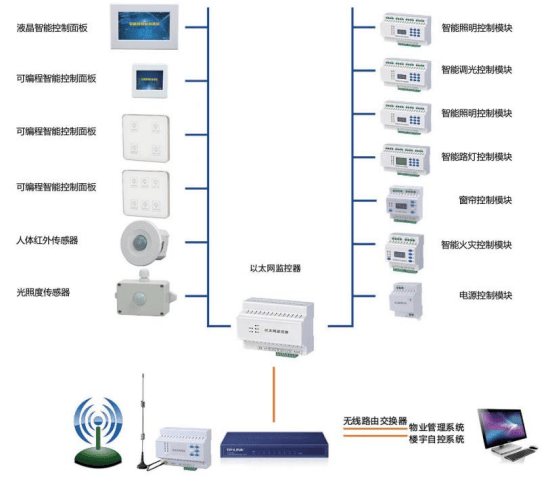
Image source: Internet
As energy saving LED lighting systems become increasingly common, opportunities to improve light source efficiency are becoming more limited, and the addition of lighting controls may become an important mechanism for reducing lighting energy consumption. Energy and building codes mandate the use of lighting controls in commercial and industrial buildings, which strongly drives this market. To reduce energy consumption and the resulting greenhouse gas (GHG) emissions, increasingly stringent regulations are being adopted, applicable to a wider range of building projects.
Despite the market's considerable growth potential, multiple challenges are limiting the size of the lighting controls market over the next decade. Energy and building codes increasingly mandate the use of lighting controls in C&I applications, driving growth in lighting control deployments; however, the industry faces resistance due to the total cost of installing lighting control systems and concerns about how the complexity of these systems will impact building operations.
01
Market Size
According to market research reports, the global smart lighting control system market size is expected to grow from approximately USD 5 billion in 2020 to around USD 10 billion in 2025, with a compound annual growth rate of about 16.6%. In the Chinese market, smart lighting control systems also have vast market potential, and the market size is expected to continue growing rapidly.
02
Profitability
The profitability of the smart lighting control system industry is relatively stable. Major companies achieve profitability by providing comprehensive solutions such as hardware equipment, software services, and cloud platforms. In addition, some companies collaborate with real estate developers and property management companies to provide customized smart lighting solutions, thereby gaining more market share and profit.
03
Growth Trend
The smart lighting control system industry is showing strong growth, driven mainly by the following factors: first, the rapid development of the smart home market provides extensive application scenarios for smart lighting control systems; second, energy-saving and emission-reduction policies are encouraging more businesses and individuals to focus on energy saving and environmental protection, creating high market demand for smart lighting control systems in this context; third, continuous technological innovation, such as the application of wireless communication technologies and artificial intelligence technologies, has improved the performance and user experience of smart lighting control systems.
Development of China's Lighting Control Market
Popularization of LED Lighting Technology: As LED lighting technology becomes increasingly popular in the market, traditional lighting equipment is gradually being replaced by LED luminaires. Due to the high potential for intelligence inherent in LED luminaires, this has driven the demand for lighting control systems.
Government policy support: The Chinese government has been encouraging energy saving and environmental protection awareness, and supporting the promotion and application of smart lighting control technology. Government policy support for energy conservation and emission reduction will promote the development of the lighting control market.
Growth of the Smart Home Market: With the booming development of the smart home market, smart lighting control systems have become an important component. The demand for intelligent and convenient home experiences will drive the application of smart lighting control systems.
Urbanization Process: China's urbanization process is accelerating, increasing the lighting demand for urban buildings, roads, and public spaces. Lighting control systems can help achieve intelligent management and improve energy efficiency, thus offering broad application prospects in the urbanization process.
Development of IoT Technology: The continuous advancement of IoT technology also supports the intelligence of lighting control systems. By connecting lighting devices with other smart devices, such as sensors and smartphones, smarter and more automated lighting management will become possible.
Commercial and Industrial Applications: Lighting control systems are widely used in commercial and industrial sectors. For example, smart office buildings, shopping malls, and factories can achieve energy saving and improved comfort through lighting control systems.
Overall, the Chinese lighting control market has huge potential for future development. However, market competition will also become increasingly fierce, and manufacturers need to continuously innovate and improve their technical levels to meet the growing needs of users. At the same time, market regulation and standardization also need to keep pace to ensure healthy and orderly market development.
Comprehensive Summary
China Light
The official website of the China Association of Lighting Industry and a full-media platform for the lighting sector. We provide authoritative and timely lighting information while striving to be a growth partner for businesses. From brand promotion and channel expansion to consulting, talent training and participation in standards development, we provide comprehensive professional services to help businesses improve quality and efficiency and jointly advance the high-quality development of the lighting industry.
Business Contacts
仇纯 (Ms.): 158 6155 3579
顾君 (Mr.): 137 7157 5253