
Will photoinitiator TPO be banned? Where is UV LED curing heading?
Recently, the European Chemicals Agency (ECHA) officially announced that Diphenyl(2,4,6-trimethylbenzoyl)phosphine oxide will be included in the 29th list of Substances of Very High Concern (SVHC). As a result, the number of SVHC candidate substances has increased to 235.
For chemicals listed on the list, relevant companies are responsible for managing chemical risks and providing information to customers and consumers on how to use these chemicals safely. These substances may be added to the authorization list in the future. If a substance is on this list, its use will be prohibited unless the company applies for and receives authorization from the European Commission to continue using it.
The specific information of the newly added substance is as follows:
Substance: Diphenyl(2,4,6-trimethylbenzoyl)phosphine oxide
Chinese Alias: Photoinitiator TPO
EC No.: 278-355-8 CAS
No.: 75980-60-8
Reason for addition: Reproductive toxicity (Article 57(c))
Common applications: inks and toners, coatings, photochemical polymers, adhesives and sealants, fillers, gypsum modeling clay, etc.
01
The Domestic Development Path of UV Curing
Photocuring refers to the curing process of monomer, oligomer, or polymer matrices under light induction, generally used for film formation. The technology features high efficiency, broad adaptability, economic viability, energy saving, and environmental protection.
光固化主要分为传统的汞灯固化和新兴的UV LED固化。因传统的汞灯在不使用后不加适当处理会导致环境造成严重污染,且UV LED固化具备更加节能,可随时开关,体积较小等诸多优点,正逐步取代传统的汞灯固化,成为光固化设备的主流。
Photoinitiators do not account for a high proportion in UV-curing formulations, typically around 2%-5%, yet they are crucial. This is because the occurrence of the UV-curing reaction requires photoinitiators to absorb ultraviolet light and generate free radicals, thereby initiating the polymerization reaction that leads to the final curing and shaping of the product.
Traditional photoinitiators, such as 1173, 184, etc., have their maximum absorption wavelength in the UVC short-wavelength range, making traditional mercury lamp curing more suitable.
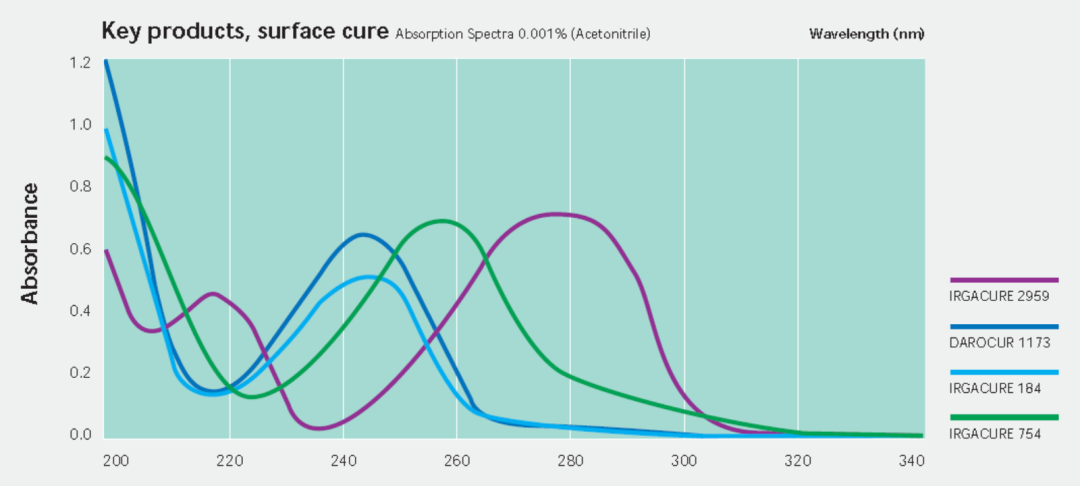
UV LEDs are mainly concentrated in a few bands such as 365nm, 385nm, 395nm and 405nm , where phosphine oxide photoinitiators have relatively strong absorption in these bands, leading to their widespread application in UV LED systems.
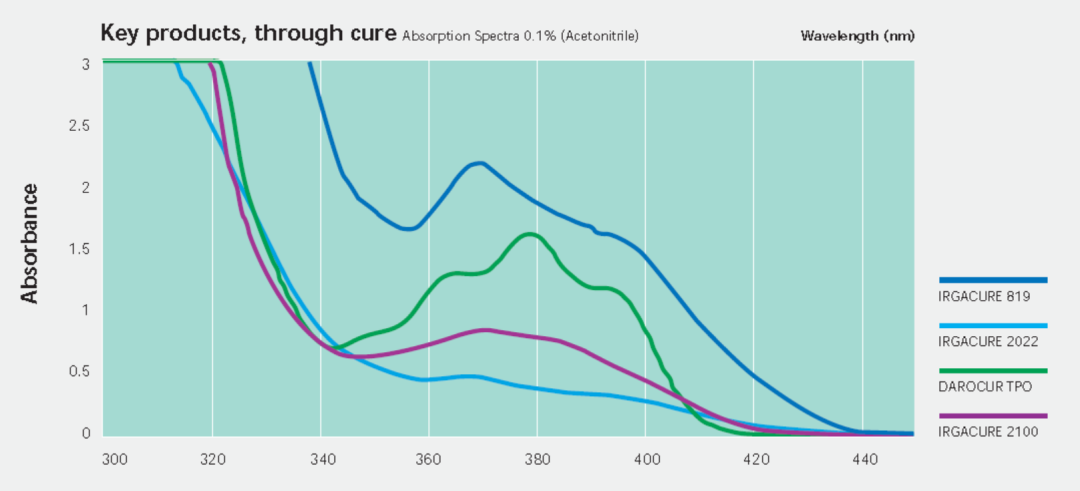
The most representative photoinitiator is TPO. It not only has high initiation efficiency and does not yellow, but its price is also relatively moderate. However, in recent years, the booming rise of UV LED curing has led to a global shortage of TPO supply, making it hard to find any stock; at its peak, the unit price exceeded 300 RMB/kg.
近几年,由于国内主流光引发剂生产商不断扩产,以及新生产商的陆续入局,使得TPO的供应紧张情况得到极大缓解,价格也回落到了百元左右的水平。TPO得以正常供应,也很大地促进了UV LED的发展。
02
TPO toxicity classification and restricted use
Photoinitiators are typically small-molecule organic compounds. In cases of incomplete curing, these photoinitiator molecules may remain in the cured material, forming potential migratory substances. Additionally, in most cases, the radical generation process of photoinitiators occurs via cleavage. These radicals, after final quenching, may form some lower molecular weight compounds. These small-molecule products not only pose migration risks but may also generate toxic substances.
With the widespread use of photoinitiator TPO, its regulation has also strengthened. According to the EU CLP (Classification, Labelling and Packaging) regulations, TPO was initially classified as a Category 2 (H361) reproductive toxicant, i.e., "suspected human reproductive toxicant."
In June 2020, Sweden proposed reclassifying it as 1B (H360DF) and adding it as a skin irritant (H317). This conclusion is based on extensive animal testing evidence. (1B refers to "Presumed human reproductive toxicant" )
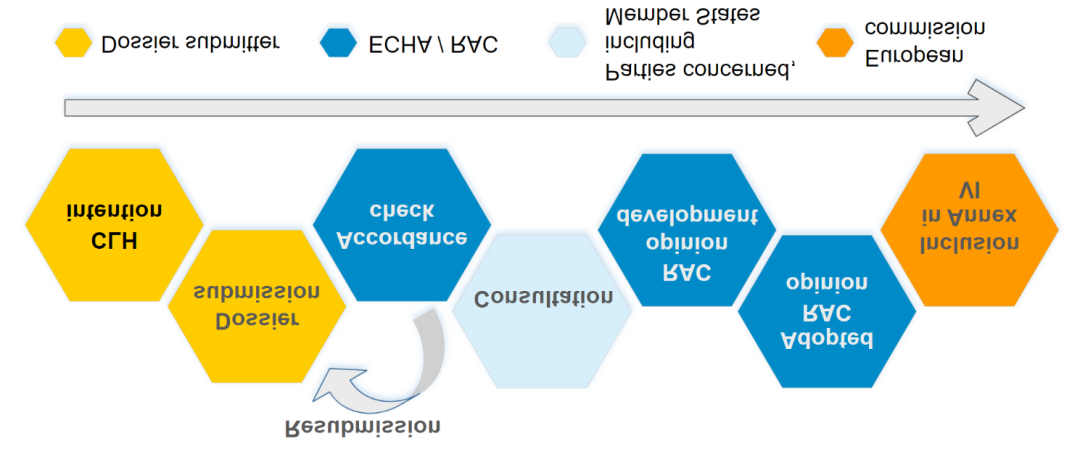
EU harmonised classification and labelling (CLH) process
In autumn 2021, the EU's Risk Assessment Committee (RAC) agreed to update the classification of TPO. Once approved by the European Commission, this classification will be added to Annex VI of the EU CLP Regulation via ATP and will have legal binding force.
In January 2023, Sweden announced its intention to propose the inclusion of TPO in the SVHC (Substances of Very High Concern) list. The public consultation on this proposal concluded on April 3, 2023.
To date, TPO has been included in the list of candidates for Substances of Very High Concern (SVHC) in the 29th update.
03
Alternatives to TPO selection
Among phosphine oxide photoinitiators that absorb in the UVA band and exhibit good absorption capability, besides TPO, there are two other commonly used photoinitiators: TPO-L and 819 (BAPO).
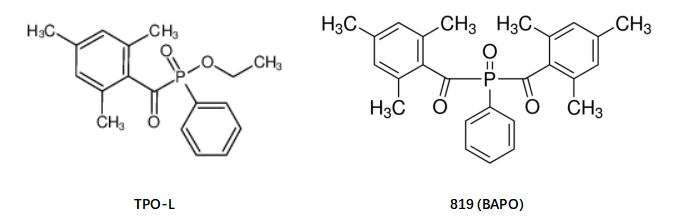
TPO-L has a structure similar to TPO, but due to one benzene ring in the molecule being replaced by an ethoxy group, its toxicity is lower. However, the drawback is that TPO-L's initiation efficiency is much lower than that of TPO.
Another photoinitiator of the phosphine oxide class is 819 (BABO), which can be viewed as TPO with one phenyl ring substituted by a 2,4,6-trimethylbenzoyl group, meaning it possesses two 2,4,6-trimethylbenzoyl groups. The initiation efficiency of 819 is higher than that of TPO, but it suffers from severe yellowing, making it unsuitable for applications where color is critical.
In other words, TPO-L and 819 can only partially replace TPO in certain application scenarios, but cannot fully replace it.
04
The new alternative to TPO—TMO
TMO stands for (2,4,6-trimethylbenzoyl)bis(p-tolyl)phosphine oxide, CAS 270586-78-2. From a structural perspective, TMO is derived from TPO by introducing a methyl group on each of the two benzene rings, which significantly reduces the biological toxicity of TPO.
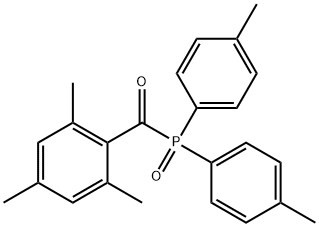
TMO
Experiments have shown that TMO's initiation efficiency is even slightly better than TPO, while also exhibiting no yellowing and lower migration.
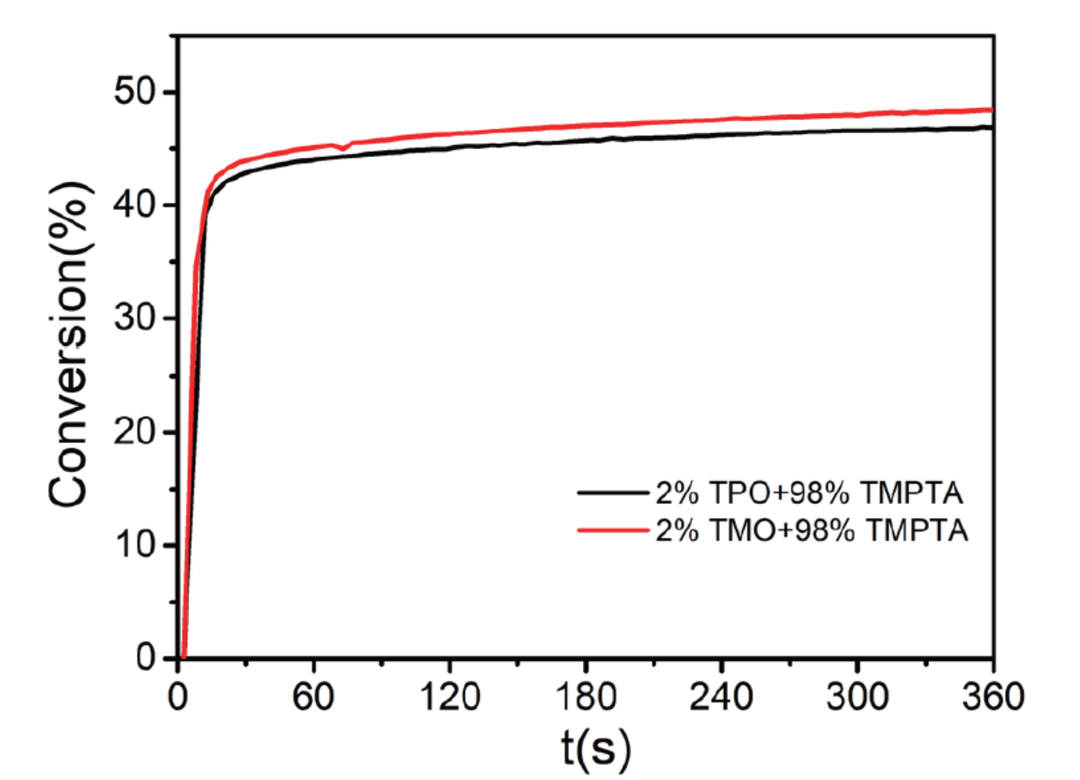
TMO and TPO induce the double bond conversion curve of TMPTA
TMO has already achieved mass production and obtained the EU Regulation (EC) No 1907/2006 concerning the Registration, Evaluation, Authorisation and Restriction of Chemicals (REACH) registration certificate. It can be sold to European regions with the strictest chemical controls.
综合整理自:
Chemical new materials, European Chemicals Agency (ECHA), GTS Global Testing, Photocurable new materials, China Chemical Information Weekly, DT New Materials
China Light
The official website of the China Association of Lighting Industry and a full-media platform for the lighting sector. We provide authoritative and timely lighting information while striving to be a growth partner for businesses. From brand promotion and channel expansion to consulting, talent training and participation in standards development, we provide comprehensive professional services to help businesses improve quality and efficiency and jointly advance the high-quality development of the lighting industry.
Business Contacts
仇纯 (Ms.): 158 6155 3579
顾君 (Mr.): 137 7157 5253