
The Hong Kong International Spring Decorative Lighting Fair has opened! John Lee emphasizes the combined strength of technological innovation in the Greater Bay Area.
Striving to develop at full speed into an international innovation and technology hub, how can Hong Kong empower Chinese digital economy enterprises to go global? Leveraging Hong Kong as an international hub platform, how can the industry-academia-research strengths of the three places in the Guangdong-Hong Kong-Macao Greater Bay Area be better coordinated, and how can sci-tech innovation achievements be better implemented in the international market? Recently, the Hong Kong International Innovation and Technology Business Week kicked off, opening up new ideas with three major tech exhibitions, a Digital Economy Summit, and the 2023 Hong Kong Web3 Carnival.
"Backed by the mainland and connected to the world, Hong Kong enjoys unique advantages under the 'One Country, Two Systems' framework. National key strategies, including the 14th Five-Year Plan and the development of the Guangdong-Hong Kong-Macao Greater Bay Area, support Hong Kong's development into an international innovation and technology center, as Hong Kong opens a new chapter in digital economy development." On April 13, while attending the 2023 Digital Economy Summit, John Lee Ka-chiu, Chief Executive of the Hong Kong Special Administrative Region, particularly emphasized in his address the synergistic efforts with the Guangdong-Hong Kong-Macao Greater Bay Area in scientific and technological innovation.
He mentioned that the Hong Kong-Shenzhen Innovation and Technology Park, currently under construction with a total area of 1.2 million square meters, together with the adjacent "Shenzhen Science and Innovation Park," will form the "Shenzhen-Hong Kong Science and Technology Innovation Cooperation Zone (Cooperation Zone)," which will be an important innovation and technology hub for the future of the Bay Area and holds significant importance for global innovation development.
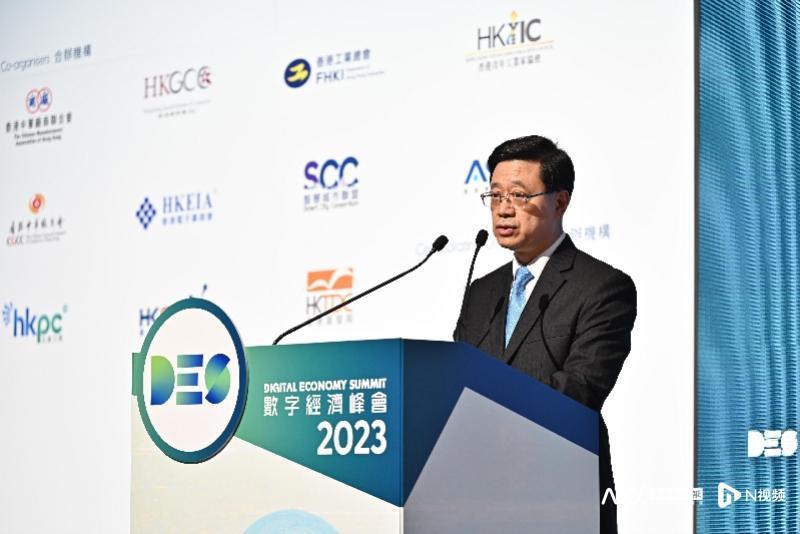
Hong Kong SAR Chief Executive John Lee delivered remarks at the summit
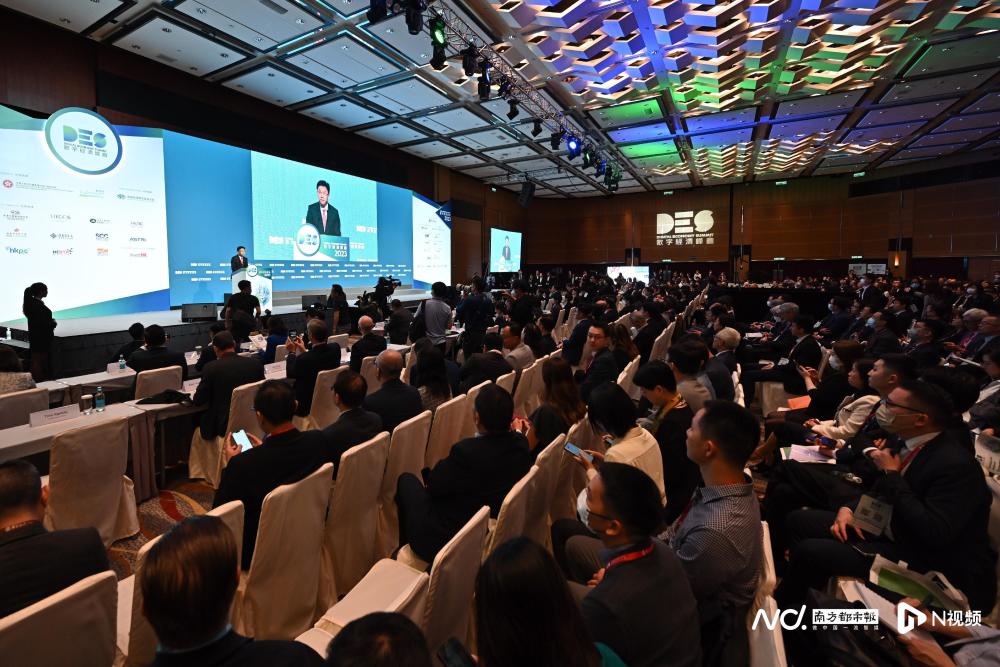
2023 Digital Economy Summit Site
Three major tech exhibitions attract over 3,000 exhibitors
Showcasing commercial applications of sci-tech innovation in smart city living scenarios
Global scientific and technological innovations compete on the same stage. How can the latest "black tech" be applied to urban life? Focusing on the commercial application of sci-tech achievements to address public livelihood pain points is a major feature of the inaugural Hong Kong International InnoTech Expo.
4月12日,香港特区政府与香港贸易发展局合办的首届香港国际创科展在香港会展展览中心开幕。连同一起启动的“香港春季电子产品展”和“香港国际春季灯饰展”,三大科技展正式吹响香港国际创科营商周的号角。
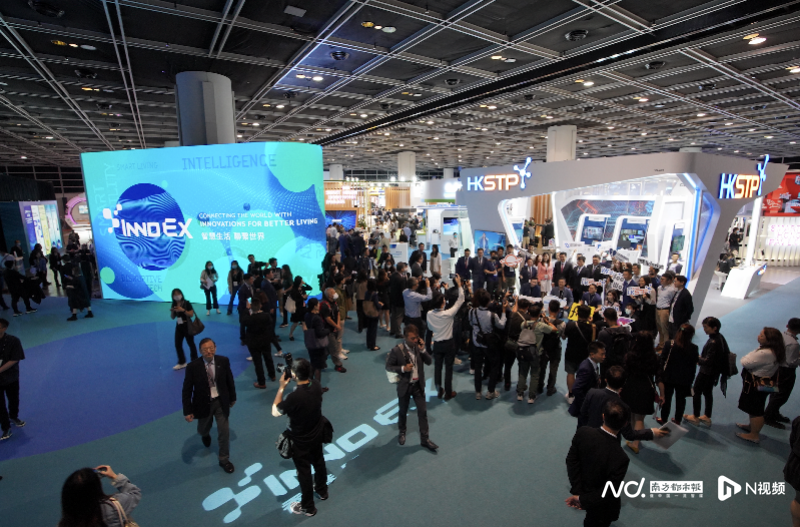
Scene from the inaugural Hong Kong International Innovation and Technology Expo.
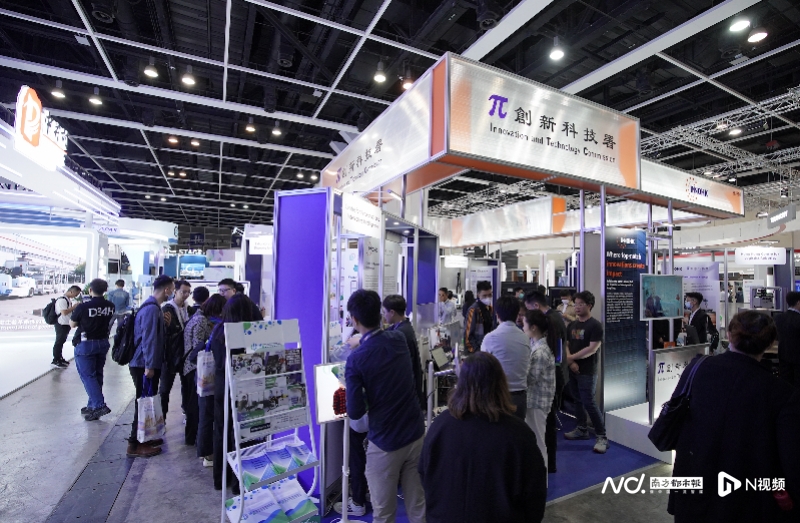
Scene from the inaugural Hong Kong International Innovation and Technology Expo.
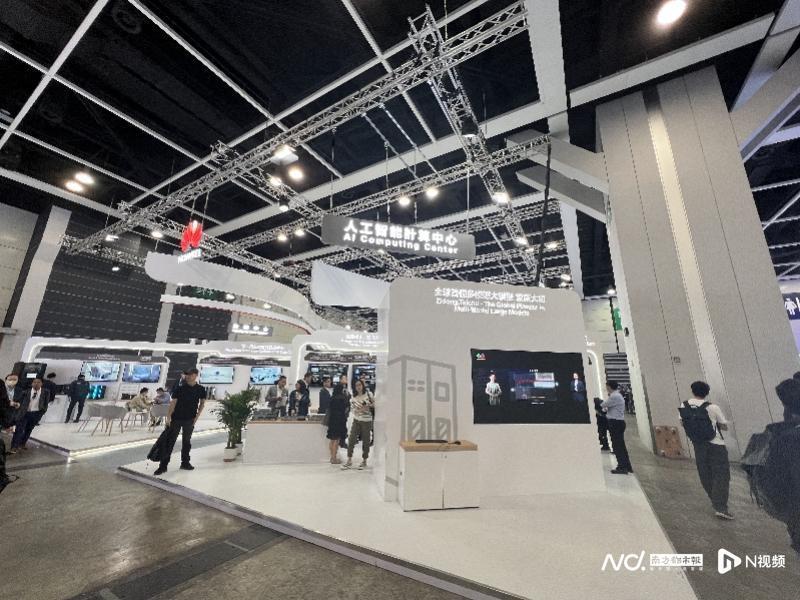
Huawei showroom exceeding 600 square meters.
The three major technology exhibitions, themed "Smart Living Connects the World," showcased the practical applications of leading sci-tech innovations through various smart city life scenarios. It is reported that the three exhibitions collectively attracted over 3,000 exhibitors from 20 countries and regions, including Hong Kong, mainland China, Asia, Europe, and the United States.
One of the featured pavilions, the "Smart Hong Kong Pavilion" established by the Office of the Government Chief Information Officer of the HKSAR Government, showcases over 50 innovative technology solutions launched by various government departments and more than 60 award-winning innovation projects from the local innovation and technology sector. It aims to promote Hong Kong's smart city development to local industries, as well as exhibitors and experts from home and abroad, seize opportunities for interaction with various sectors, establish cooperative relationships, and drive global innovation and technology collaboration to jointly develop more technology solutions that benefit citizens and businesses.
For example, through new 3D stereoscopic scanning sensors, the items "seen" by robots are no longer two-dimensional planes, naturally enabling them to better understand how to twist their "wrists" to grasp objects. At the exhibition site, a robot is demonstrating on-site how to identify and classify items for packaging. In the future, such technology could also be applied to the rapidly developing e-commerce industry in recent years, aiming to facilitate self-service parcel packaging.
For another example, cutting-edge technology from the AIR Center of the Chinese Academy of Sciences in Hong Kong was also showcased on-site. Through AI, it can detect whether medical devices have been left inside a patient's body and monitor in real time via images whether brain surgery has reached critical steps, thereby better ensuring surgical quality. It is reported that this new technology has undergone three pre-clinical trials in Hong Kong and is expected to be applied in more medical fields.
The theme of this InnoTech Expo is "Smart Living, Connecting the World". At the opening ceremony of the Forum, Mr. Sun Dong, Secretary for Innovation, Technology and Industry of the HKSAR Government, pointed out that the inaugural Hong Kong International InnoTech Expo not only demonstrates Hong Kong's commitment to promoting innovation and technology development, injecting strong momentum into economic growth, and addressing public livelihood pain points, but also explores more cross-regional and cross-industry cooperation opportunities and business prospects for global sci-tech innovation.
Zhang Guangjun, Vice Minister of the Ministry of Science and Technology, stated in his video address that Hong Kong is an important gathering place for global innovation elements and a key hub in the global innovation network. Leveraging its advantages of being backed by the mainland and connected to the world, it plays an indispensable and important role in the national innovation system. The Ministry of Science and Technology will work closely with the Hong Kong Special Administrative Region Government to promote innovation and technology as a new engine for Hong Kong's social development.
Leverage Hong Kong's International Advantages
Smart Industry and Sci-Tech Innovation Achievements from the Bay Area Accelerate Global Expansion
Leveraging Hong Kong's international advantages, overseas sci-tech innovation forces are coming in, while outstanding domestic scientific research achievements are also going global.
Since the resumption of customs clearance, economic and trade ties between the mainland and Hong Kong have become closer. At the exhibition, 12 large delegations from 10 provinces and cities on the mainland came to exhibit. As one of the mainland exhibition groups, the Shenzhen delegation occupied a total area of 270 square meters, showcasing products from nearly 70 "specialized, refined, distinctive, and innovative" enterprises across various industries. Among them, 20 companies exhibited on-site, while nearly 50 companies participated online through virtual "grid stores", covering many industry sectors such as artificial intelligence, life sciences, new displays, and integrated circuits.
Shenzhen Chasing Innovation Technology Co., Ltd., engaged in the R&D and production of underwater robots, showcased four underwater robot products at the exhibition. On the first day, the company encountered numerous cooperation opportunities from Europe, America, and Southeast Asia, as well as potential collaborations with Hong Kong's fire and water departments. Yao Liyun, Overseas Sales Supervisor at Chasing Innovation, believes this reflects Hong Kong's international advantages.
At the Huawei booth, which spans over 600 square meters, many visitors also stopped to take a look. Xue Wu, Director of Strategic Planning for Huawei Communications, stated that Huawei's Hong Kong Research Institute currently employs over 1,000 people, including more than 300 R&D staff, with over half holding master's degrees or higher. "Observing Hong Kong's advantages from within the Guangdong-Hong Kong-Macao Greater Bay Area is of significant importance. Hong Kong possesses strong scientific research and innovation capabilities, gathering many world-renowned experts and scholars. Meanwhile, Hong Kong's status as an international hub for science, technology, and innovation can attract considerable overseas talent. On the other hand, Greater Bay Area cities represented by Shenzhen have very strong industrial advantages, and their mature supply chains can effectively implement the latest scientific and technological innovations."
Citing examples, Ms. Zhang Shufen, Acting Executive Director of the Hong Kong Trade Development Council, noted that in recent years, Hong Kong International Airport has implemented new technologies from digital enterprises in Shenzhen, Beijing, and other cities, applying "5G+AI" advanced technology to aircraft maintenance. "While Hong Kong takes the lead in leveraging emerging technologies to build a smart city, it also helps accelerate the global rollout of these new technologies," said Ms. Zhang Shufen.
Building a New Highland for the Digital Bay Area
Fintech and cross-border government services become key areas of collaboration in the Greater Bay Area
Focusing on the Guangdong-Hong Kong-Macao Greater Bay Area, how do urban clusters synergize their digital effects? What new expectations are there for the Digital Bay Area? At this Hong Kong International InnoTech & Business Week, one of the flagship events, the Digital Economy Summit, offered more possibilities.
It is reported that since Hong Kong and the mainland fully resumed border crossings at the beginning of this year, Hong Kong has signed three cooperation agreements, including the "Guangdong-Hong Kong Science and Technology Innovation Exchange and Cooperation Agreement", the "Guangdong-Hong Kong Cooperation Agreement on Jointly Building Smart City Clusters", and the "Arrangement on Comprehensively Promoting Shenzhen-Hong Kong Science and Technology Innovation Cooperation".
Recently, while leading a team to visit Shenzhen Hetao, Qianhai, and Guangzhou Nansha, Secretary for Innovation, Technology and Industry of Hong Kong, Sun Dong, emphasized that the technology corridor linking Hong Kong, Shenzhen, and Guangzhou will hold significant future importance. Hong Kong's existing financial support, basic research capabilities, advantages in overseas talent, and business environment development will deeply empower the creation of smart city clusters. In the "Global Innovation Index 2022," the "Shenzhen-Hong Kong-Guangzhou" technology cluster has ranked second globally for three consecutive years, and the comprehensive strength and huge development potential of innovation and technology cooperation in the Greater Bay Area are highly anticipated.
Building a new highland for the digital Greater Bay Area, with fintech and cross-border government services becoming key focuses. Acting Government Chief Information Officer Wong Chi-kwong specifically mentioned that residents of Guangdong and Hong Kong often face pain points in cross-border living due to the lack of mutual recognition of documents for business processing. Next, cross-border government services will be an important entry point.
Similarly, Yang Pengfei, Party Secretary and Director of the Guangdong Provincial Government Service Data Management Bureau, also mentioned focusing on promoting government service collaboration and integration among Guangdong, Hong Kong, and Macao, as well as cross-border data flow. Currently, Guangzhou Nansha, Shenzhen Qianhai, and Zhuhai Hengqin are piloting "data customs" initiatives.
In addition, leveraging its existing financial strengths and continuously building a fintech hub, Hong Kong will also provide differentiated momentum for the Digital Bay Area. Attracting over 2,000 sci-tech innovation enterprises, two-thirds of which are fintech companies, Cyberport, after twenty years of development in Hong Kong, has currently incubated numerous new economy enterprises such as virtual banks and virtual insurers. "Taking financial payments as an example, the mainland does not lack large enterprises engaged in payments, but when truly opening up to the international market, many issues arise, such as payment card compatibility. This actually relates to the understanding of the international market. Hong Kong's inherent international environment allows enterprises to consider these cultural backgrounds from the outset upon entry," said Ren Jingxin, CEO of Cyberport. He stated that in the future, with the support of the Northern Metropolis, the digital economic development between Guangdong and Hong Kong will reach new heights.
China Light
The official website of the China Association of Lighting Industry and a full-media platform for the lighting sector. We provide authoritative and timely lighting information while striving to be a growth partner for businesses. From brand promotion and channel expansion to consulting, talent training and participation in standards development, we provide comprehensive professional services to help businesses improve quality and efficiency and jointly advance the high-quality development of the lighting industry.
Business Contacts
仇纯 (Ms.): 158 6155 3579
顾君 (Mr.): 137 7157 5253