
Must-Read! Overview of China's Lighting Industry Exports in 2021 and Outlook for 2022
Table of Contents
1. Overall Situation
II. Cause Analysis
3. Product Aspects
(1) Light Source Products
(2) Luminaire Products
(3) Epidemic prevention-related products (including UV)
(4) Horticultural lighting products
4. Market Aspects
(1) Overall Situation
(2) Specific Markets
(3) Specific Products
5. Challenges Faced
(1) Materials and Chips
(2) Logistics
(3) Exchange Rate
(4) Energy
(5) Labor and Land
(6) Pandemic
6. 2022 Outlook
(1) Demand contraction
(2) Supply Shock
(3) Weakening expectations
General Overview
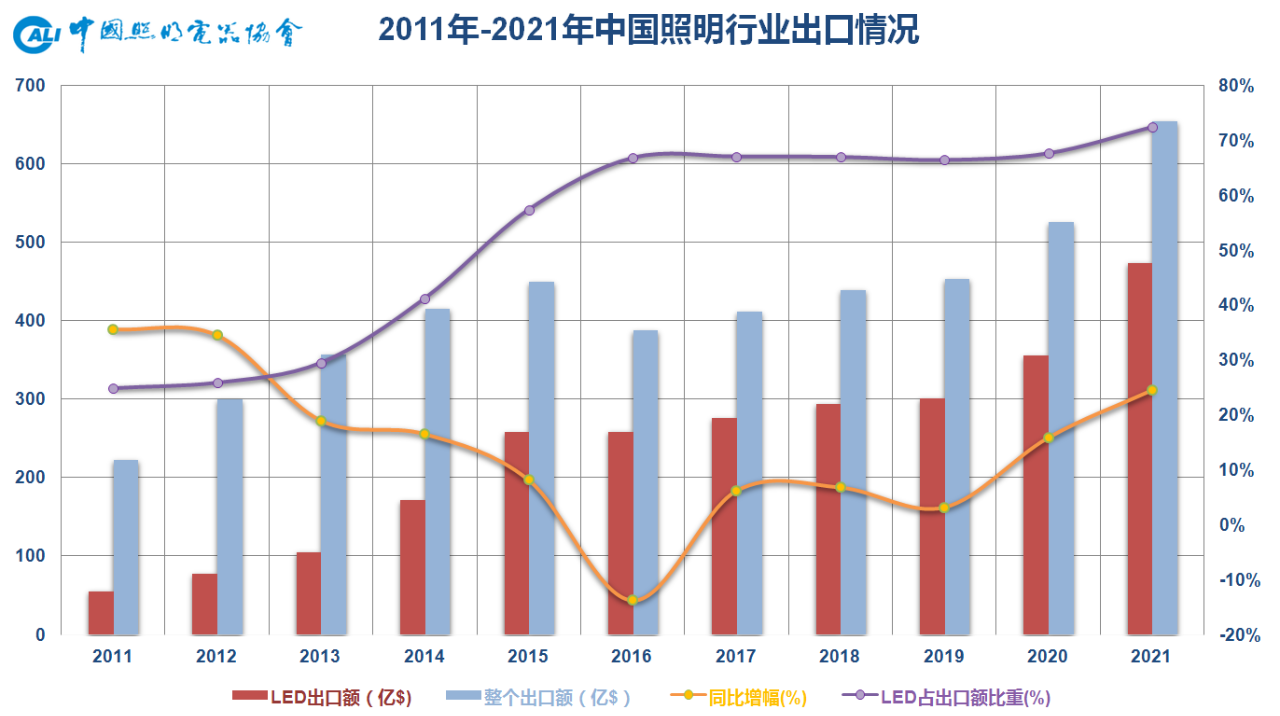
In 2021, facing the severe impact of the ongoing COVID-19 pandemic on global markets and an increasingly complex external environment, China's lighting industry demonstrated strong resilience and growth potential. This was achieved through the continued implementation of national policies to stabilize foreign trade and promote innovation, as well as the concerted efforts of numerous lighting export enterprises. The industry actively practiced strategic concepts such as dual circulation, high-quality development, and new development paradigms.
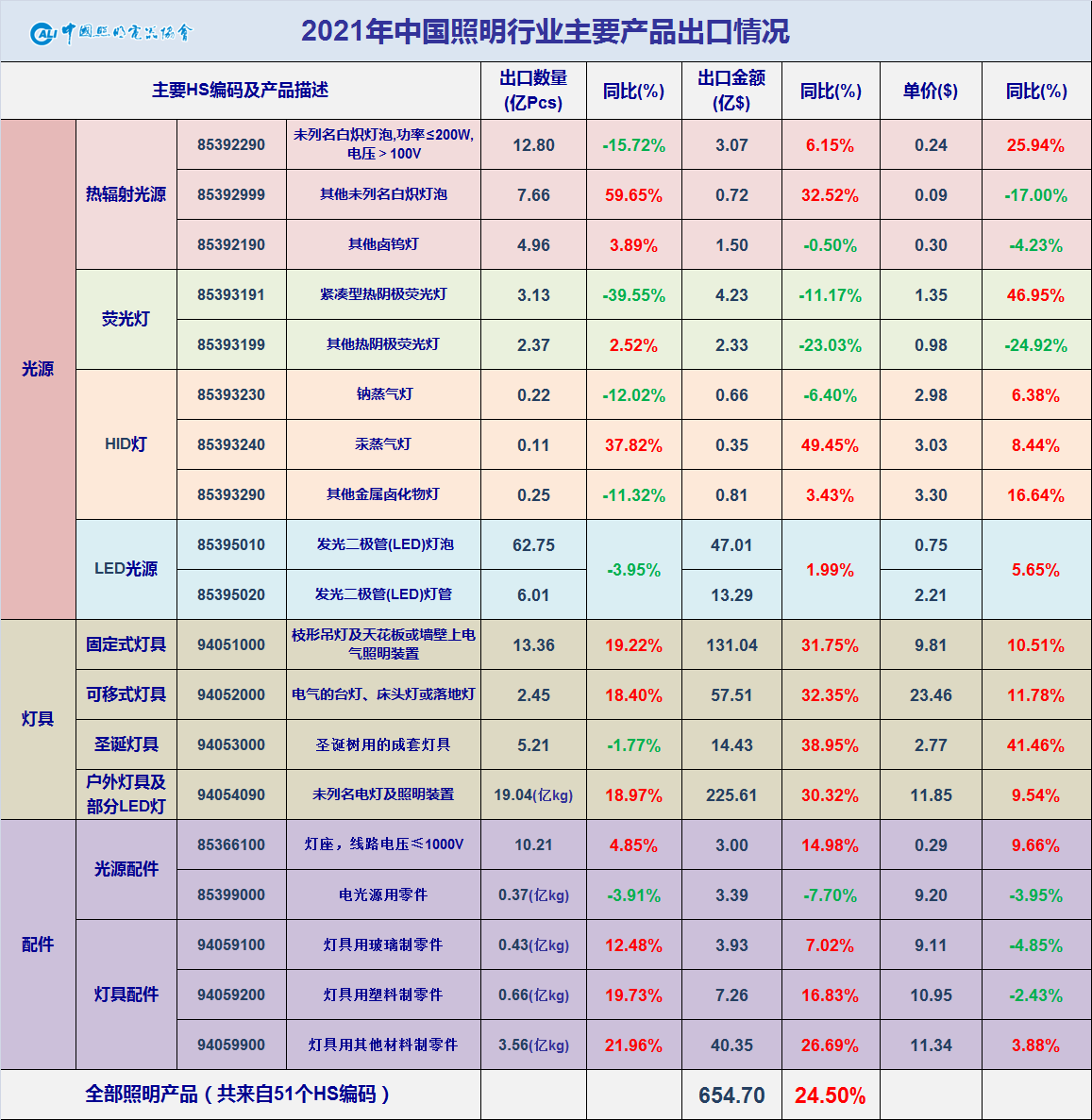
In 2021, the entire industry achieved a total export value of USD 65.47 billion, representing a Year-on-year (YoY) increase of 24.50%, a 44.09% increase compared to 2019, and a two-year average growth rate of 12.95%. Among these, the export value of LED lighting products reached USD 47.445 billion, with a Year-on-year (YoY) increase of 33.33%, a 57.33% increase compared to 2019, and a two-year average growth rate of 16.31%. The share of total exports rose from 25% ten years ago to over 70% currently. Both the total export value of lighting products and the export value of LED lighting products broke historical records for the lighting industry's exports again after 2020, demonstrating the important role of foreign trade in connecting domestic and international dual circulation.
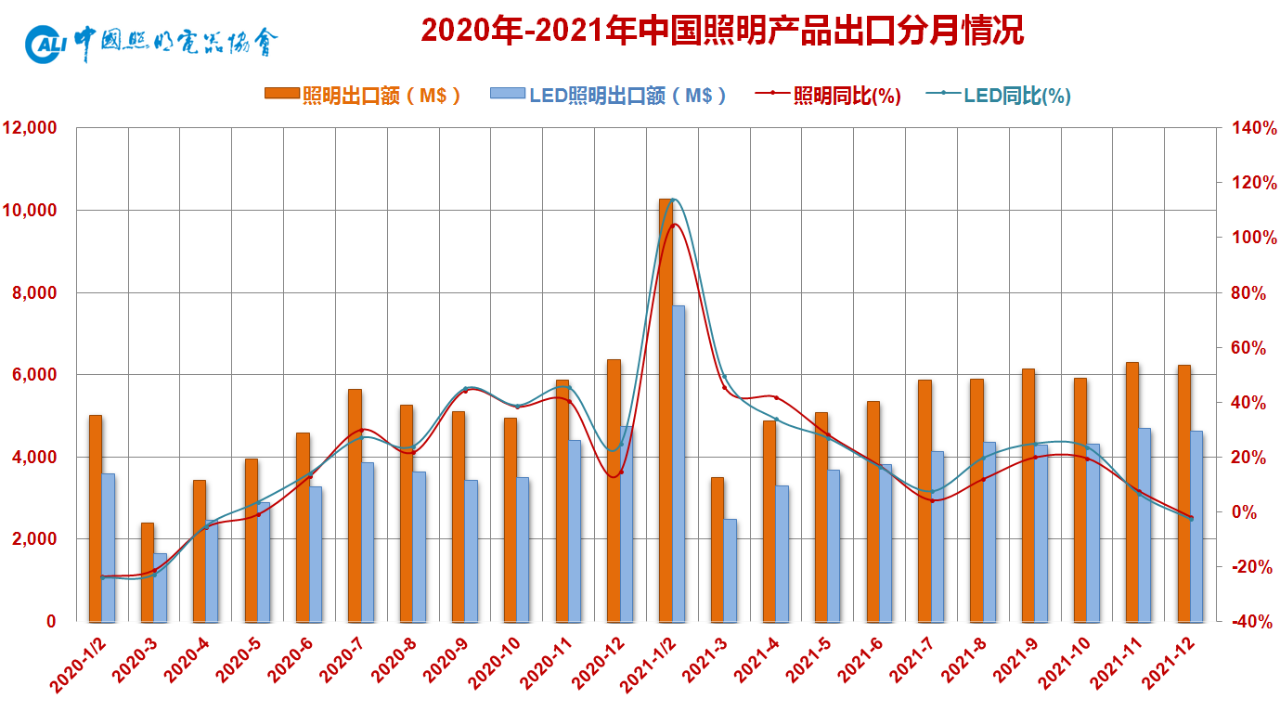
On a monthly basis, China's lighting product exports continued to surge in 2021 under the influence of multiple factors, following the "V"-shaped reversal experienced in 2020.
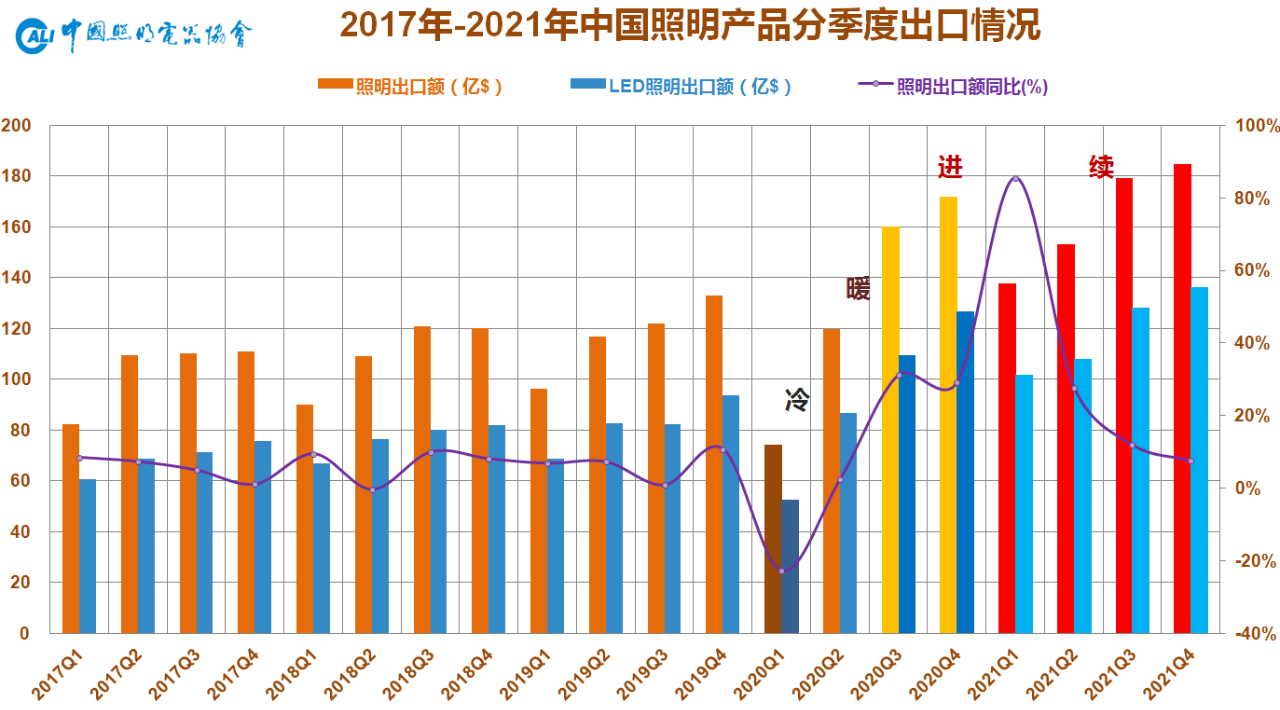
By quarter, compared to the ultra-high growth in Q1 2021, Q2 showed a clear trend of narrowing monthly growth rates. Momentum recovered somewhat in Q3, while Q4 showed signs of weakness again. The trend is related to changes in the base comparison with the same period last year, and is also affected by the repeated impact of overseas epidemics on supply chains and demand.
II. Cause Analysis
The reasons for the sustained high growth rate of lighting exports in 2021 are:
1、2020年同期(特别是一季度)的低对比基数。2020年一季度因国内疫情爆发,制造业产能和供应链受到极大阻碍,交付难致使出口降至谷底,今年中国制造则尽享抗疫成果红利,供应端开足马力,对出口提供了强大支撑;
2、外需边际持续改善。各主要经济体疫情虽然未得到有效控制,但在疫苗的持续推广作用下,纷纷承压重启经济,对中国照明出口来说外需边际得到持续改善,同时在诸国货币宽松政策的刺激下,需求端复苏好于供给端,消费需求持续释放;
3. Continuation of monetary easing policies. With the global pandemic still not improving, major economies have continued the significant monetary easing measures implemented since 2020, keeping interest rates at low levels. Citizens in various countries have received varying degrees of fiscal assistance and relief from their governments. The resulting excess liquidity has also boosted consumption of essential daily goods such as lighting products.
4. Exports of products related to epidemic prevention and control and the stay-at-home economy remain at a relatively high level. However, it is worth noting that exports of epidemic-prevention lighting products such as scientific research and medical lamps and UV lamps, as well as stay-at-home economy-related products like plant grow lights and filament lamps, have declined compared to the same period in 2020. Currently, the growth rate of these products shows signs of narrowing, and their boosting effect on overall export growth has weakened.
5. Advance and excessive ordering on the demand side. In 2021, especially in the first half of the year when the entire industry faced an extreme shortage of chips and materials, many overseas customers, based on their predictions of temporary supply-demand imbalances in the upstream supply chain, generally placed orders early and in excess to occupy the production capacity and materials of Chinese suppliers;
6. Soaring costs have driven up end-product prices. Although the pass-through of price increases from upstream to downstream exhibits a certain time lag and diminishes at each stage, the sharp rise in various cost prices caused by the commodity boom since the fourth quarter of 2020 has ultimately pushed up the prices of end products. In particular, in the second half of 2021, price factors significantly boosted export volumes;
7. Changes in product structure. The growth of light source products has hit a ceiling, and their share of total exports has declined year by year. Meanwhile, the proportion of higher-unit-price integrated luminaires and connected lighting products has further increased, thereby driving an overall increase in export value.
8. The "substitution and transfer effect" of China on the global market is still ongoing. This remains the main reason for the continued growth in exports in 2021. Starting from the second quarter of 2020, China, as a major economy that successfully contained the pandemic, was the first to resume work and production. The rapid recovery of Chinese manufacturing further highlighted the advantages of being a lighting manufacturing center and supply chain hub, effectively filling the global supply gap caused by the pandemic and replacing other countries' export shares for a certain period. In 2021, with the pandemic still fluctuating globally, the resumption of work and production in other industrial countries remained intermittent, and a full recovery of supply was still far off, so this substitution and transfer effect continues.
Three Products
1 Light Source Products
Judging from the trend in the proportion of light sources in recent years, the development trend of the total volume of light source products indicates that it has reached a growth ceiling.
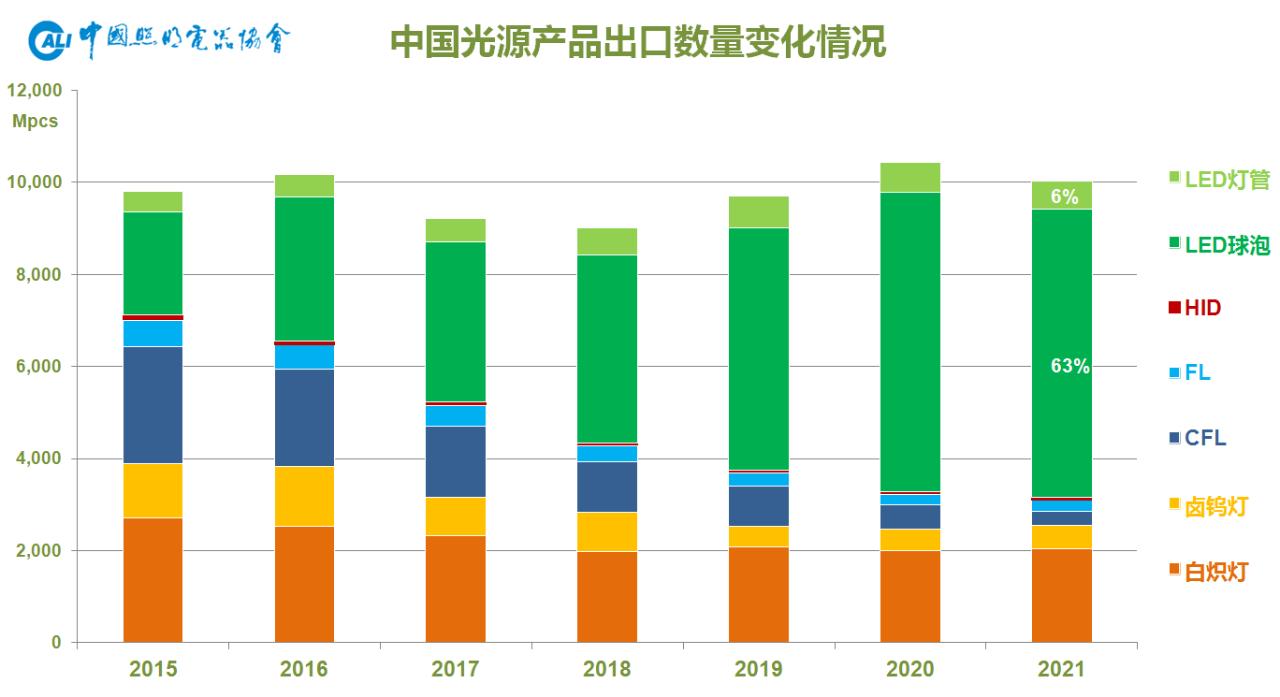
The share of LED products in total light source exports has been rising year by year, reaching nearly 70% by 2021. This reflects a steady, gradual substitution of traditional products by LED products. In the segment of traditional light sources, the total volume of incandescent lamps has stabilized at around 2 billion units for the past 3–4 years. The total volume of high-intensity discharge lamps, including high-pressure mercury lamps, high-pressure sodium lamps (HPS), and metal halide lamps (MH), is gradually decreasing, but their share remains relatively stable. For tungsten halogen lamps, export volumes were halved in 2019 due to the EU ErP directive issued in September 2018, which required the phase-out of certain non-reflector tungsten halogen lamps; however, there has been a slow recovery in the past two years. Meanwhile, compact and linear/tubular fluorescent lamps have continued their significant downward trend in recent years, directly impacted by LED products with continuously improving cost-performance ratios.
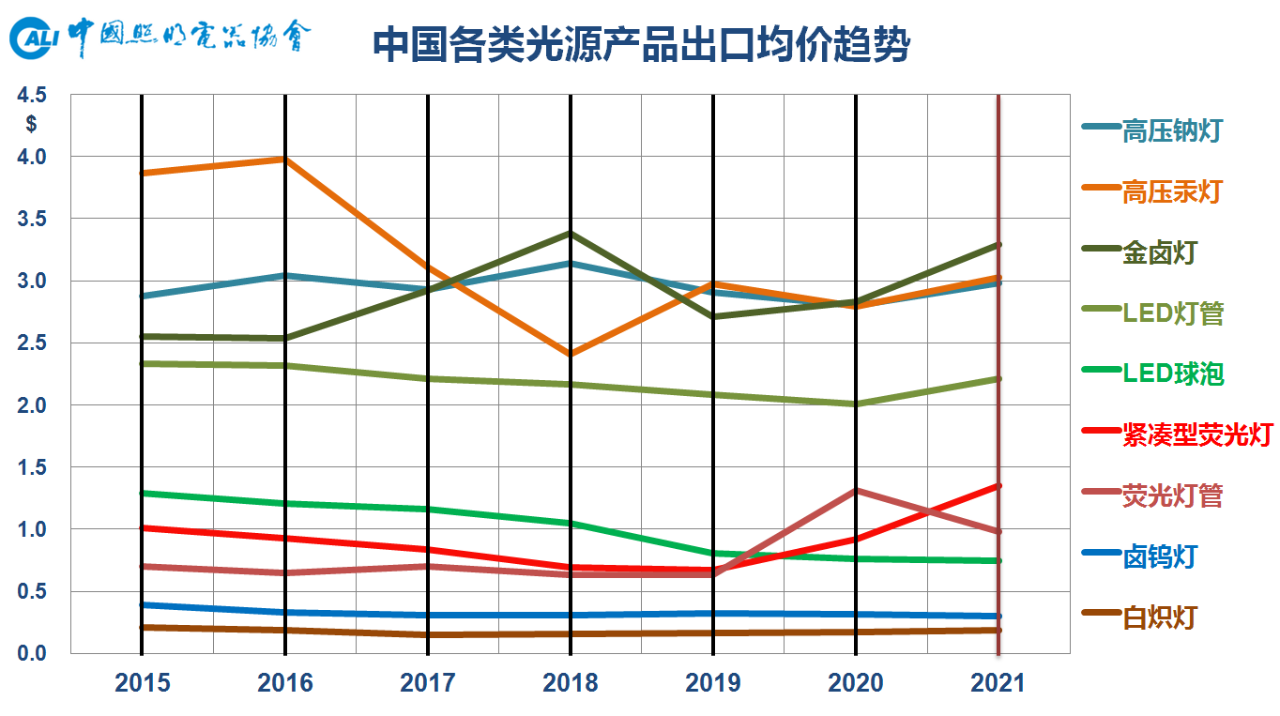
Regarding the average export price of light source products, the overall trend in recent years has been downward. However, due to the significant increase in upstream raw material, logistics, and energy costs in 2021, the average export prices of various light source products mostly rebounded in 2021. In contrast, the price of LED bulbs continued to decline. As the price of Compact fluorescent lamp (CFL) rose during the same period, the price ratio between the two shifted from 1:0.7 five years ago to 1:1.8 today. Against the backdrop of rigid cost increases, the profit margins of related Export enterprises have been further compressed, which is the core reason why leading Export enterprises have gradually reduced or exited the LED light source Export market in recent years.
Next, lighting source products will continue to face substitution pressure from integrated luminaires, with total volume trending downward amid fluctuations. The total volume of thermal radiation light sources and HID light sources will remain relatively stable for a certain period. Under the international backdrop of restricting mercury-added products, the share of fluorescent lamps will continue to decline. While there is still room for growth in the share of LED products, it has reached a bottleneck.
2 Luminaire Products
In 2021, exports continued to surge, driven primarily by significant growth in various luminaire products and accessories. Major luminaire categories, including fixed luminaires, portable luminaires, and other unspecified luminaires, saw export volumes increase by nearly 20%, while export values rose by over 30%. This growth reflects both price increases due to cost inflation and the enhanced value resulting from the integration, modularization, systematization, and intelligence of luminaires.
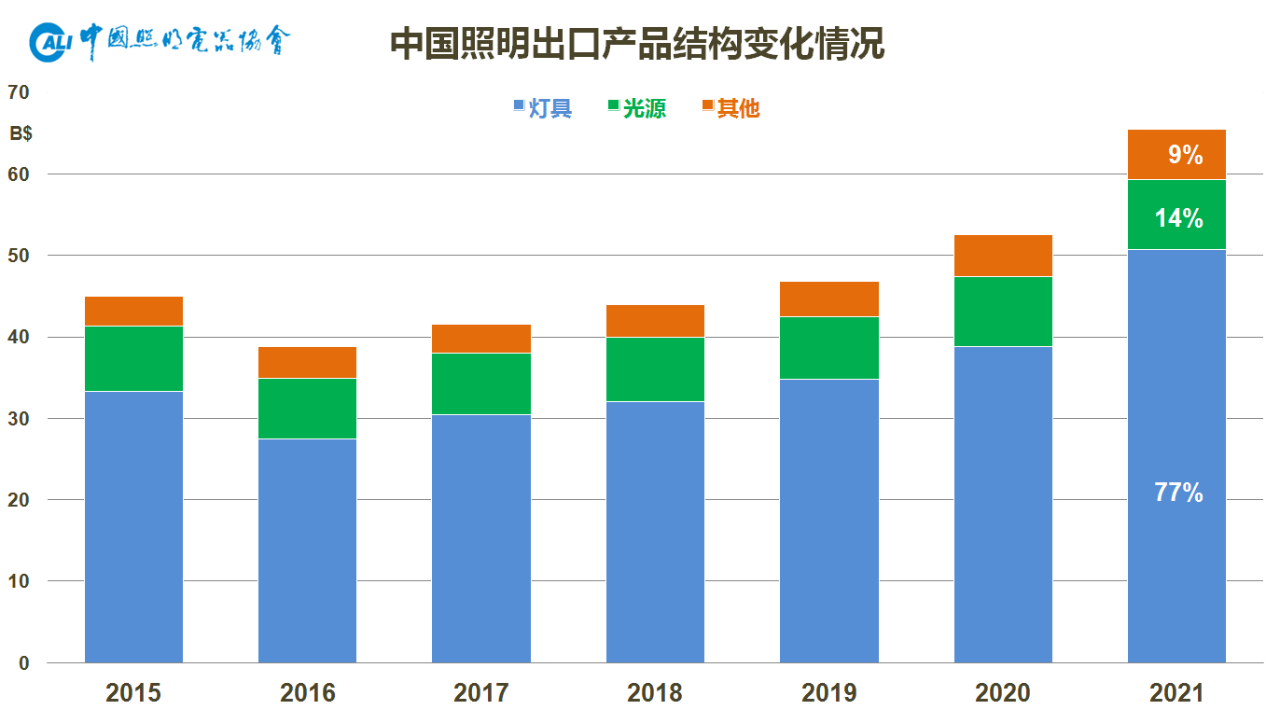
From the changes in the product structure of lighting exports from China, it can be seen that the proportion of luminaire products has been increasing year by year, accounting for 77% of total exports by 2021. The significant increase in the proportion of luminaires is also fully reflected in the changes in the product structure of various export destination markets. The export of luminaire products reflects the basic needs of national economies and social life in various countries. In the foreseeable future, the export of luminaire products will remain the core driving force of overall lighting exports.
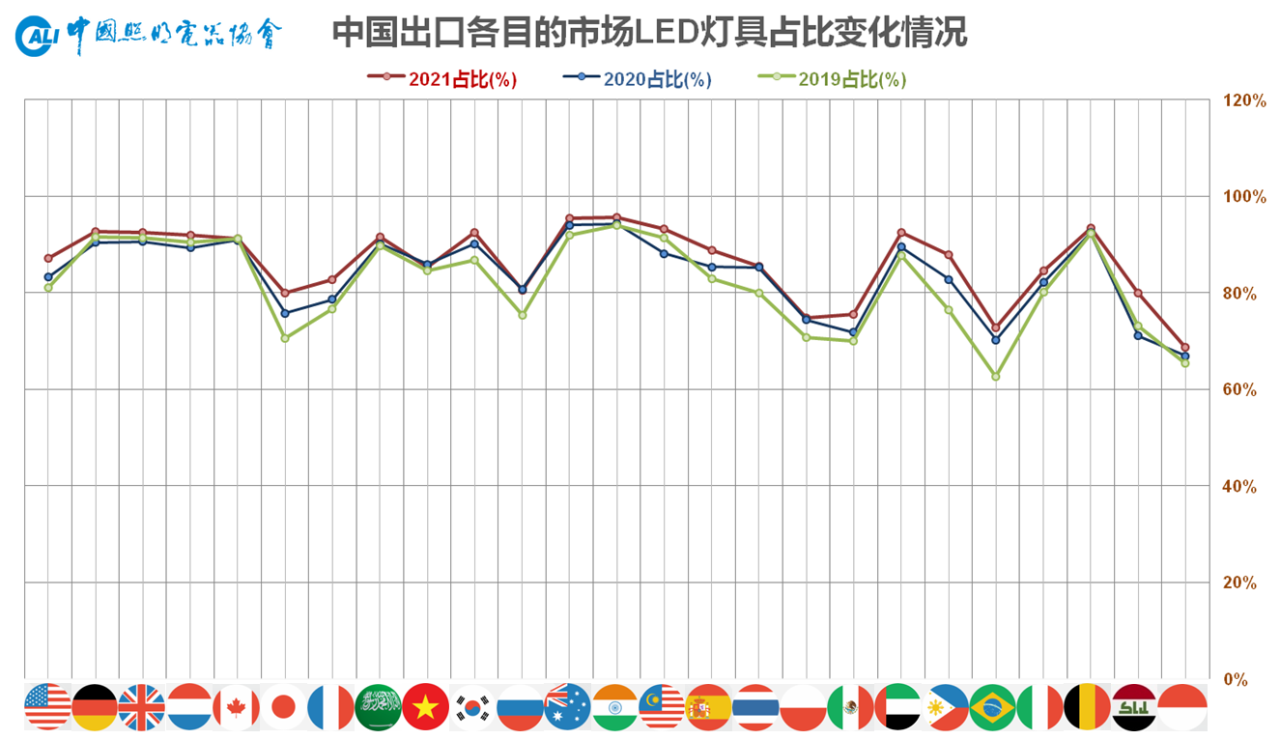
Among exported luminaires, competition for standardized indoor products such as downlights, spotlights, panel lights, ceiling lights, and light strips/bars is becoming increasingly intense. Meanwhile, high-power products with higher requirements and value—such as street lights/tunnel lights, industrial and mining lights, floodlights, plant growth lights, and stage lights—are becoming options for some companies to optimize their product structure and enhance product added value.
3. Epidemic prevention-related products (including UV)
Since the beginning of 2020, lighting products related to epidemic prevention, such as scientific research lamps, medical lamps, and ultraviolet lamps, have experienced explosive growth against the backdrop of surging global demand caused by the rampant pandemic. In 2020, the export value of these products, originally targeting niche markets, surged by over 540% to reach US$585 million. Entering 2021, although exports of epidemic prevention-related lighting products remained at a relatively high level, the figures declined. The export value of related products in 2021 was US$460 million, a Year-on-year (YoY) decrease of 21.3%; among them, ultraviolet lamp exports amounted to US$330 million, a Year-on-year (YoY) decline of 31.5%.
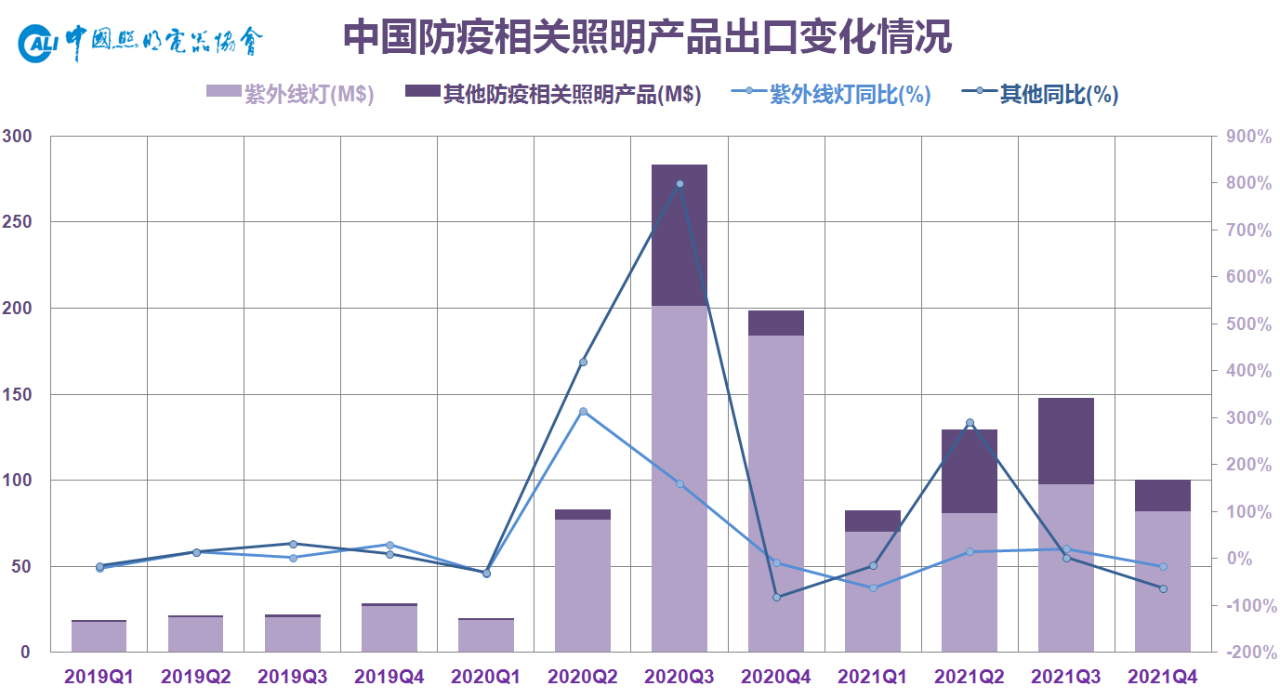
Overall, traditional low-pressure gas discharge lamps remain the mainstay on the front lines of epidemic prevention and control, playing a significant role during the pandemic. Driven by防疫 needs, UV LED development has been in full swing; UV LED devices/modules, originally with low production capacity, became hard to obtain, prompting manufacturers across the upstream, midstream, and downstream of the supply chain to increase investment. As an environmentally friendly physical method for sterilization and disinfection, deep UV LEDs have been confirmed by research institutions to effectively kill the novel coronavirus. Even without the pandemic as a catalyst, they hold broad application prospects in many scenarios requiring sterilization and disinfection, with huge market potential. However, at this stage, they are mainly constrained by low photoelectric conversion efficiency and high costs. Still in the development phase, comprehensive promotion in the future requires further improvements in luminous efficacy, lifespan, cost, standards, testing, patents, reliability, and application safety.
4 Horticultural Lighting Products
Since the second half of 2020 in particular, horticultural lighting exports have surged, driven by multiple factors including the commercial legalization of cannabis in North America, global pandemic-induced shortages of food and pharmaceutical supplies, and increased home confinement. In the first half of 2021, horticultural lighting exports continued the growth trend seen since 2020. However, it is worth noting that in the second half, the strong momentum of horticultural lighting exports slowed significantly due to factors such as reduced logistics efficiency, increased end-user inventory, weakened consumer demand, and a high Year-on-year (YoY) comparison base from the same period last year. The total export value of horticultural lighting products in 2021 was US$450 million, a decline of over 10% Year-on-year (YoY), marking a peak followed by a回落. Meanwhile, constrained by exchange rate fluctuations, intensified competition, and rising logistics and raw material costs, the gross profit margin of products decreased noticeably.
From a product perspective, horticultural lighting exports are currently dominated by high-power HID and LED luminaires. However, in many high-power applications, traditional HID lamps remain the mainstay due to issues related to technology, efficiency, cost, and reliability, often yielding even higher gross profit margins.
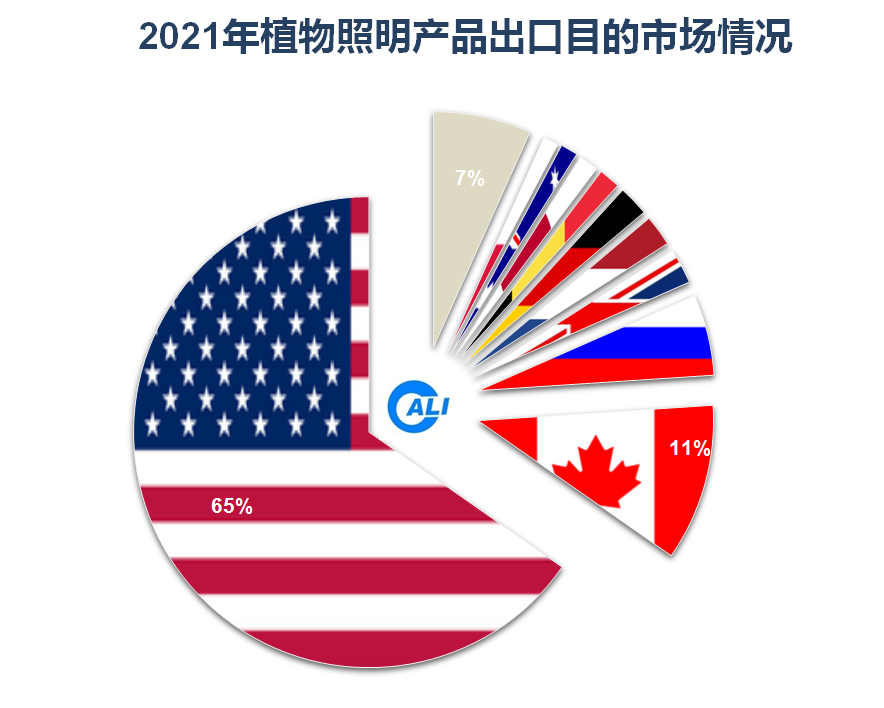
From a market perspective, the export market for horticultural lighting is mainly in developed economies in Europe and America, with the North American market remaining the absolute mainstay, accounting for 76% of the market share in 2021, followed by the European market. The North American market is relatively concentrated, with demand from large brand owners; whereas the European market is more fragmented, dominated by small traders.
Among export enterprises, Meizhi Optoelectronics, Yinglai Energy, Huodi Technology, Xidi Technology, Guangderui, and Hongrui Optoelectronics are currently in a leading position in LED finished product exports. Inventronics and Soosen are leaders in LED power supplies for horticultural lighting. It is also worth mentioning that representative horticultural lighting companies such as New Cosmos, Meiguangyuan, and Prolight have more comprehensive horticultural lighting product lines, which include not only LED luminaires but also HID luminaires and matching ballasts.
Overall, the domestic horticultural lighting sector, especially LED horticultural lighting, is still in its early stages of development. This round of export growth is mainly driven by the legalization of commercial cannabis in North America, and we are still some way from the widespread adoption of horticultural lighting that we anticipate. At the same time, it is important to recognize that, driven by food security and agricultural industrialization, the export market for horticultural lighting is growing rapidly, the domestic market is emerging, standards and regulations are continuously improving, corporate investment continues to increase, and application scenarios are constantly expanding. Therefore, we should remain optimistic about the huge development potential of the horticultural lighting market in the future.
IV. Market Aspects
1 Overall Situation
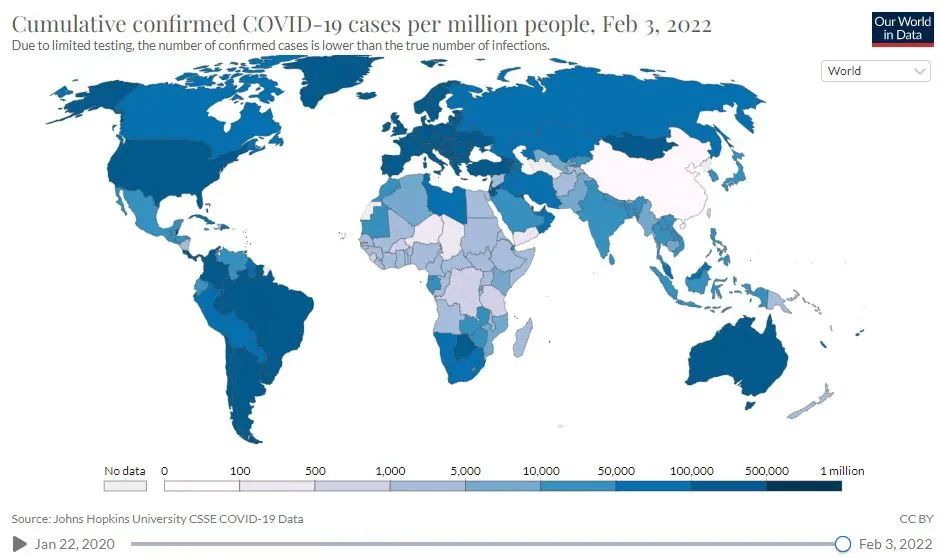
国际货币基金组织(IMF)和世界银行(IBRD)都曾在2020年度经济报告中提到疫情防控与经济复苏的相关性,指出疫情是当前阻挠全球经济企稳的最大不稳定因素。我们也能够从LED照明出口全球各地区占比变化情况中看出疫情发展与市场表现的相关性。
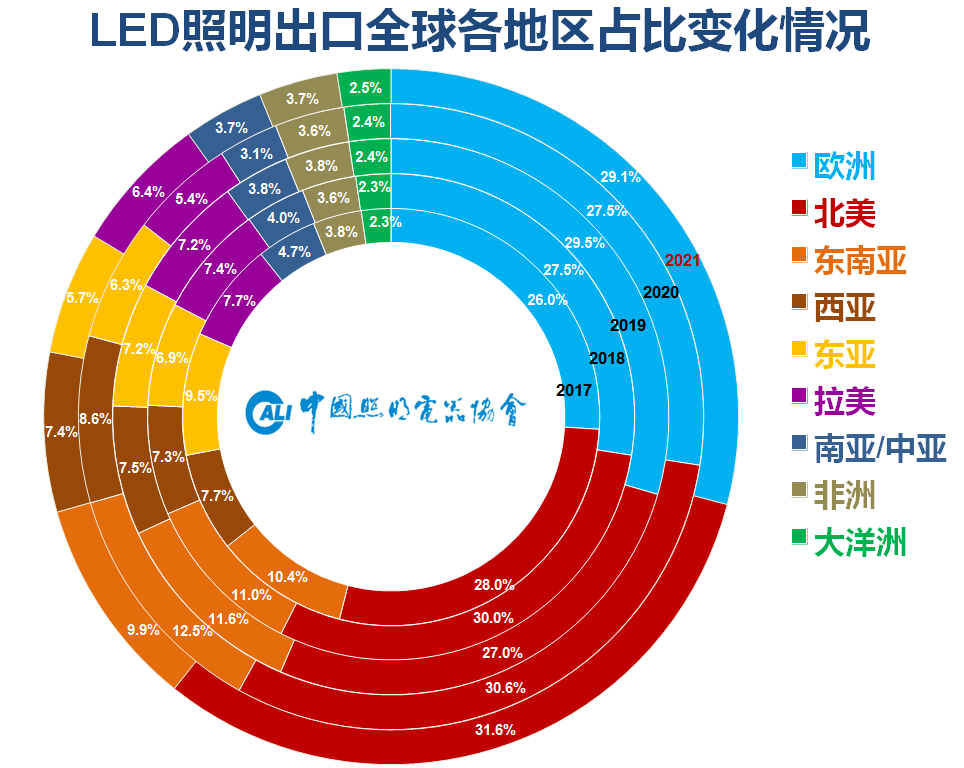
In 2020, the Asia-Pacific market, dominated by emerging economies, significantly outperformed the European and American markets, which are primarily composed of developed economies. Within the Asia-Pacific region, East Asia, West Asia, Southeast Asia, and Oceania demonstrated remarkable performance despite the impact of the pandemic. However, the South Asian market became a drag on the overall Asia-Pacific performance due to a sharp decline in the Indian market. Among the European and American markets, North America recovered much more strongly from the second half of the year onwards, aided by substantial monetary easing, whereas Europe and Latin America saw significant declines in their market shares.
In 2021, the situation reversed sharply, especially in the first half of the year. Vaccination rates against COVID-19 rose rapidly in developed economies in Europe and the United States. In contrast, the epicenter of the pandemic shifted to Asia, hampering the economic reopening process in the Asia-Pacific region. As a result, demand in European and American markets rebounded strongly, while markets in East Asia, Southeast Asia, and West Asia, which had performed prominently in the same period last year, saw only slight growth and paled in comparison, with their shares declining to varying degrees.
2 Specific Markets
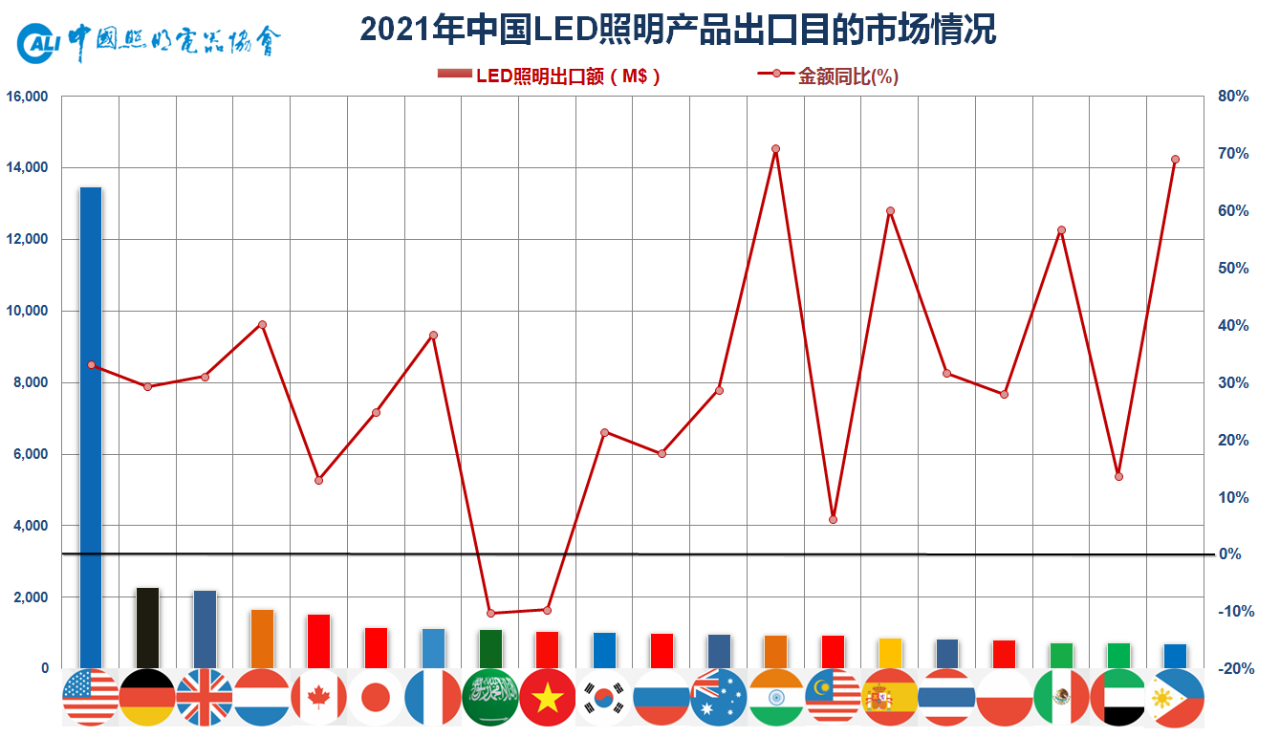
Looking at the main destination markets for LED lighting exports in 2021, nearly all of the top 20 showed growth. Major economies such as the US, Germany, the UK, the Netherlands, and France saw significant improvement compared to 2020, thereby driving the overall performance of the North American and European markets. Saudi Arabia and Vietnam, which stood out in 2020 as representatives of the dynamic West Asian and Southeast Asian markets respectively, became among the few markets that experienced a Year-on-year (YoY) decline in 2021, suggesting a peak followed by a pullback. In 2021, the total value of LED lighting products exported from China to the top 20 countries and regions accounted for approximately 74% of the entire LED lighting Export volume, indicating a high concentration in key markets, although this figure dropped by 2 percentage points compared to the same period last year.
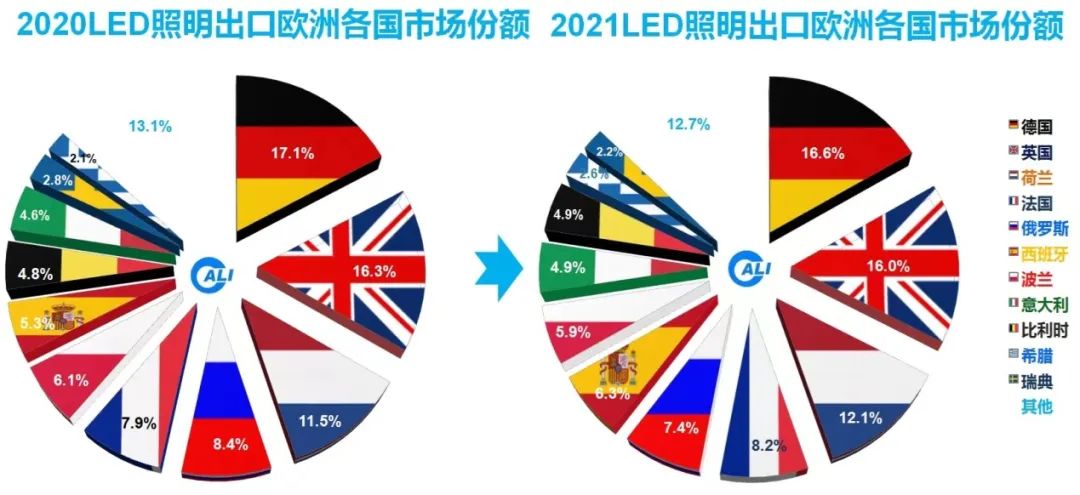
In 2021, the total value of LED lighting products exported to the European market reached USD 13.79 billion, a significant Year-on-year (YoY) increase of 33.9%, with its share of total LED lighting exports rebounding to 29.1%. Major economies generally saw growth, driving a strong overall recovery.
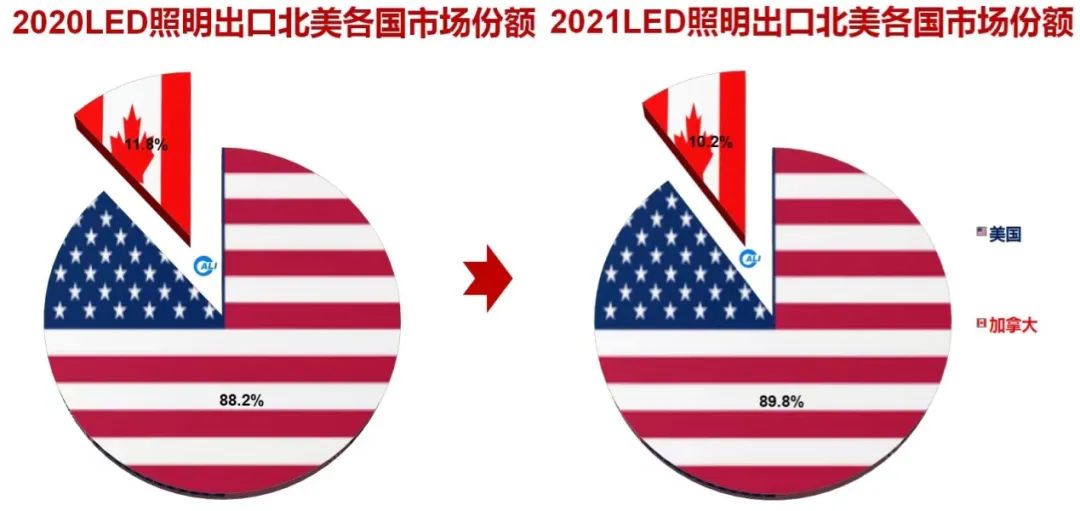
In 2021, the total value of LED lighting products exported to the North American market reached USD 15.01 billion. Building on last year's growth and supported by significant monetary easing, it increased by another 30.8%, with its share of total LED lighting exports reaching a historic high of 31.6%. The saying "Whoever wins North America wins the world" still holds true.
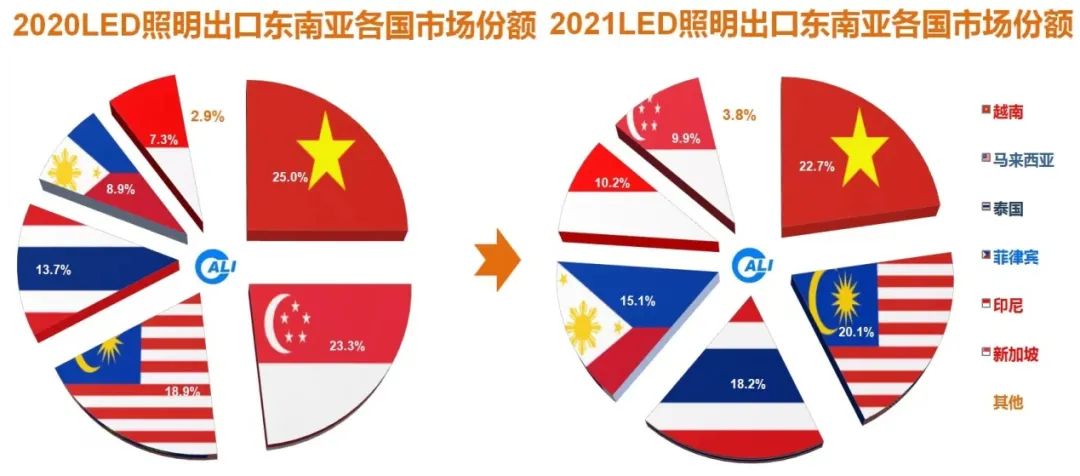
In 2021, the total value of LED lighting products exported to the Southeast Asian market reached US$4.68 billion, a slight Year-on-year (YoY) decline of 0.4%, and its share of total LED lighting exports also decreased by 2.6 percentage points. Singapore's sharp drop of nearly 60% became a drag on the overall performance, truly illustrating that "small boats fear the waves, while large ships are hard to turn."
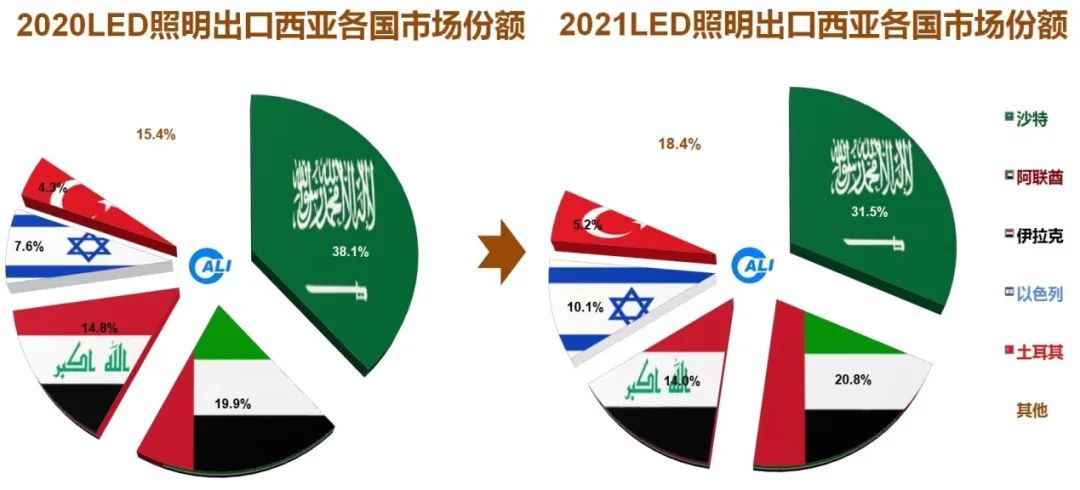
In 2021, the total value of LED lighting products exported to the West Asian market reached US$3.52 billion, a Year-on-year (YoY) increase of 8.6%, while its share of total LED lighting Export dropped to 7.4%. Notably, Iran was once a super-sized market comparable to Saudi Arabia in scale, but in recent years, Western sanctions and the pandemic have intensified its difficulties, causing its market share to shrink by more than 70%, pushing it out of the top ten even within the West Asian market. In contrast, post-war Iraq has shown considerable growth year after year.
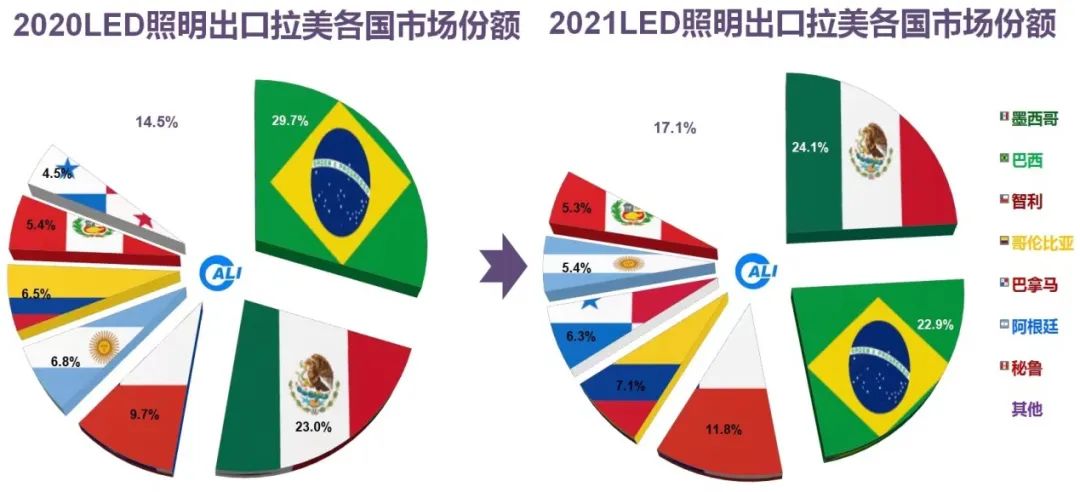
In 2021, the total value of LED lighting products exported to the Latin American market reached US$3.04 billion, a Year-on-year (YoY) surge of 49.9%, with its share in total LED lighting exports rising by 1 percentage point to 6.4%. Mexico, with growth nearing 60%, replaced Brazil as the leading market in Latin America after many years.
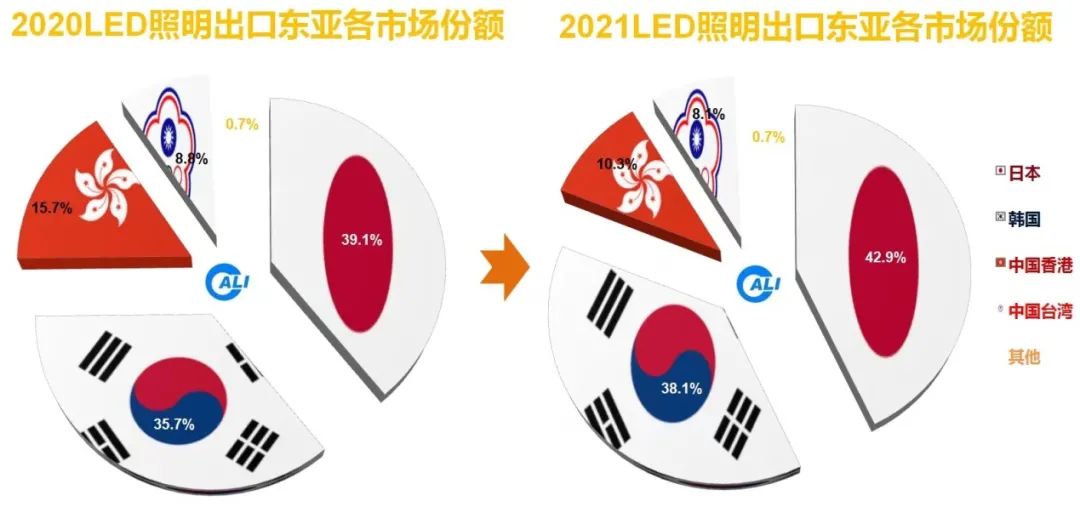
In 2021, the total value of LED lighting products exported to the East Asian market reached USD 2.71 billion, a Year-on-year (YoY) increase of 13.8%, while its share of total LED lighting exports slightly decreased to 5.7%. As a major re-export hub, Hong Kong suffered from the continuous impact of the pandemic, resulting in a decline of over 25% for the full year.
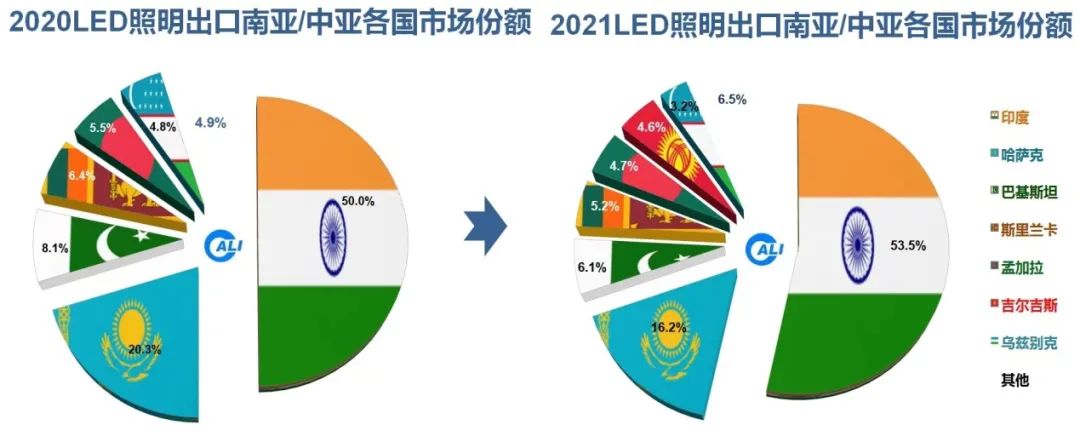
In 2021, the total value of LED lighting products exported to the South Asia/Central Asia markets reached USD 1.77 billion, a Year-on-year (YoY) surge of 53.4%, with its share of total LED lighting exports rebounding to 3.7%. The main driver was India, which accounts for more than half of this market, where data showed a Year-on-year (YoY) growth of over 70% in 2021.
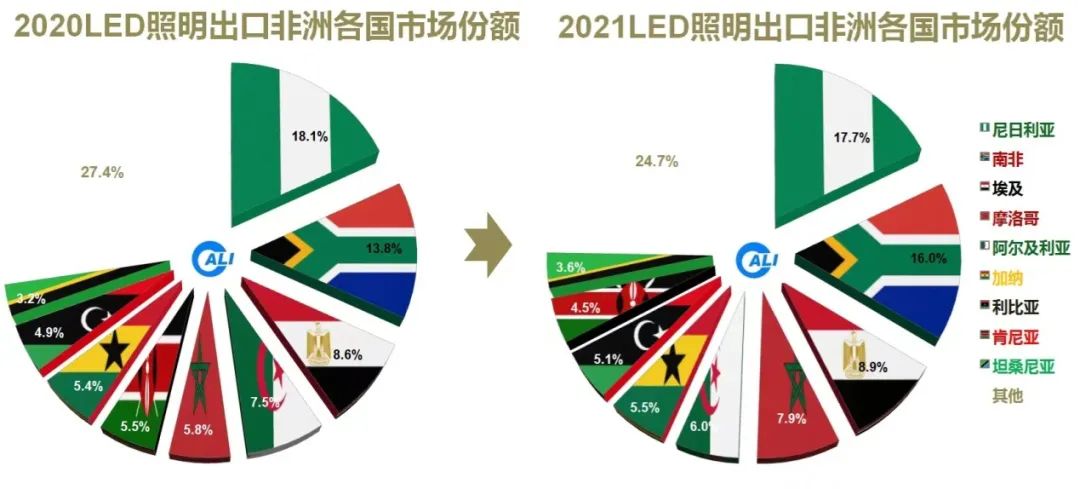
In 2021, the total value of LED lighting products exported to the African market reached US$1.74 billion, a Year-on-year (YoY) increase of 28.7%, with its share of total LED lighting exports slightly rising to 3.7%. The "bulk" African market has maintained a certain upward trend, but due to limitations in its overall social and economic development, it remains in an initial stage of development. Apart from the economic powerhouse South Africa, North African countries, and the populous Nigeria, other markets have little to offer.
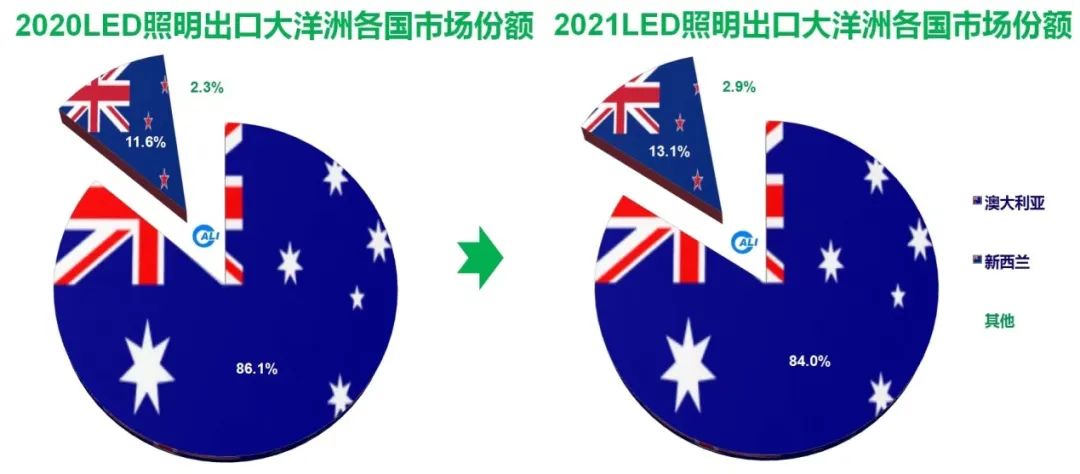
In 2021, the total value of LED lighting products exported to the Oceania market reached US$1.18 billion, a Year-on-year (YoY) increase of 13.8%, accounting for a slightly reduced share of 2.5% in total LED lighting exports. This market is highly concentrated, with Australia and New Zealand consistently accounting for over 97%, featuring a stable structure and steady growth.
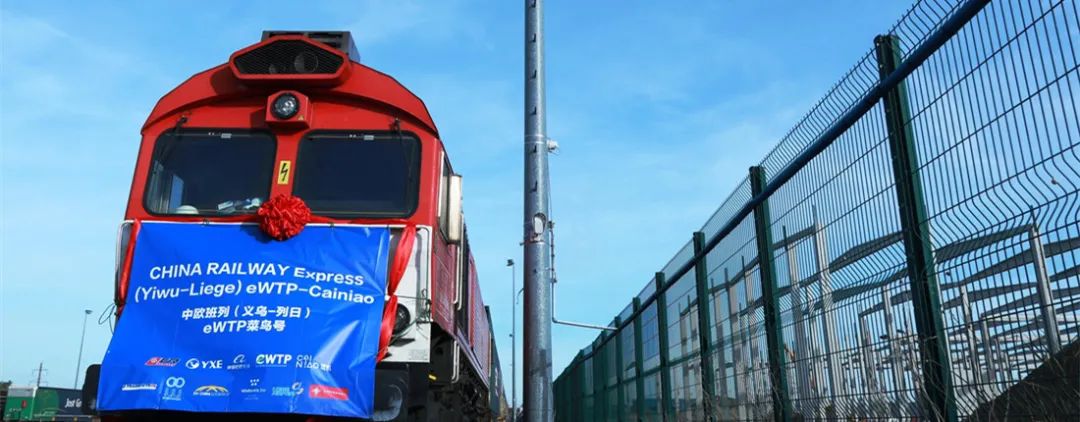
In 2021, the total value of LED lighting products exported from China to the 65 countries along the "Belt and Road" (B&R) route reached US$13.3 billion, a Year-on-year (YoY) increase of 13.8%, accounting for 28% of the total LED lighting exports.
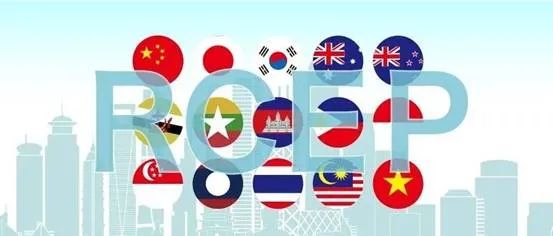
In 2021, the total value of LED lighting products exported from China to the 14 member countries of the Regional Comprehensive Economic Partnership (RCEP) reached US$8 billion, a year-on-year (YoY) increase of 9.1%, accounting for 17% of the total export volume of LED lighting.
3 Specific Products
1. LED light source
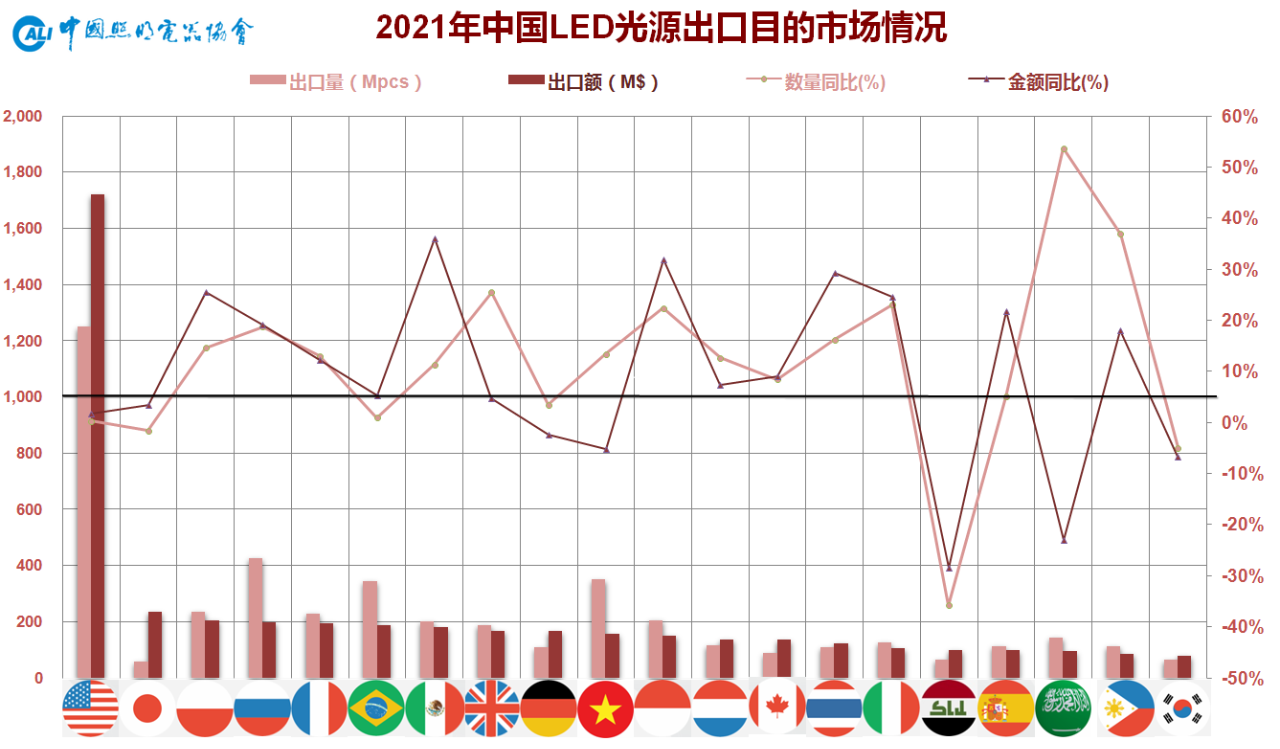
From the perspective of export destination markets for LED light source products, the total export volume to the top 20 markets in 2021 was 4.52 billion units, an increase of 370 million units compared to the top 20 markets in the same period of 2020, with its share of total exports rising to 66%. In 2021, the total export value to the top 20 markets amounted to USD 4.51 billion, an increase of USD 200 million compared to the top 20 markets in the same period of 2020, while its share of total export value increased by 2 percentage points to 75%.
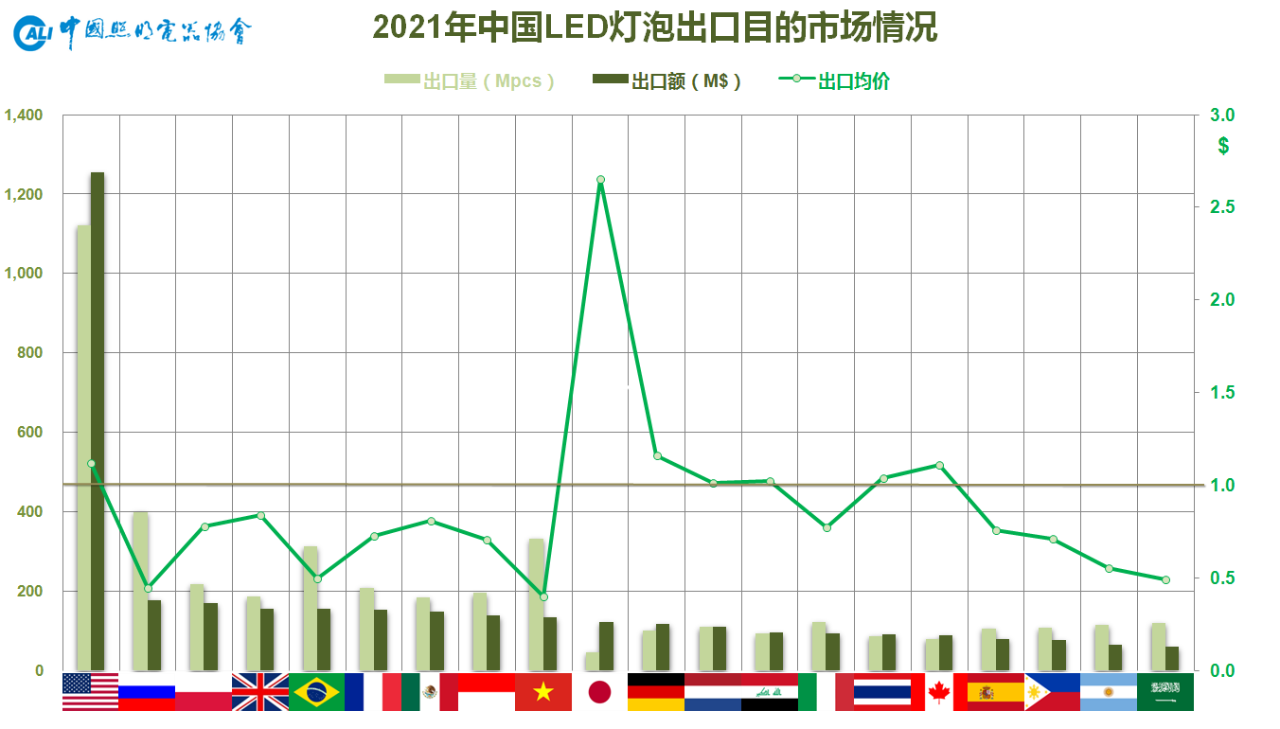
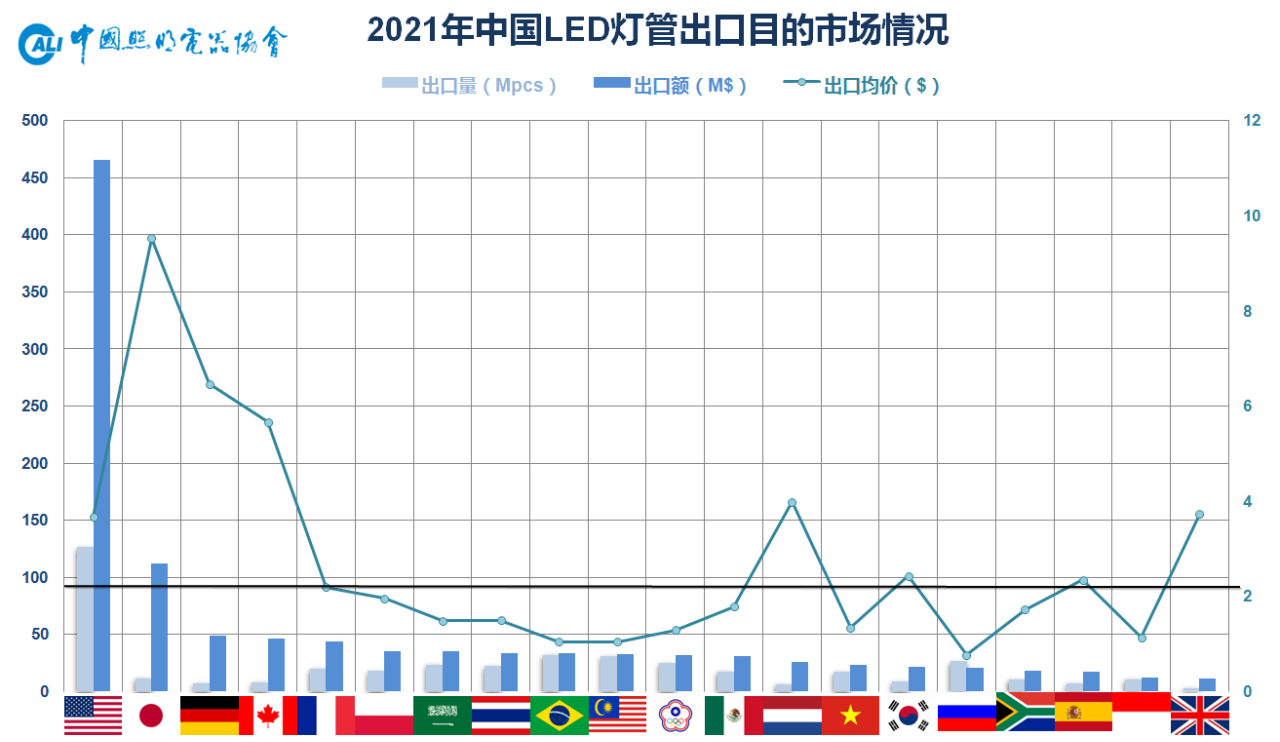
Let's look at LED light bulbs and tubes separately. The total export volume of LED light bulbs to the top 20 markets was 4.23 billion units, accounting for two-thirds of the total export volume; the total export value to the top 20 markets was USD 3.47 billion, representing 74% of the total export value. The total export volume of LED tubes to the top 20 markets was 430 million units, accounting for 72% of the total export volume; the total export value to the top 20 markets was USD 1.10 billion, representing 83% of the total export value. For both LED light bulbs and LED tubes, the average export price to Japan is far ahead of other markets.
2. Traditional Light Sources
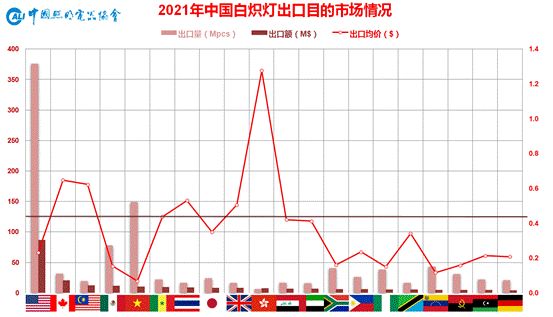
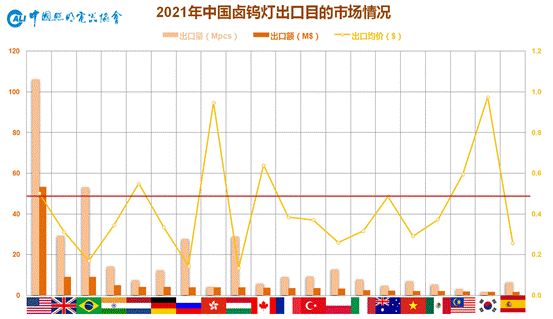
Export data for incandescent lamps shows that African countries occupy 7 of the top 20 markets, indicating that incandescent lamps with an average price of less than $0.20 still have a significant market in less developed regions. As another thermal radiation light source, tungsten halogen lamps present a different scenario: their leading markets are mostly developed economies in Europe and America. Tungsten halogen lamps have long been favored by European and American markets that prefer low color temperature and high color rendering index, thanks to their excellent light color quality, higher efficiency compared to incandescent lamps, and lower price compared to LED. Although their development is constrained by energy efficiency requirements in major markets, they will still maintain differentiated market competitiveness in the near future.
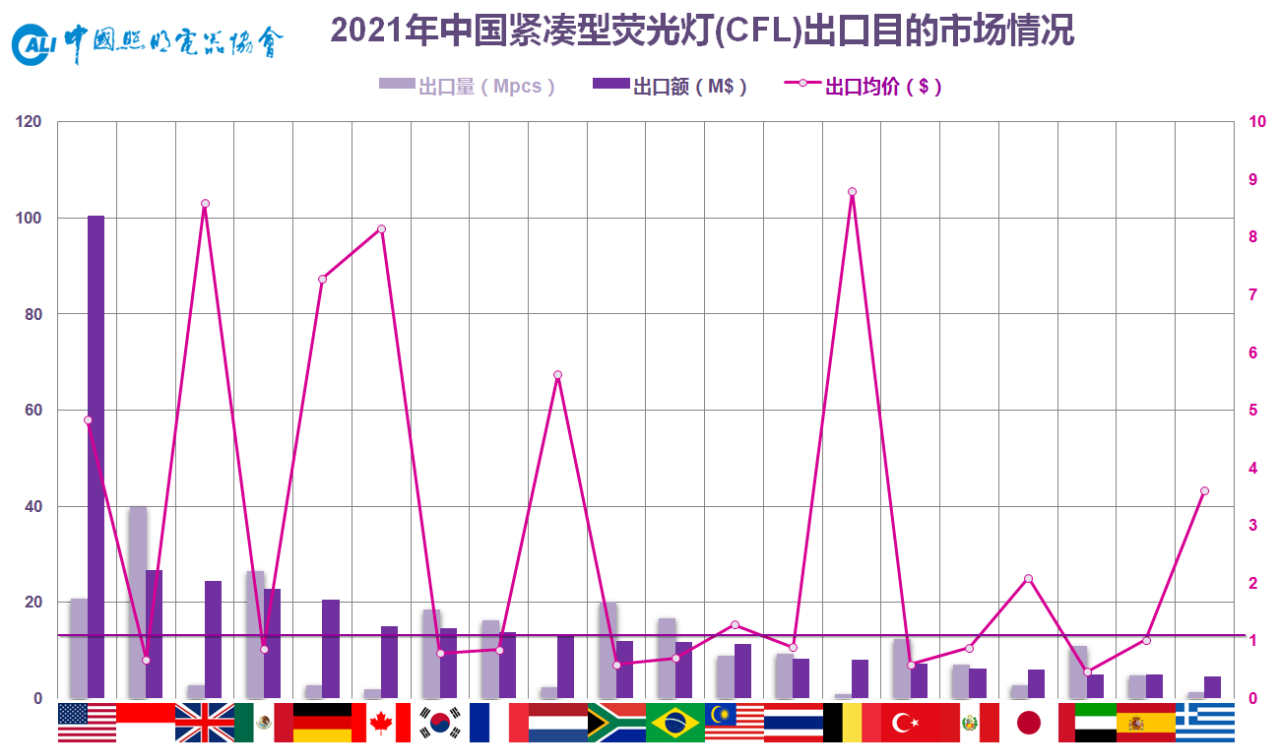
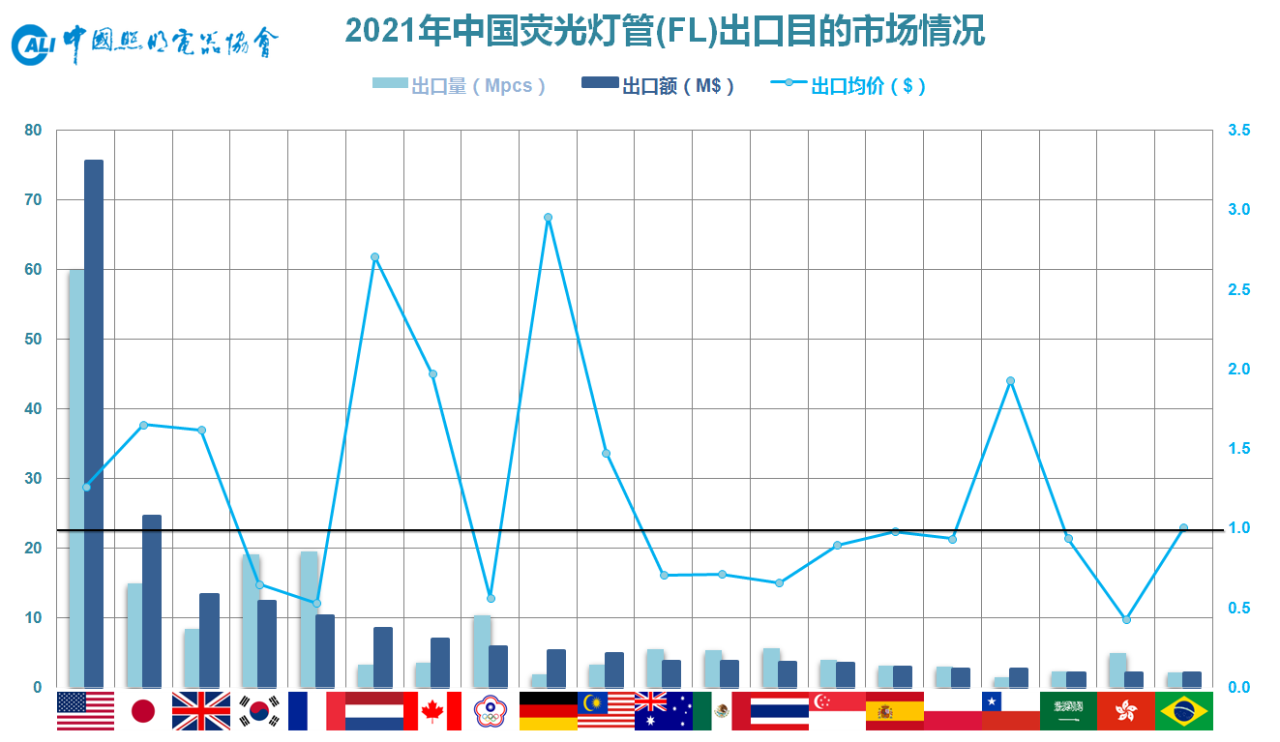
For fluorescent lamp products, similar to LED light sources, the unit price for exports to developed economies such as the US, Canada, Germany, the UK, and the Netherlands is significantly higher than the average. This is particularly true for compact fluorescent lamps (CFL), where exports to Europe and the US are currently dominated by high-value, high-power products, as small and medium-power CFLs in these markets have been largely replaced by LED products.
3. LED Luminaire
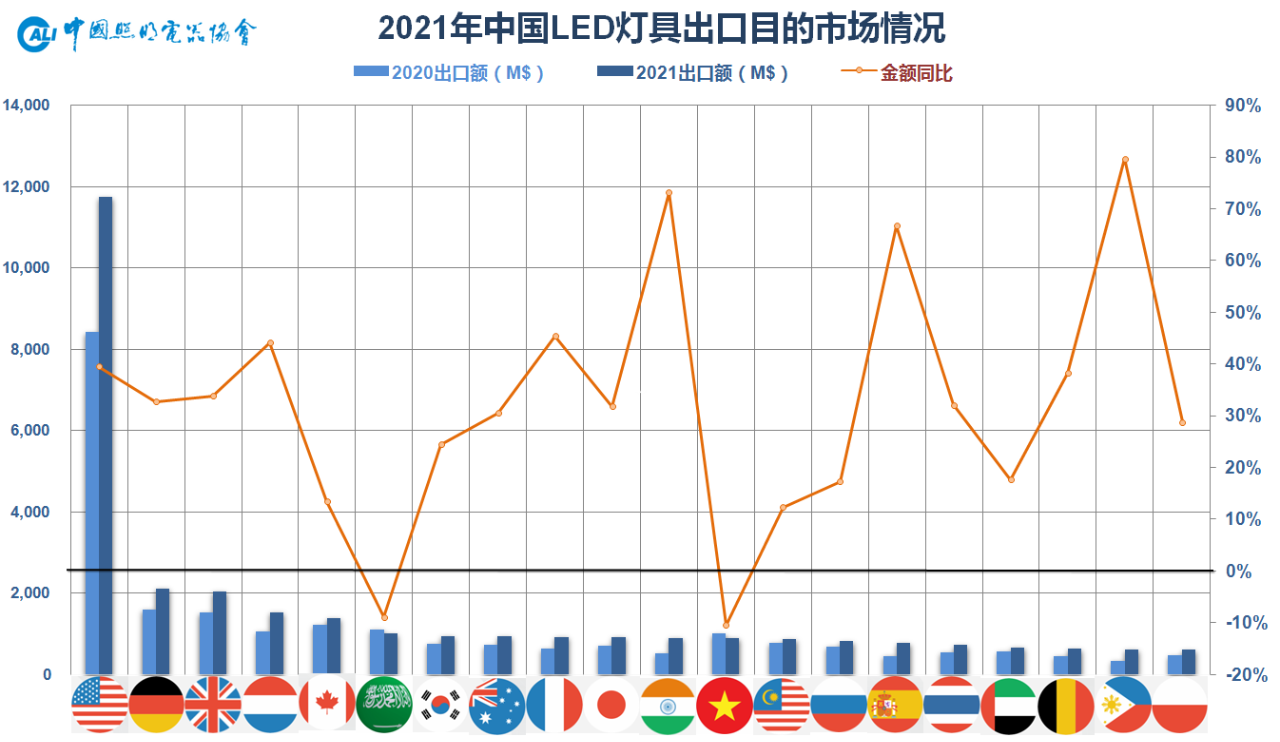
From the perspective of export destination markets for LED luminaire products, the total export value to the top 20 markets in 2021 reached USD 31.19 billion, a 28% increase compared to the same period in 2020, accounting for 75% of the total export value of LED lighting products. As the integration, modularity, systematization, and intelligence of LED luminaire products improve, their share in overall exports will gradually increase.
V. Challenges Faced
While the fundamentals of lighting exports remained generally positive, the pandemic triggered excess liquidity due to global monetary easing on one hand, and severely hampered the recovery of end markets on the other. This led to upstream cost inflation and downstream market deflation, resulting in a situation where, despite booming export data, most exporting enterprises actually faced "orders without profits" in 2021.
The challenges faced by lighting exports in 2021 included: sharp increases in material costs, chip shortages, soaring freight rates, exchange rate fluctuations, energy restrictions, and sporadic domestic COVID-19 outbreaks. The root cause lies in the impact of the COVID-19 pandemic on the global supply chain, characterized by its rapid outbreak, wide reach, long duration, difficulty in prevention and control, and profound impact.
1 Materials and Chips
Upstream raw material price fluctuations are inherently cyclical events driven by commodities. However, the sudden intervention of the pandemic amplified their impact, completely disrupting production schedules and decision-making logic, leading to phased and structural supply-demand imbalances since the fourth quarter of 2020. This has caused significant price increases and varying degrees of shortages for nearly all products in the manufacturing supply chain, including IC chips, MCUs, MOS transistors, rectifier bridges, aluminum substrates, PCBs, passive components, plastic parts, and paper products.
The causes of this round of surging commodity prices and the global chip shortage are complex, resulting from the combined effects of inflation, supply chain disruptions, hoarding and reluctance to sell, a rush on production capacity, demand that was initially suppressed then rebounded, and the transmission of anxiety-driven expectations. As commodity prices approach an inflection point, supply chains are being restructured, production capacity on the supply side is being released, demand growth is narrowing, and market expectations are returning to rationality. As we predicted in our H1 2021 Export report, the sharp rise in raw material prices and the chip shortage have now been alleviated to a considerable extent.
2 Logistics
Since the fourth quarter of 2020, the pandemic has caused global manufacturing demand to first decline and then rebound. The accumulation of large volumes of cargo, combined with reduced port efficiency, has made space shortages, container scarcity, and soaring freight rates common in the international shipping industry.
The direct impact of soaring ocean freight rates on Export is mainly delayed delivery. Most lighting manufacturers quote FOB, so they do not need to consider the direct impact of rising ocean freight costs; some even list ocean freight separately on certain orders to avoid this uncontrollable factor. The impact of shipping disruptions on Export is more indirect: first, soaring ocean freight increases overseas customers' purchasing costs, reduces their willingness to buy, and decreases orders; it also pressures overseas customers to demand price reductions from Export manufacturers, thereby squeezing profits. Disruptions in the international shipping system, with containers "going out but not returning" and a severe shortage of containers, make it difficult for overseas customers to book space and slow down cargo pickup, increasing the likelihood of cargo abandonment, extending delivery and payment collection cycles, affecting cash flow speed, and increasing liquidity risks for Export manufacturers; on the other hand, large volumes of products awaiting shipment accumulate in domestic manufacturers' warehouses, affecting their overall operational turnover efficiency. The main issue is delayed delivery.
3 Exchange Rate
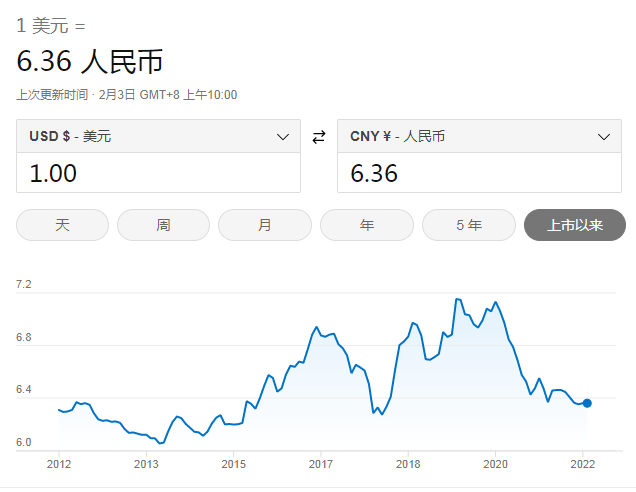
The RMB/USD exchange rate appreciated from the 2020 high of 7.2 to 6.3. This significant appreciation of the RMB against the USD was a major source of profit losses for export manufacturers in 2020, while the situation improved relatively in 2021. However, future exchange rate fluctuations will remain a major variable affecting lighting exports.
4 Energy
In the fourth quarter of 2021, the National Development and Reform Commission issued the "Plan for Improving the Dual Control System for Energy Consumption Intensity and Total Volume." It pointed out that high energy-consuming and high-emission projects must be strictly controlled, and the results of dual control over energy consumption will serve as an important basis for assessing provincial people's governments. Subsequently, large-scale power rationing began to sweep across the national manufacturing industry. This round of restrictions on industrial electricity usage was characterized by wide coverage, strong suddenness, and strict enforcement. In particular, major manufacturing provinces such as Jiangsu, Zhejiang, Fujian, and Guangdong took strong measures, implementing varying degrees of power rationing and production halts for enterprises under their jurisdiction. As a result, the supply chain coordination, logistics efficiency, and production capacity delivery of a considerable number of lighting enterprises were significantly affected.
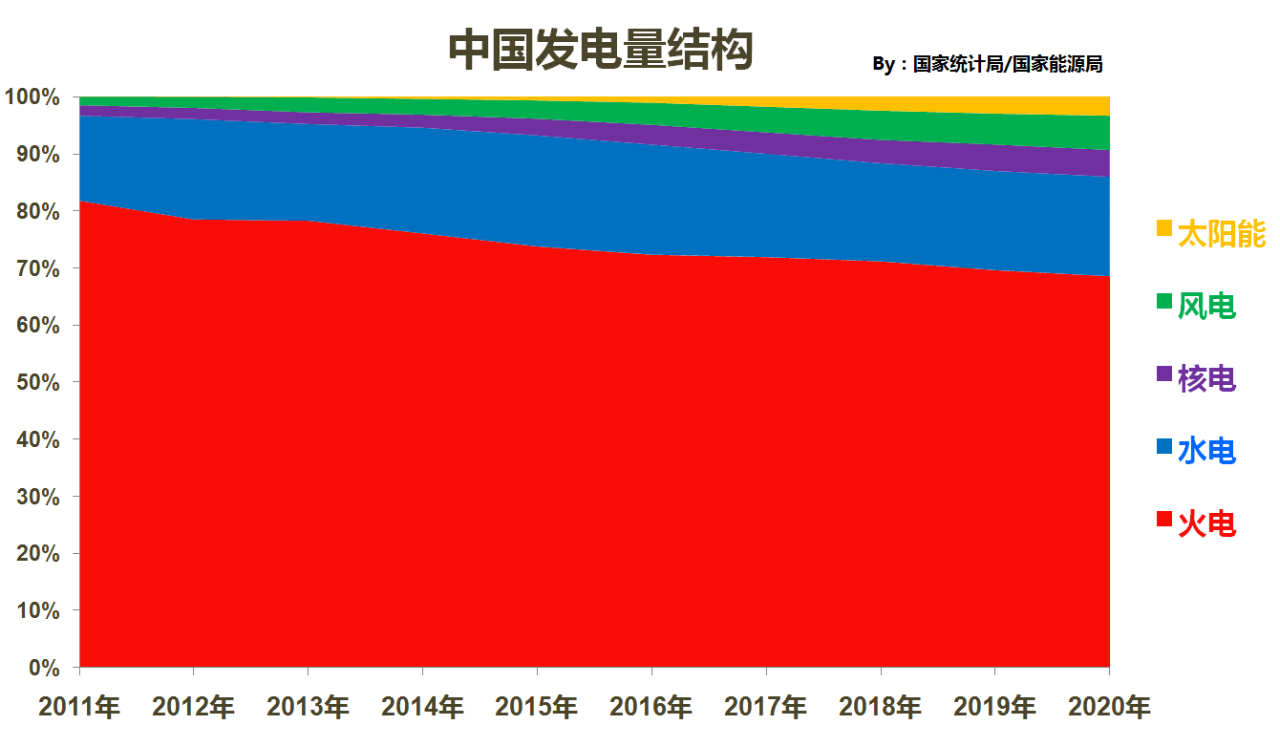
The main reasons for this round of nationwide power rationing are:
1. Fundamentally, there is a shortage of coal and electricity. In recent years, China's energy transition has shifted from primarily thermal power to clean energy sources such as wind, hydro, and photovoltaic power. However, new energy is still in its early stages of development, while the expansion of thermal power is restricted. The prosperity of the manufacturing sector has driven up electricity demand. Coupled with soaring coal prices and high coal washing costs, terminal electricity tariffs—critical to national livelihood—are limited in their ability to rise. This "market-driven coal, planned electricity" situation has caused power enterprises to operate at a loss, ultimately leading to insufficient thermal power production capacity.
2. Some localities rushed to meet dual energy consumption control targets. Dual energy consumption control refers to both improving energy efficiency and strictly limiting total consumption, which better safeguards national energy security. However, some local administrators failed to plan ahead; in order to comply with mandatory national targets, they hastily completed annual carbon emission reduction tasks by implementing crude, one-size-fits-all power rationing and load shedding for local industrial production sectors.
3. Reduce low-end and excess production capacity. Under the pandemic, global manufacturing demand has concentrated in China, which leads in resuming work and production. However, against the backdrop of global monetary easing, factors such as significant price increases for upstream raw materials, soaring ocean freight rates, and exchange rate fluctuations have severely squeezed manufacturing profits. The current power rationing is also a proactive measure to reduce low-end and excess production capacity, urging related industries to pursue high-quality development.
The lighting industry has entered the post-LED era. As the industry benefits brought by LED technological innovation approach their ceiling, the growth rate of the entire industry is narrowing year by year. High-quality development, with intelligent, healthy, green, and low-carbon lighting systems as the main direction, will become the inevitable path for industrial development. On one hand, it is necessary to increase industrial concentration; the concentration and integration level of the lighting industry are relatively low, and fierce competition among domestic enterprises results in weak pricing power for products. On the other hand, while facing the high volume of orders driven by the transfer and substitution effects under the pandemic, companies should remain clear-headed, expand cautiously, proactively reduce low-end production capacity, optimize product structure, increase product added value, and thereby enhance their own international competitiveness.
5 Labor and Land
The rigid rise in labor and land costs, coupled with structural shortages, is becoming increasingly prominent, especially in the well-developed lighting manufacturing regions along China's southeast coast, where recruitment difficulties and high land prices are particularly acute.
Data from China's seventh national census shows that the working-age population has decreased by 30 million compared to ten years ago. Compared to working in factories in the manufacturing sector, the new generation of laborers prefers service industries such as express delivery and food delivery, which have risen rapidly in recent years. This is also a common problem faced by China's manufacturing industry. As a result, many lighting companies have adopted a "dual-center model," where business centers such as headquarters, R&D, and sales remain in the southeastern coastal areas, while manufacturing centers shift to the central and western regions with lower costs.
6 Pandemic
As a "top performer" in global epidemic prevention and control, China adhered to the "dynamic zero-COVID" policy in 2021, with its main challenge remaining "preventing imported cases and domestic rebounds." However, despite stringent measures, sporadic local outbreaks still occurred. Lighting industry clusters such as Yangzhou, Xiamen, Shaoxing, Hangzhou, Shenzhen, Dongguan, and Zhongshan successively faced epidemics in 2021. The lockdown policies implemented in various regions had varying degrees of impact on the production capacity and logistics of local lighting enterprises.
In short, if the profit losses of export manufacturers in 2020 were mainly due to exchange rates, then in 2021 their profits were largely squeezed by rising upstream costs, while also coping with the impact of power rationing and sporadic outbreaks on production capacity. This is the hardship behind the booming manufacturing data.
2022 Outlook
In 2022, the global pandemic situation remained severe, with a more complex,严峻 and uncertain external environment, and a slowdown in the recovery of international demand. China's economic development also faced triple pressures of demand contraction, supply shocks, and weakening expectations, and the export of China's lighting industry was no exception.
1. Demand Contraction
1. External demand faces downward pressure
The COVID-19 pandemic has severely impacted the global economy and disrupted global supply chains, leading to a decline in market growth. In 2022, the global monetary policy, which had been significantly eased for two years, is likely to come to an end and enter a new cycle of tightening, greatly increasing the probability of a financial crisis. External demand will continue to face significant downward pressure due to the global economic downturn.
2. The high growth in demand for products related to epidemic prevention and the stay-at-home economy is difficult to sustain in the long term.
In 2021, exports of epidemic prevention and control-related lighting products such as scientific research and medical lamps and UV lamps, as well as stay-at-home economy-related products like plant grow lights and filament lamps, declined compared to 2020, reducing their boost to overall exports. The export of these products is closely tied to the development of the overseas pandemic, and it is expected that demand for pandemic-related products in various countries will further weaken in 2022.
3. Excess inventory will suppress new purchase orders
In 2021, overseas customers placed advance and excess orders to secure production capacity and materials from Chinese suppliers based on their forecasts of future trends. Coupled with low logistics turnover efficiency, this led to high product inventory levels. The duration of the inventory digestion cycle will affect their willingness to purchase new orders in 2022.
4. The sustainability of the substitution effect is weak
In the future, as other industrialized countries find pandemic control unmanageable and opt for coexistence, gradually resuming production and operations, their supply capacity will recover. The substitution effect of China's exports to other countries will inevitably weaken, and export market share will return to normal levels, thereby reducing support for overall export growth.
2 Supply Shock
The lighting manufacturing sector has long faced common challenges in China's manufacturing industry on the supply side, namely the rigid rise in costs for materials, logistics, labor, land, and energy. Excessively high production costs, coupled with structural overcapacity and homogeneous low-price competition, have repeatedly intensified survival pressures on lighting enterprises. At the same time, they must cope with difficulties and challenges brought by dual control of energy consumption, sharp exchange rate fluctuations, and sporadic domestic outbreaks.
In addition, with the continuous escalation of trade frictions between China and the United States and the undercurrent of de-Sinicization in the global industry / supply chain, the risk of spillover from China's lighting supply chain will continue to exist in the long term. In the pre-pandemic operating system, the globalized supply chain mainly emphasized cost-effectiveness and efficiency; in the future, it will evolve to prioritize supply chain security while balancing efficiency. The international supply chain model of the lighting industry is likely to adopt a "China+1" strategy in the future, with some lighting orders inevitably diverted to Southeast Asia, India, Mexico, and other regions.
3. Weakening expectations
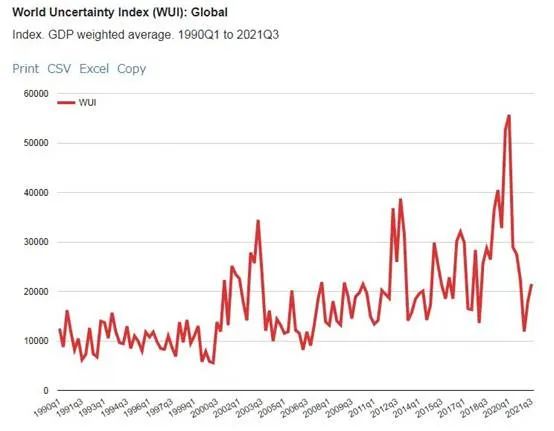
In the year of the pandemic, global supply chains suffered severe setbacks. Major economies expanded monetary and fiscal policies, exacerbating inflation, asset bubbles, and debt risks. Uncertainties facing lighting exports continue to increase, and the recovery of international market demand in the post-pandemic era shows an uneven trend.
Pessimistic expectations have intensified the contraction in demand and amplified wait-and-see sentiment on the supply side, leading to reduced investment willingness and higher asset-liability ratios among related export enterprises, which will to some extent constrain the recovery of external demand. Meanwhile, the interplay of variables such as the global pandemic trajectory, the world economic situation, China-US trade friction, and the RMB exchange rate poses significant challenges to the decision-making and planning of these export enterprises.
Looking ahead to the export prospects of China's lighting industry in 2022, there are both headwinds from the withdrawal of Generalized System of Preferences (GSP) tariff preferences by 32 Western countries at the end of 2021, and tailwinds from the formal entry into force of the Regional Comprehensive Economic Partnership (RCEP) at the beginning of the year. Considering the pressures from shrinking demand, supply shocks, and weakening expectations, along with the high base effect from the strong export growth in 2021 and the recent decline in commodity prices which has weakened price factors, it will be difficult for lighting exports to replicate the boom of 2021. The full-year export value in 2022 is expected to achieve a slight single-digit growth, with the possibility of negative growth in certain months.
Amid the global pandemic, the lighting industry faced successive challenges on both the supply and demand sides. Nevertheless, the entire sector demonstrated remarkable resilience, with export scale further expanding despite numerous difficulties. Countless facts and data from the past illustrate that China's lighting industry is a globalized sector vital to national economy and people's livelihood. China's position as the manufacturing center and supply chain hub of the global lighting industry was further consolidated during the pandemic. New concepts such as intelligence, health, design, and low carbon have endowed the lighting industry with greater added value and room for imagination. Against the backdrop of the industry's transition from scale-driven growth to high-quality development, the sector should be guided by market demand as the core force, driven by technological innovation, and based on an efficient and secure modern supply chain system, gradually entering the phase of high-quality development.
The German philosopher Albert Schweitzer once said, "We look to the future with anxiety, but we must still be filled with beautiful hope." We sincerely hope that 2022 will be a good year!
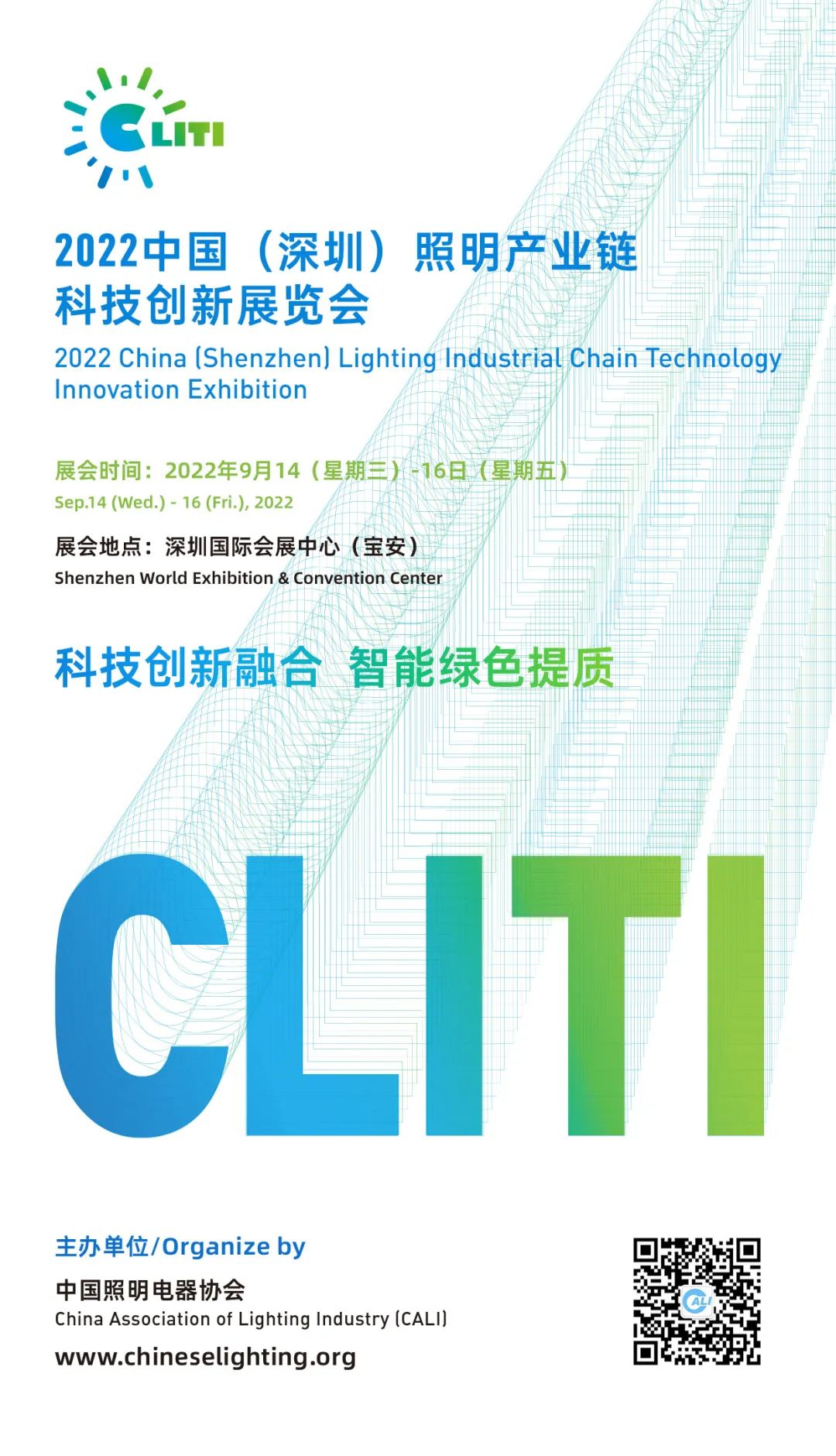
Integration of technological innovation, intelligent and green quality improvement, connecting dual-circulation markets, and practicing high-quality development. Please pay attention to the "China (Shenzhen) Lighting Industry Chain Technological Innovation Exhibition" (CLITI Exhibition) hosted by China Association of Lighting Industry(中国照明电器协会) in Shenzhen in September 2022!
Click the image for details
Booth Inquiry
Contact: Zhao Weixin, Sun Shuyi, Yan Zhongshu, Hou Sha, Deng Maolin
Phone: 010-65135872, 65135873
Email: cliti@cali-light.com
China Light
The official website of the China Association of Lighting Industry and a full-media platform for the lighting sector. We provide authoritative and timely lighting information while striving to be a growth partner for businesses. From brand promotion and channel expansion to consulting, talent training and participation in standards development, we provide comprehensive professional services to help businesses improve quality and efficiency and jointly advance the high-quality development of the lighting industry.
Business Contacts
仇纯 (Ms.): 158 6155 3579
顾君 (Mr.): 137 7157 5253