
Analysis of China's Lighting Industry Export in the First Half of 2021: Exports Continued to Surge, Cautious Optimism Remains Despite Positive Fundamentals
Author/Wen Qidong
China Association of Lighting Industry(中国照明电器协会)
1. Overall Overview
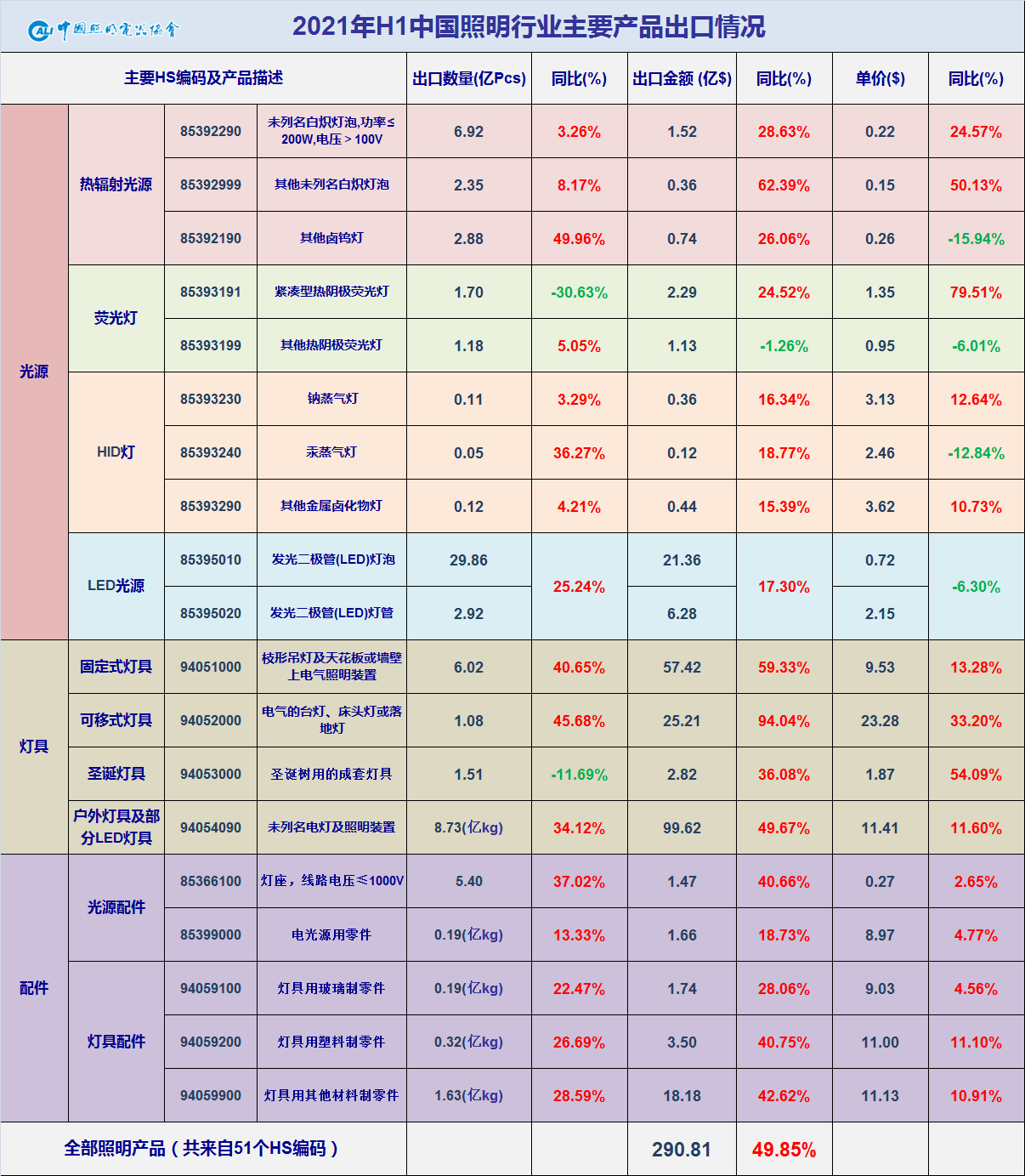
Note: On December 31, 2020, the Tariff Commission of the State Council issued the "Import and Export Tariff of the People's Republic of China (2021)". The original 8-digit HS code 85395000 for "Light-emitting diode (LED) light bulbs (tubes)" was deleted, and two new 8-digit HS codes were added: 85395010 for "Light-emitting diode (LED) light bulbs" and 85395020 for "Light-emitting diode (LED) tubes". This adjustment originated from suggestions submitted by the China Association of Lighting Industry(中国照明电器协会) to relevant departments regarding adjustments to import and export tariff items in the lighting industry, among which the suggestion to separately list the above LED light source products under HS codes was adopted.
In the first half of 2021, China's total lighting product exports reached US$29.081 billion, a Year-on-year (YoY) increase of 49.85%, and a 36.51% increase compared to the same period in 2019. The two-year average growth rate also reached double digits at 10.92%. Among these, LED lighting product exports amounted to US$20.988 billion, with a Year-on-year (YoY) increase of 50.83%, and a 38.35% increase compared to the same period in 2019. The two-year average growth rate was 11.43%. Both the total lighting product exports and LED lighting product exports set new historical records for the first half of the year in the lighting industry.
另据海关总署数据显示,2021年上半年,我国货物贸易出口总值达到9.85万亿元人民币,同比增长28.1%,以美元计则达到1.52万亿美元,同比增长达38.6%;其中机电产品5.83万亿元,占出口总值的59.2%,同比增长达29.5%。自去年6月起首度扭负为正之后,照明行业出口表现继续大幅领先于外贸大盘,为提振整体出口做出了贡献。
2. Analysis of Growth Drivers
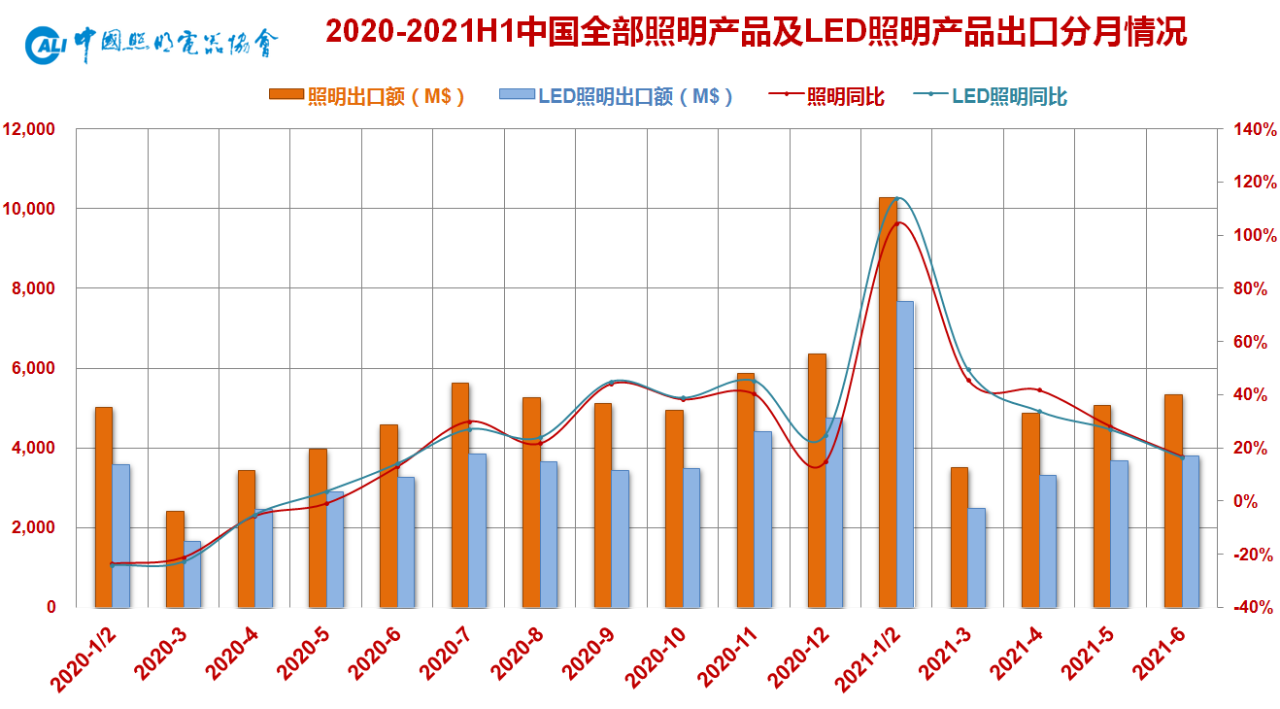
After experiencing a "V"-shaped reversal in 2020, with an initial decline followed by a recovery, the export of Chinese lighting products maintained a strong momentum in the first half of 2021. However, compared to the ultra-high growth in the first quarter, the second quarter showed a clear trend of monthly narrowing growth rates.
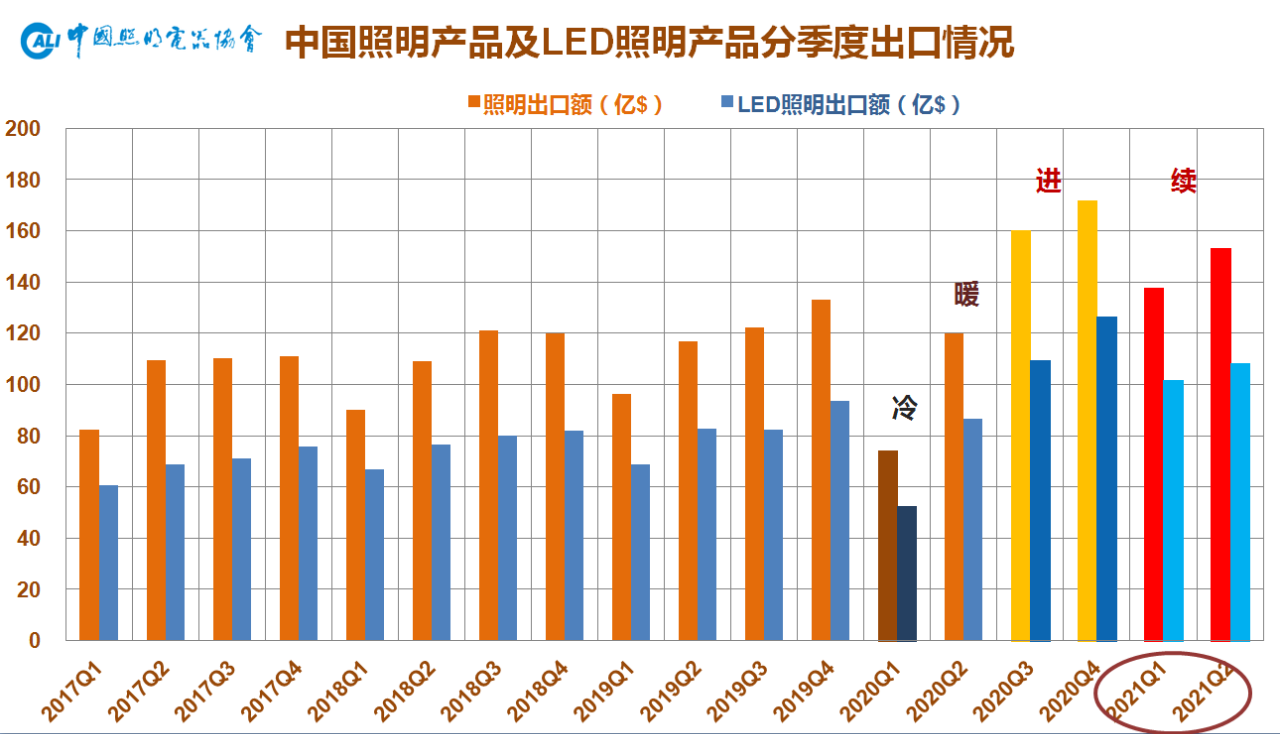
1. Low comparison base from the same period last year. However, it is worth noting that the significant growth in the first half of 2021 was not solely due to the low-base effect of 2020. As traditionally relatively off-peak seasons, the export data for Q1 and Q2 2021 not only far exceeded those of the same periods in previous years but were even significantly higher than the data for Q3 and Q4, which are typically peak seasons.
2. Although the epidemic has not been effectively controlled in major economies in Europe and America, the gradual rollout of vaccines has enabled a pressured restart of their economies. For China's lighting exports, external demand has continued to improve marginally. Meanwhile, stimulated by loose monetary policies in various countries, demand-side recovery remains stronger than supply-side recovery, with consumer demand being steadily released.
3. Exports of products related to epidemic prevention and control and the stay-at-home economy continued to maintain a certain growth momentum. Although the growth rate of these products has shown signs of narrowing, their boosting effect on overall export growth has weakened. Among them, the total export value of epidemic prevention-related lighting products such as scientific research and medical lamps and UV lamps was approximately USD 200 million in the first half of 2021, whereas in the third and fourth quarters of 2020, the export volume exceeded USD 200 million in a single quarter.
4. The "substitution and transfer effect" of China on the global market continues. Starting in the second quarter of last year, as one of the few major economies to fully contain the pandemic, China was the first to resume work and production. The rapid recovery of Chinese manufacturing further highlighted the advantages of being a lighting manufacturing center and supply chain hub, effectively filling the global supply gap caused by the pandemic and replacing other countries' export shares for a certain period. In the first half of this year, with the pandemic still fluctuating globally, the resumption of work and production in relevant industrial countries remained intermittent, and a full recovery of supply remains distant; therefore, this substitution and transfer effect persists.
5. Many overseas customers, anticipating a temporary supply-demand imbalance in the upstream industry / supply chain that leads to "chip and material shortages," have generally placed orders early and in excess to secure production capacity and materials from Chinese suppliers.
3. Export Product Overview
1. Gradual LED Replacement
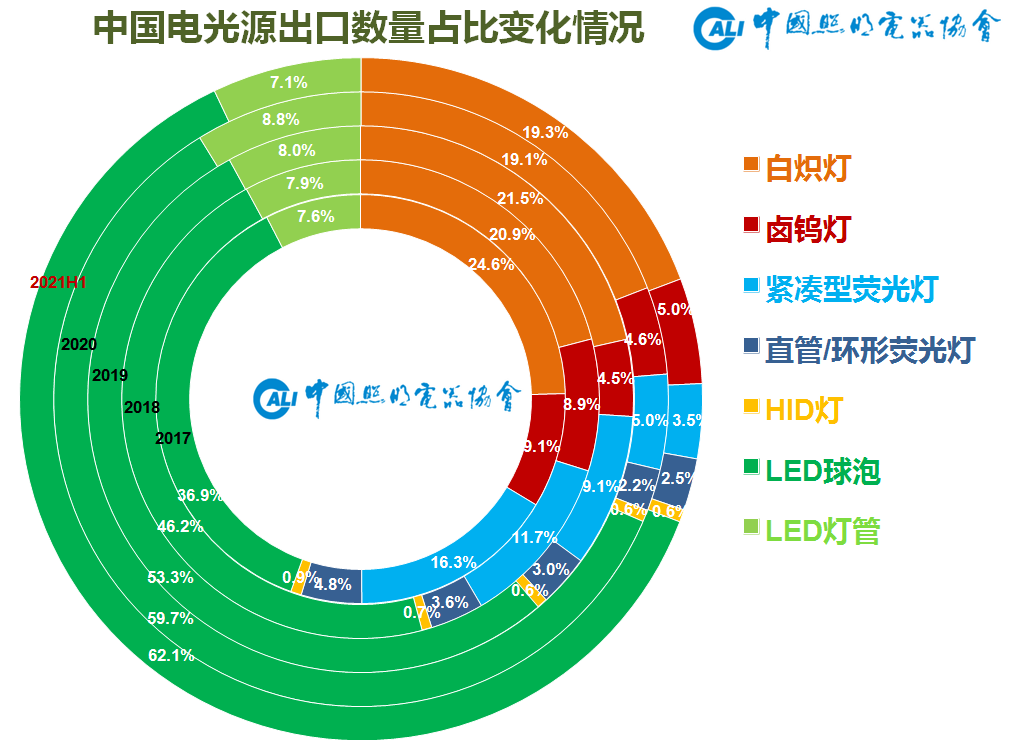
Judging from the trend in the proportion of light sources in recent years, the share of LED products in total light source exports has been rising year by year, reaching nearly 70% at present. This reflects that the replacement of traditional products by LED products continues to show a steady, gradual trend of one declining as the other rises. In terms of traditional light sources, the overall share of incandescent lamps and high-intensity gas discharge lamps, including high-pressure mercury lamps, high-pressure sodium lamps, and metal halide lamps, remains relatively stable. Tungsten halogen lamps were once affected by the EU ErP Directive in September 2018, which required the phase-out of certain non-reflector tungsten halogen lamps, causing export volumes to be "halved"; however, their share has shown a rebound trend in the past two years. Meanwhile, compact and linear/circular fluorescent lamps have been directly impacted by LED products with continuously optimized cost-performance ratios, and their share continues the significant downward trend seen in recent years.
2. The proportion of luminaires continues to rise
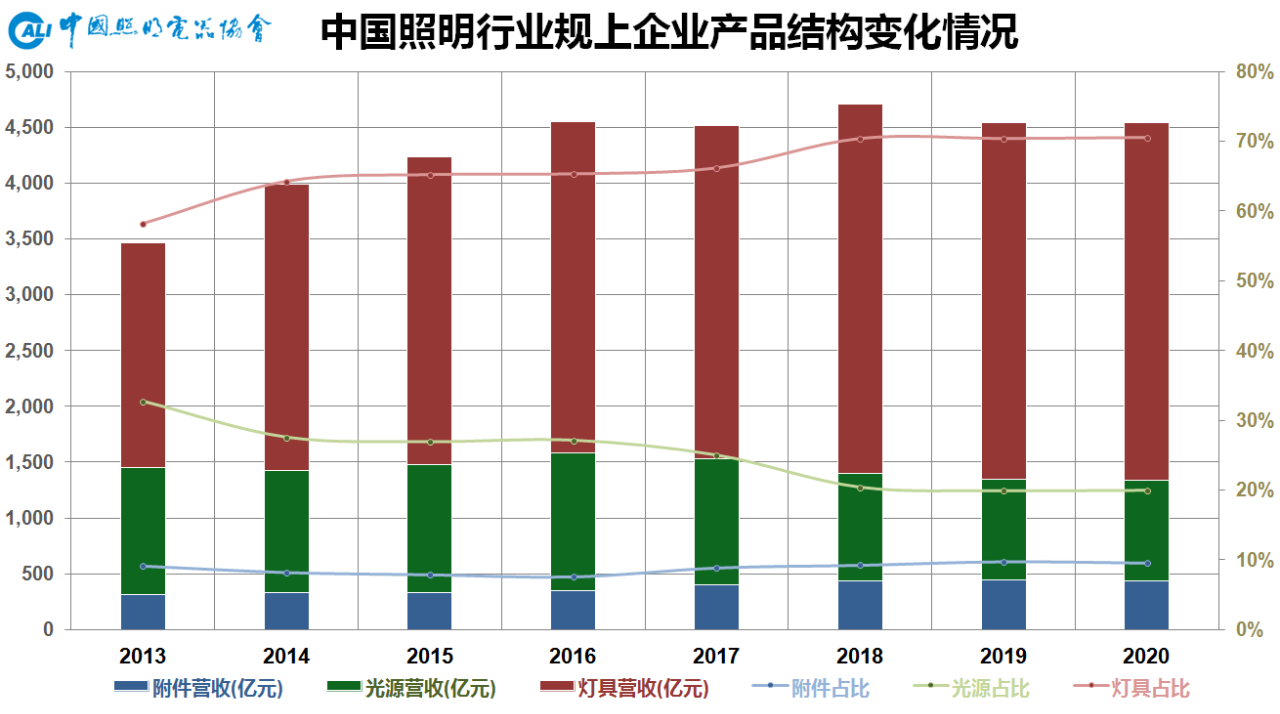
Based on the changes in the revenue structure of products from large-scale enterprises in the lighting industry in recent years, the proportion of light sources has decreased year by year, the proportion of luminaries has further increased, and the proportion of electrical accessories has remained basically stable. Currently, the ratio of luminaires, light sources, and electrical accessories is approximately 7:2:1.
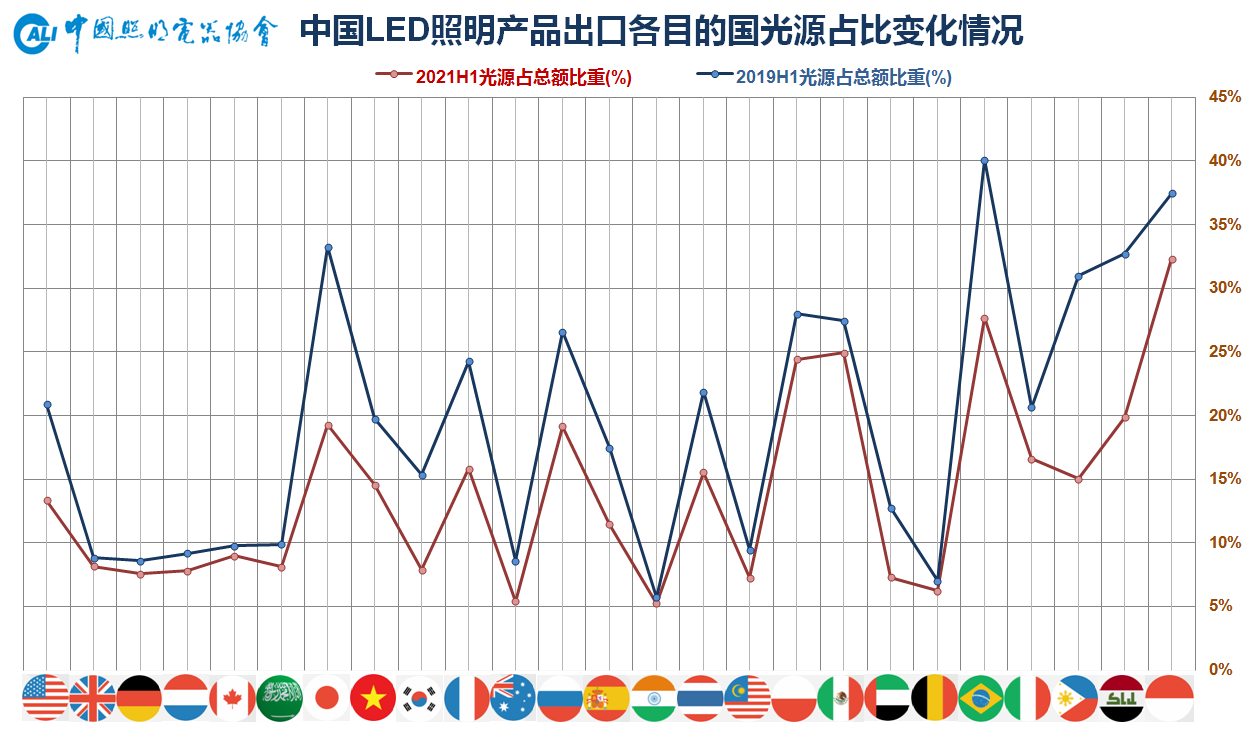
Changes in the product structure of export enterprises and export markets also confirm this trend. Taking export markets as an example, the top 25 markets for China's LED lighting product exports account for over 80% of the total share. As shown in the chart, over the past two years, the proportion of light sources exported to various markets has almost universally declined, with some cases dropping by more than 15 percentage points. Alongside the decline in the proportion of light sources, the share of luminaires has continued to rise. Currently, in China's LED lighting export products, the ratio of light sources to luminaires is approximately 13/87.
3. Declining prices squeeze export profits
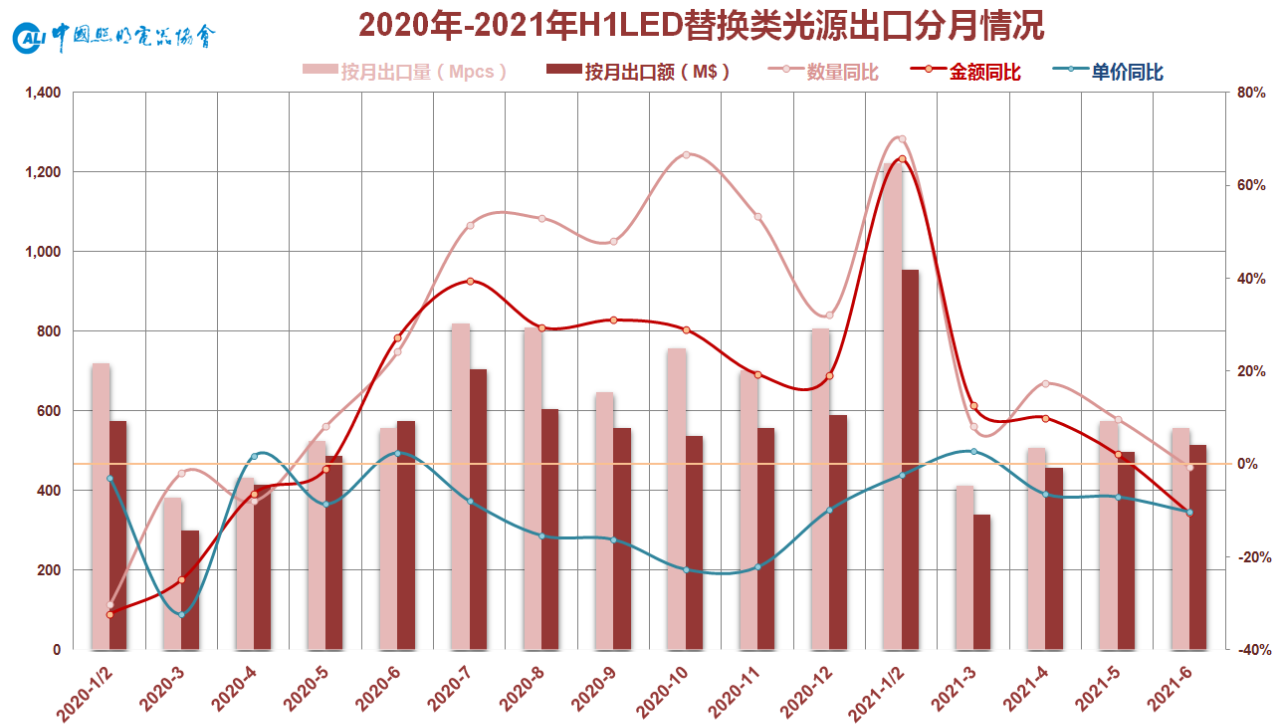
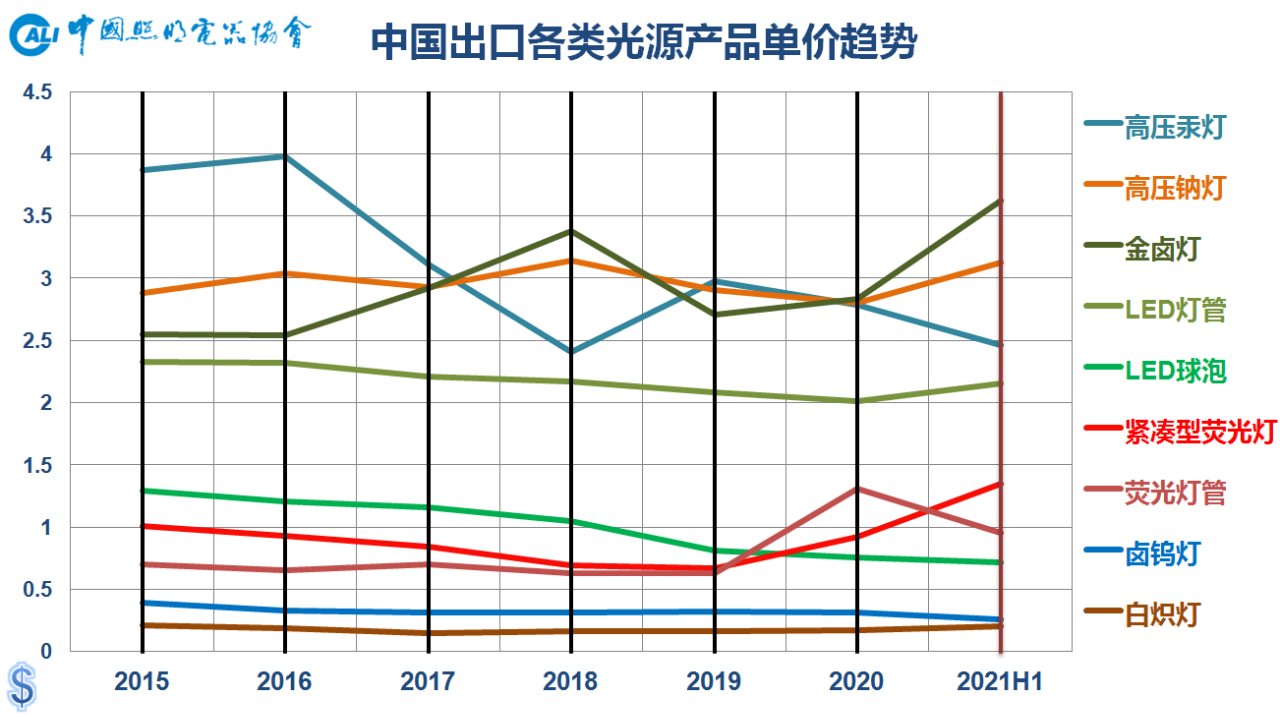
值得注意的是,LED光源出口均价同比来看依然延续了近年来的下行趋势,去年全年就下滑了近10%,随着同期荧光灯产品的价格上升,此消彼长的两者间甚至出现了出口均价倒挂的情况;进入2021年,这一状况并未缓解,并有逐步扩大的态势,自去年下半年以来,LED光源每个单月的出口均价均在下降区间,其中LED球泡和紧凑型荧光灯的价格比已从5年前的1:0.7滑落到如今的1:1.9。在材料、物流等各项成本大幅上涨的同时,LED光源的终端价格却持续下行,利润空间被进一步压缩,这也是头部企业近年来逐步缩减或退出LED光源出口市场的原因。
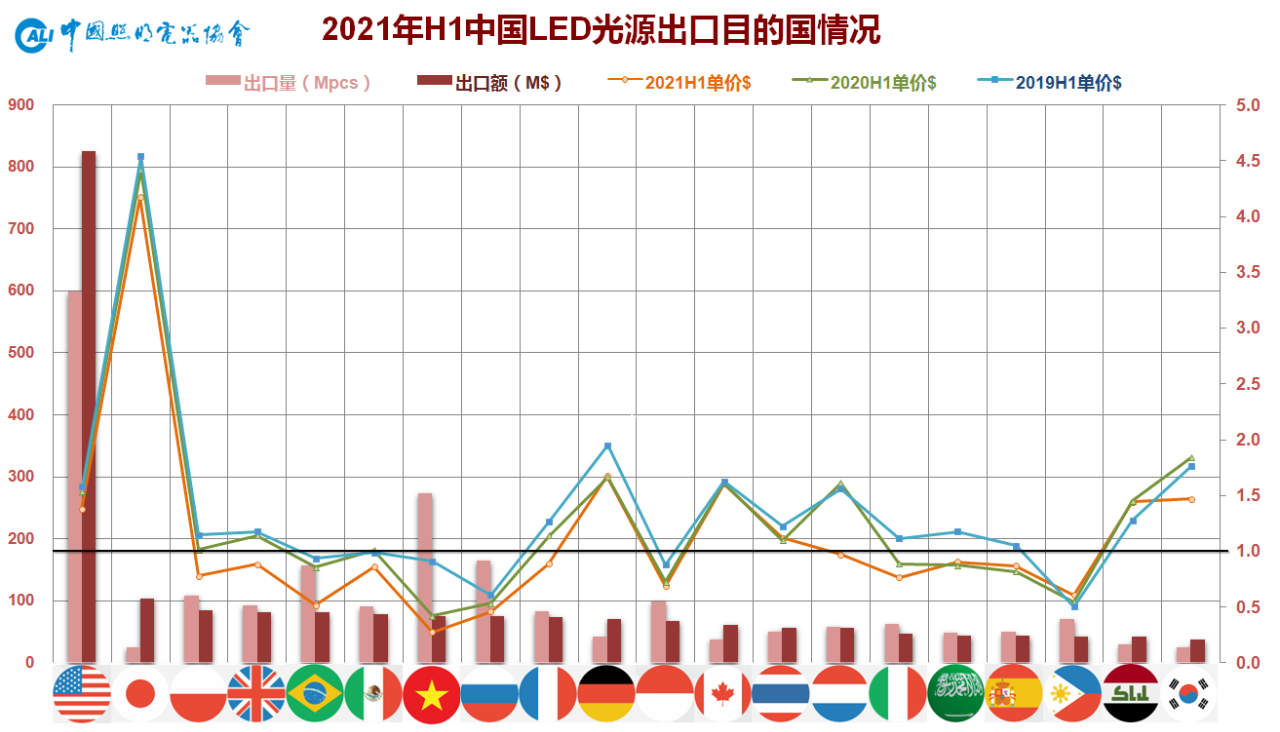
As shown in the figure, the average export price of LED light sources in major markets has also declined to varying degrees.
4. Export Market Landscape
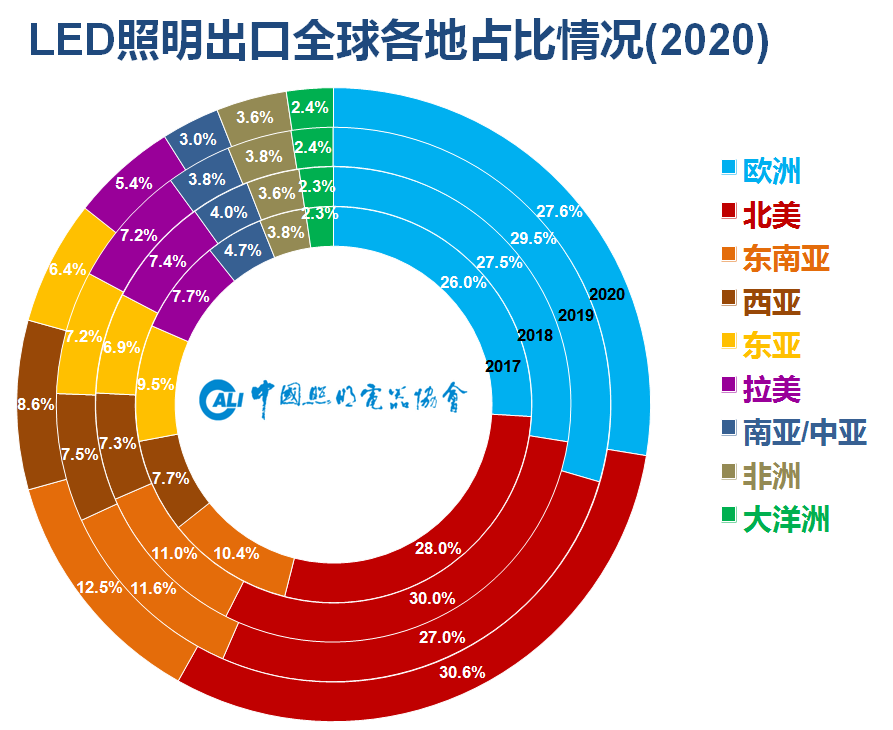
In 2020, the Asia-Pacific market, represented by emerging economies, outperformed the European and American markets that struggled with pandemic control. In particular, RCEP (Regional Comprehensive Economic Partnership) countries in Southeast Asia, East Asia, and Oceania showed outstanding performance. Starting in the second half of the year, the North American market, boosted by significant monetary easing, performed better overall than Europe and South America. By the end of the year, China's Export of lighting products to the United States had fully recovered to the pre-2018 tariff level.
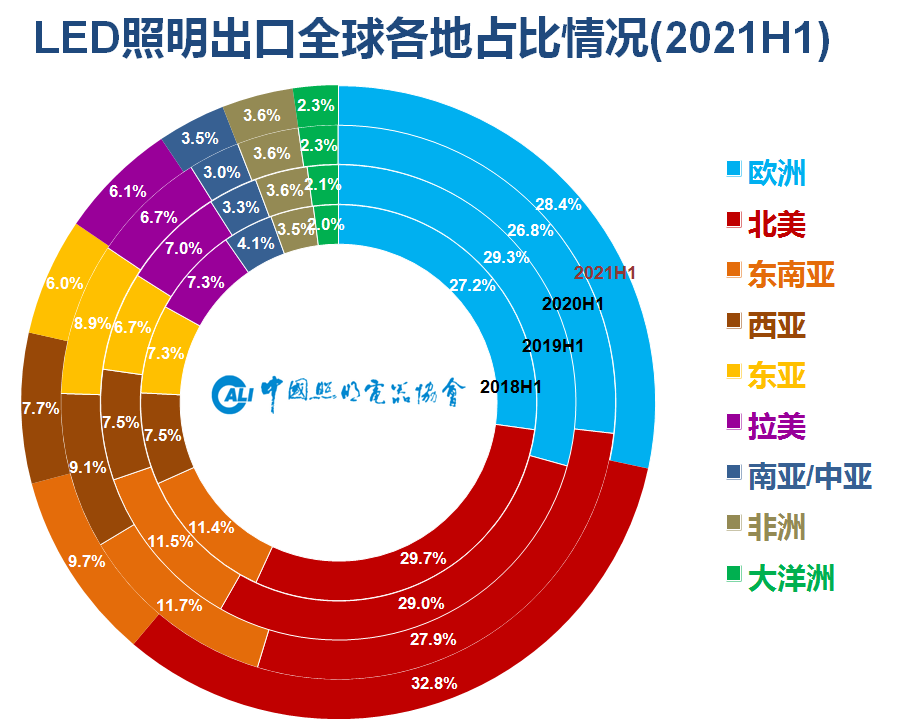
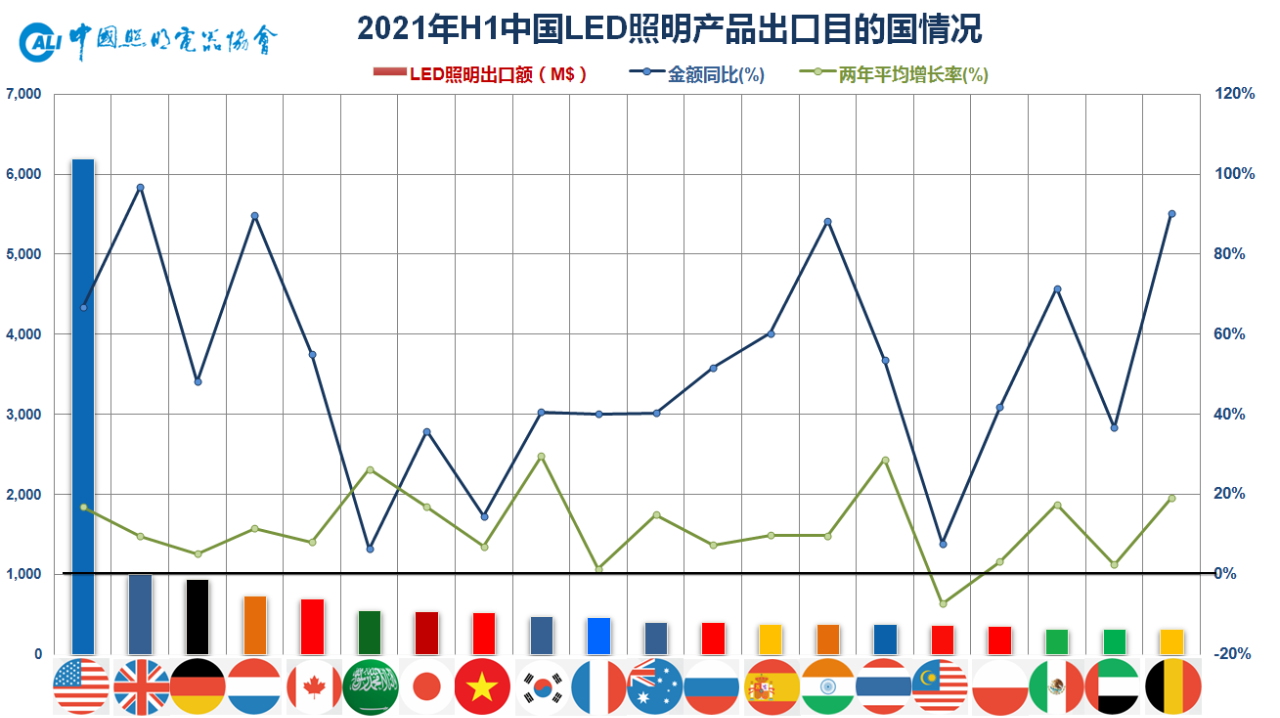
Entering the first half of 2021, the situation changed significantly. Vaccination rates against COVID-19 rose rapidly in developed economies in Europe and America. In contrast, the epicenter of the pandemic shifted to Asia, hampering the economic reopening process in the Asia-Pacific region. Amid these shifting dynamics, data shows a strong rebound in demand in North America and Europe, while East Asia, Southeast Asia, and West Asia markets, which performed outstandingly in the same period last year, were overshadowed, with their market shares declining Year-on-year (YoY) to varying degrees.
5. Challenges Faced
Amid the boom in export data, we must remain rational and cautiously optimistic. On one hand, while the overall fundamentals are improving, rising production costs due to materials, logistics, and exchange rates mean that many specific export enterprises have orders but no profits behind the general prosperity. On the other hand, although it is encouraging that exports maintained growth in the first half of the year, lighting exports in the second half and beyond still face multiple severe challenges.
1. Challenges from the supply side
(1) Materials: Surge in commodity prices, global chip shortage:
Fluctuations in upstream raw material prices are inherently cyclical events driven by commodities. However, the sudden intervention of the pandemic amplified their impact, completely disrupting production schedules and decision-making logic, leading to the current phased and structural supply-demand imbalance.
The reason is:
Under the stimulus of global loose monetary policy, the surge in international commodity prices—whether driven by raw material cost pass-through or investment demand—does not fully reflect changes in market supply and demand. Instead, it more accurately reflects excess liquidity resulting from excessive money issuance worldwide.
Disrupted supply chains, sudden outbreaks of the pandemic, tariffs and sanctions resulting from China-US trade friction, as well as some environmental protection production restrictions have exacerbated supply shortages;
Stockpiling and reluctance to sell, driven by soaring prices of raw materials and components as well as supply shortages, have naturally triggered market hoarding due to a mix of active or passive behavior and overlapping genuine and speculative demand. This has further exacerbated price increases and product shortages to some extent.
Demand growth: The pandemic accelerated digital transformation. In 2020, global demand for consumer electronics related to the stay-at-home economy, such as mobile phones, computers, TVs, and small home appliances, initially declined but then rebounded. Digital demands for remote work/education/medical audio-video systems were also on the rise. Meanwhile, the new energy vehicle manufacturing boom was in full swing, significantly increasing the demand for core chips. These manufacturing demands rapidly concentrated in China within a short period, exacerbating the supply gap.
Production capacity squeeze: Since the lighting industry entered the LED era, the supply chain has transitioned from being exclusive to the electro-vacuum era to becoming common in the electronics industry. Especially for non-exclusive components shared with automotive and consumer electronics industries, the lighting industry must compete with other high-margin sectors for production capacity.
Anxiety transmission: if downstream players expect further sharp increases upstream, they may engage in panic buying, place duplicate or multiple orders, or even fabricate orders, causing upstream prices to surge to levels unsustainable for the entire supply chain in the short term. If downstream sentiment remains stable, price transmission will cease once upstream prices reach a level that downstream players simply cannot bear. Therefore, the root cause of the chip shortage lies in expectations, not in production capacity.
In this situation, it serves as a comprehensive assessment of the lighting supply chain, a process to identify high-quality suppliers and customers, and an industry reshuffle that separates the genuine from the fake. Each fluctuation in commodity prices effectively raises the industry threshold, presenting an opportunity for high-quality enterprises to expand and strengthen. Based on current understanding, the main challenges for high-quality finished product manufacturers are rising costs and extended lead times, rather than chip or material shortages. Limited orders will gradually concentrate on these high-quality production capacities with strong supply chain control capabilities. High-quality supporting enterprises will also take this opportunity to optimize customer resources and product structures, further strategically binding with high-quality downstream customers. Running a business is not just about being first; the key is to maintain a steady and enduring flow.
Driven by commodity prices approaching an inflection point, supply chain restructuring, and flattening demand, the industry-wide shortage of chips and materials is expected to ease to some extent by the fourth quarter of this year.
(2) Logistics:
If the current supply chain is characterized by a "chip shortage," logistics faces a "container shortage." Since the fourth quarter of last year, the surge in demand caused by the pandemic and reduced port efficiency have led to widespread vessel overbooking, container shortages, and skyrocketing prices in international shipping. This has also resulted in rising costs and delayed delivery times for export enterprises.
(3) Exchange rate:
The RMB/USD exchange rate appreciated from 7.2 last year to 6.3 at one point. The significant appreciation of the RMB against the USD was also a major source of profit losses for export enterprises in 2020, and the current situation is tending towards stability.
(4) Labor and Land:
The rigid rise in labor and land costs, coupled with structural shortages, has become particularly pronounced in the well-developed lighting manufacturing regions along China's southeast coast. Data from China's Seventh National Population Census shows that the working-age population has decreased by 30 million compared to ten years ago. Meanwhile, the new generation of workers prefers service industries such as express delivery and food delivery over factory-based manufacturing, a common challenge facing China's manufacturing sector. As a result, many lighting companies have adopted a "dual-center model," keeping headquarters, R&D, and sales centers in the southeast coastal region while relocating manufacturing centers to the central and western regions.
(5) Energy:
Energy saving and environmental protection production restriction policies in some regions, such as Guangdong, Zhejiang, and Fujian—areas with developed manufacturing industries—have led to phased power outages and electricity rationing during extreme heat and severe cold due to annual energy saving targets, which has had a certain impact on the production capacity of some lighting manufacturers.
(6) Supply Chain:
The risk of spillover from China's manufacturing supply chain will persist in the long term. Before the pandemic, the global industry / supply chain primarily focused on cost-effectiveness and efficiency; in the future, it will evolve to balance both security and efficiency. The international supply and demand model in the lighting industry is likely to adopt a "China+1" strategy.
2. Challenges from the Demand Side
(1) The high growth of products related to epidemic prevention and the stay-at-home economy is unsustainable
Currently, the growth rate of related products has shown signs of narrowing. In the first quarter of 2021, the total export value of epidemic prevention-related lighting products, such as lamps for scientific research and medical use and ultraviolet lamps, was US$80 million, whereas in the third and fourth quarters of 2020, it exceeded US$200 million each.
(2) The sustainability of the substitution effect is difficult to maintain
As vaccination rates in other major economies, especially developed ones, gradually increase and production and work resume in an orderly manner, related supply capacity is gradually recovering. The substitution effect of China's exports to other countries will inevitably weaken, and the export market share will return to normal levels, thereby weakening support for overall export growth.
(3) The recovery of the international market shows a divergent trend
In 2020, the Asia-Pacific market, dominated by emerging economies, significantly outperformed the European and American markets, which struggled with pandemic control. The situation reversed sharply in 2021; vaccination rates in developed economies such as North America and Europe were generally higher than those in developing countries in Asia, Africa, and Latin America, leading to a polarized recovery in market demand.
(4) Continued decline in terminal profits increases pressure on corporate survival
As the rigid costs essential to manufacturing—such as labor, land, energy, and raw materials—continue to rise, product prices in the general lighting sector, which has relatively low technical barriers, keep declining amid increasingly fierce competition. With monetary oversupply and inflation upstream while terminal consumption faces deflation downstream, the already thin profit margins of the lighting industry are being further squeezed. Against the backdrop of slowing industry growth, practitioners are working harder yet finding it increasingly difficult to secure profits. This significantly compresses the survival space for related enterprises, especially small and micro businesses, ultimately curbing supply and hindering the sustainable development of the industry.
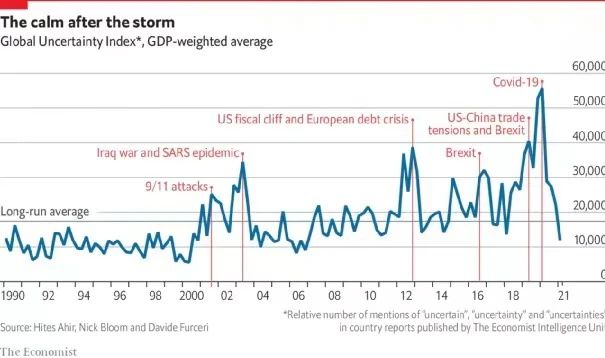
(5) The increase in various uncertainties regarding the outlook has led to significant difficulties in decision-making and planning.
Summary
Looking ahead to the second half of 2021, based on the high base from the same period last year and other relevant factors, it is judged that the growth rate of exports will further narrow, resulting in a trend of high performance in the first half and stability in the second half for the full year; however, with the solid foundation laid in the first half, it is highly likely that annual exports will reach a new historical record.
For lighting enterprises, focusing on core business and embracing change remains the optimal choice, with high-quality development as the direction: optimize product structure, increase product added value, establish an efficient supply chain system, and improve management level and operational efficiency. From the perspective of product R&D manufacturers, combine product standardization with application personalization, gradually evolve into solution integrators and environmental system service providers, and seize future demands in design, intelligence, health, and low carbon, which endow the industry with more added value and room for imagination, to build a people-oriented healthy smart light environment.
China Light
The official website of the China Association of Lighting Industry and a full-media platform for the lighting sector. We provide authoritative and timely lighting information while striving to be a growth partner for businesses. From brand promotion and channel expansion to consulting, talent training and participation in standards development, we provide comprehensive professional services to help businesses improve quality and efficiency and jointly advance the high-quality development of the lighting industry.
Business Contacts
仇纯 (Ms.): 158 6155 3579
顾君 (Mr.): 137 7157 5253