
The 270th Taishan Science and Technology Forum—Smart Lighting Empowering New Heights of Opening Up—Held in Qingzhou
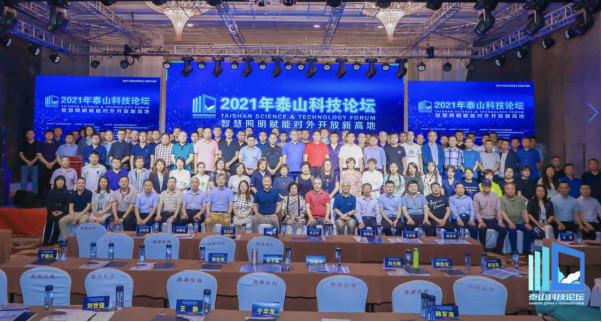
2021年6月17-19日,第270期泰山科技论坛在潍坊市青州青州市青都国际大饭店举办,本次论坛活动由山东省科学技术协会主办。山东照明学会、潍坊市科学技术协会、山东省旅游行业协会、潍坊市市政公用事业服务中心承办。潍坊市潍城区综合行政执法局、山东清华康利城市照明研究设计院有限公司、山东光汇控股有限公司、山东彩旺建设有限公司、山东魏仕照明科技有限公司、太明智能科技发展有限公司、万得福实业集团有限公司、奥斯福集团有限公司、济南市市政工程设计研究院(集团)有限责任公司协办。来自省内外300余位专家、学者,一线科技工作者参加了论坛现场活动。8万余人次通过中国之光网明课堂、阿拉丁照明网、壹玖云影视三个直播平台收看了现场直播。
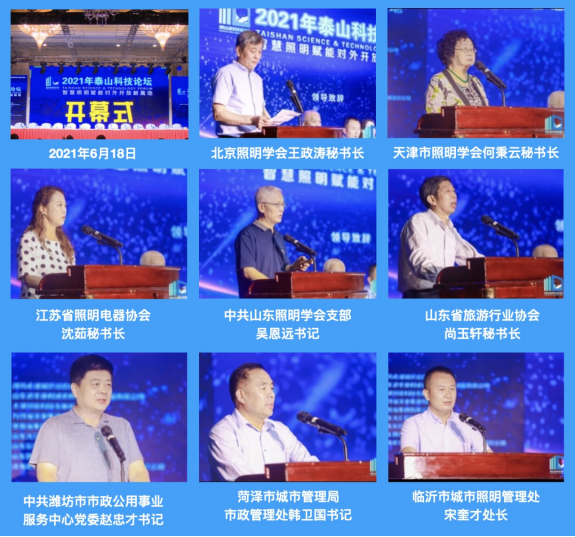
Wang Zhengtao, Secretary-General of the Beijing Illuminating Engineering Society; He Bingyun, Executive Director and Secretary-General of the Tianjin Illuminating Engineering Society; Shen Ru, Secretary-General of the Jiangsu Lighting Electrical Appliances Association; Shang Yuxuan, Executive Vice President and Secretary-General of the Shandong Tourism Industry Association; Wu Enyuan, Secretary of the Branch of the Communist Party of China in the Shandong Illuminating Engineering Society; Zhao Zhongcai, Secretary of the Party Committee of the Weifang Municipal Public Utility Service Center; Han Weiguo, Secretary of the Heze Municipal Administration Office; and Song Kuicai, Director of the Linyi Urban Lighting Management Office delivered speeches at the opening ceremony.
The Forum received 69 papers and articles sharing excellent case studies. Academician Jiang Fengyi from the Chinese Academy of Sciences, Professor Song Hongwei from Zhejiang University, and Professor Hao Luoxi from Tongji University contributed relevant papers to the Forum's special issue. Thirteen experts were selected to deliver keynote speeches; due to important receptions and government projects, ten experts delivered keynote reports, and representatives from eight leading organizations participated in thematic dialogues.
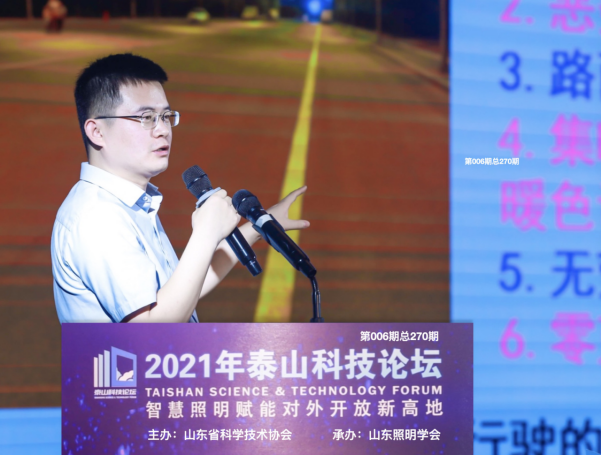
Researcher Wang Guangxu
Assistant to Academician Jiang Fengyi of the Chinese Academy of Sciences, Nanchang University "Ganjiang Distinguished Professor" , Deputy Director of the National Silicon-based LED Engineering Technology Research Center, Researcher Wang Guangxu, introduced Academician Jiang Fengyi's research achievements and the position of domestic pure LED in the global lighting industry. He delivered a keynote speech titled "Pure LED Lighting Technology and Applications." The report elaborated on the higher energy saving potential and greater intelligent space of pure LED lighting technology, explaining that pure LED lighting is on-demand lighting, capable of meeting people's aspirations for beautiful lighting; breakthroughs in high luminous efficacy silicon-based yellow and green LED technologies have opened up new directions for pure LED lighting, promoting the early realization of the 2030/2050 goals for semiconductor lighting technology. LED lighting technology still requires long-term development, and LED lighting applications hold infinite possibilities! Pure LED lighting technology is the development direction of lighting technology, which will help achieve the national "Carbon Neutrality" goal.
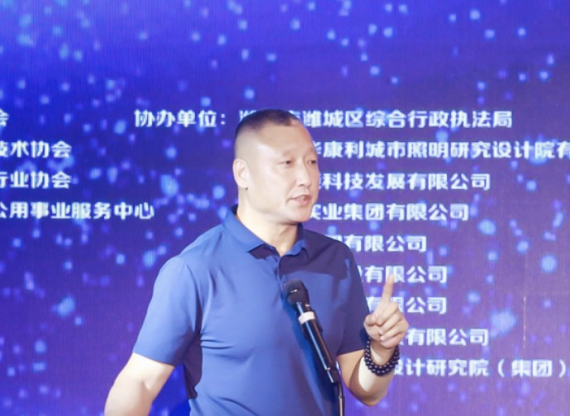
Professor Chang Zhigang
中央美术学院视觉艺术高精尖创新中心常务副主任、MAIC国际媒体建筑学会·中国主任、MAB18国际媒体建筑双年展主席、北京照明学会副理事长、北京城市规划学会视觉与色彩研究中心主任常志刚教授,作了题为《照明赋能文化旅游产业—从故宫和大兴机场夜景谈起》的主题演讲报告。
Beijing New Airport Expressway road landscape enhancement and toll canopy design, emphasizing "Capital Style, Ancient City Charm, Modern Spirit"; prioritizing artistic form to reflect Beijing's stature as a cultural capital; holistic system integration: conceptualizing a smart avenue with media architecture as future urban infrastructure, connecting all nodes to form an integrated information and feedback system; integrating form and smart systems to construct a 27-kilometer scenic boulevard with a ceremonial spatial sequence; five major design strategies combining artistic form and media architecture.
The lighting design of the Forbidden City in Beijing adheres to the principle that cultural relics must not be touched by light. First, appropriate hierarchical relationships for lighting carriers are established. Data obtained through optical simulation and actual testing determine the optimal projection direction for each point, allowing luminaire projection positions to be resolved within the managed area. Luminaires are selected based on architectural structure and color. By adopting UV-free and IR-free sources, reducing luminaire power, minimizing luminaire volume, and adding cut-off shields and anti-glare louvers, it is ensured that luminaires cause no harm to cultural relics and do not affect the building's structural colors or its inherent historical and cultural atmosphere. During installation, luminaires do not directly contact the building; existing light poles are utilized as much as possible. At nodes where new light poles are unavoidable, they are concealed as much as possible. Considering visitor needs, while satisfying the illumination of the architecture, interference from luminaire appearance with photographic framing is minimized. The launch of nightscape lighting at the Forbidden City represents a breakthrough from its past image. Whether city gates or corner towers, they are witnesses to major historical events; they are history itself, as well as a symbol and core of national spirit. We attempt to use lighting to touch the Forbidden City, to touch such an abstract, spiritual, and distant existence, thereby establishing a connection between people and architecture, and between the material and the spiritual. What is touched is the strength of the nation and the continuation of national lineage, a sense of belonging rooted in ancestral heritage.
Case studies of the night scenes at the Forbidden City in Beijing and Beijing Daxing International Airport illustrate that luminaires, as the nerve endings of the urban fabric, possess the basic functions of IoT terminals. Accurate cultural positioning and mastery of the integration of smart lighting technology and art enable us to touch history with light, highlight historical and cultural values, reinforce urban characteristics, and showcase the relationship between humans and nature, as well as between the material and the spiritual. Facing the IoT era, artistic intervention is both an opportunity and a responsibility. Starting from visual arts, we participate in smart city innovation strategies, practice the Internet of Everything through interactive design, achieve cross-boundary integration through technological art concepts, and lead industry development.
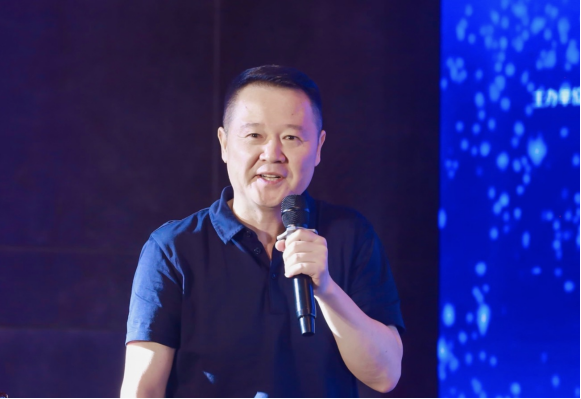
Senior Engineer Li Xiaoming
江苏省发明协会副会长、江苏省照明学会智慧照明专业委员会主任、南京理控物联技术有限公司董事长黎晓明高级工程师,认为:户外智慧照明的春天来了。一是政策支持,“推进市政公用设施、建筑等物联网应用和智能化改造”写进了国家第十四个五年计划和2035年远景目标纲要;国家发展改革委《关于印发<2021年新型城镇化和城乡融合发展重点任务>的通知(发改规划〔2021〕493号)》,“(十三)建设新型智慧城市。推进市政公用设施智能化升级,建设数字化、智慧化管理平台,全面推行城市运行一网通管。”为智慧照明指出来发展方向。二是智慧控制技术成熟,控制有“1”到“n”的质变容易实现。三是理控的系列智能网管具有多协议融合,硬件防护等级适合户外智慧照明。
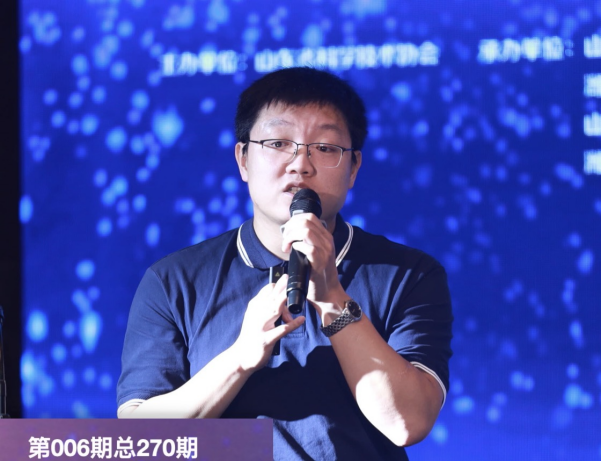
Wang Wenlong, Senior Engineer, Dean of the Shenyang Branch of Shandong Tsinghua Kangli Urban Lighting Research and Design Institute Co., Ltd., and Visiting Professor at Liaoning University of Science and Technology, elaborated in his presentation "Creating Urban Night Living Rooms with Smart Light, Low-Carbon Light, and Creative Light" on abandoning large-scale, centralized, high-energy-consuming lighting layouts. By introducing design concepts of smart light and creative light, and applying a small number of moderate light elements with regional cultural connotations, micro-scale urban public spaces such as streets, alleys, parks, green spaces, communities, and roads with humanistic landscapes are transformed into urban night living rooms that integrate functionality, aesthetics, thematicity, convenience, and intelligence. This enhances the nighttime light environment, light quality, and light experience, making residents feel relaxed and comfortable with a home-like warmth, while allowing visitors to experience different local cultures and customs. This fosters more interaction and repeat visits, thereby boosting the night tourism economy.
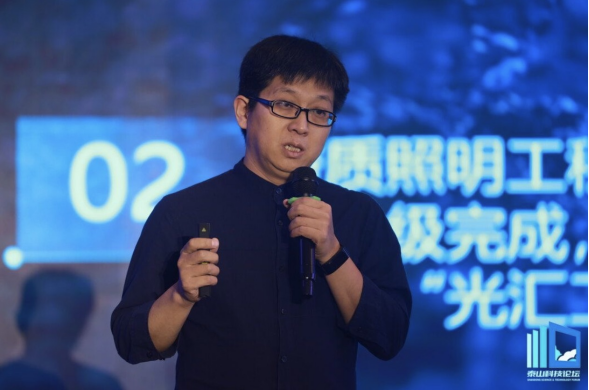
Jiao Shengjun, Senior Engineer, Director of the Lighting Application Center at Qilu University of Technology, Professor in the Lighting Industry, General Manager of Shandong Guanghui Holdings Co., Ltd., Deputy Secretary-General and Deputy Director of the Expert Committee of the Shandong Lighting Society, and Specially Appointed Expert of the Landscape Lighting Professional Committee of the China Association of Lighting Industry (CALI), delivered a keynote report titled "From Smart Lighting to Smart Cities — Riding the Wind and Waves, Forging Ahead." He believes that a smart city is a large-scale system with cross-system interactions, not merely a stacking of hardware or redundant software development, but requires a central nervous system-like urban command system. This system must possess comprehensive, real-time, and full-data decision-making capabilities —, which is what is known as the "City Brain." In other words, the City Brain is a "system of systems". "Smart City" is not just the future of cities, but a thinking City Brain, focusing on the integration of information resources and enhancing services for the people, using smart grid construction as a key approach, and leveraging the deep application of next-generation information technologies to build the City Brain, integrate data information, unify command and dispatch, and promote the modernization of government urban governance systems and capabilities.
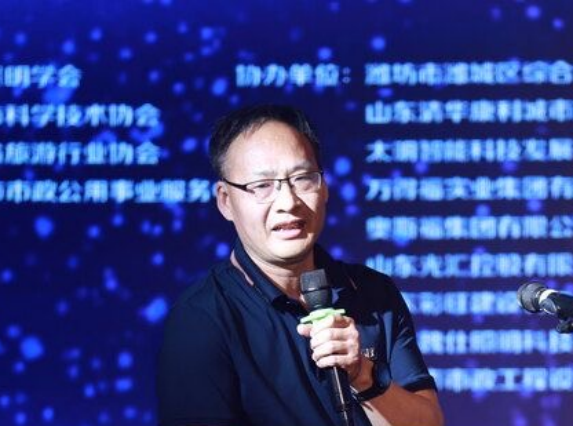
Senior Engineer Feng Jijun
Senior Engineer Feng Jijun, General Manager of Jinan Xinguangchen Energy Saving Technology Co., Ltd. and expert reviewer for engineering consulting projects of the Shandong Provincial Development and Reform Commission, shared a case study titled "Touching Ancient Buildings with Light to Awaken Them".
By adhering to the principles of "seeing the light but not the fixture" and "balancing implementation with preservation", he illustrates cases of architectural lighting design and construction for ancient buildings. He explains how to leverage the original architectural features, using layered elements such as eaves, dougong brackets, and railings to reflect variations in color temperature. By integrating lighting into the architecture, the language of light restores the historical, cultural, technological, and artistic values of ancient structures, redefining the building and allowing it to regain contemporary vitality, presenting visitors with its most natural and perfect state.

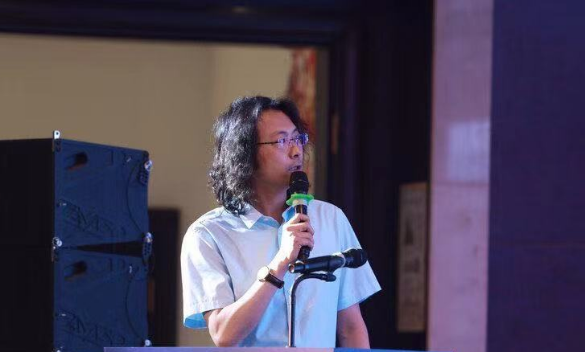
Design Director at Yiguanzhong
Yi Guanzhong, Design Director of Wande Fu Industrial Group Co., Ltd. and Innovation and Entrepreneurship Mentor at the Maker Lab of the School of Fine Arts, University of Jinan, presented "Light and Shadow Wonderland.Dreamlike New Look—Lighting Plan for the Taishan Shigandang Cultural Tourism Area," introducing innovative and creative approaches implemented in the design of the Taishan Shigandang toll scenic area.
Mount Tai Shigandang is among the first batches of intangible cultural heritage announced by the State Council. This project takes culture as its soul to create distinctive themes and form a core attraction that gathers foot traffic. Regional cultural stories and local customs are refined, restructured, and illuminated through lighting, performances, interactions, and immersive experiences, complemented by distinctive themes and cultural IPs that align with the city's character.
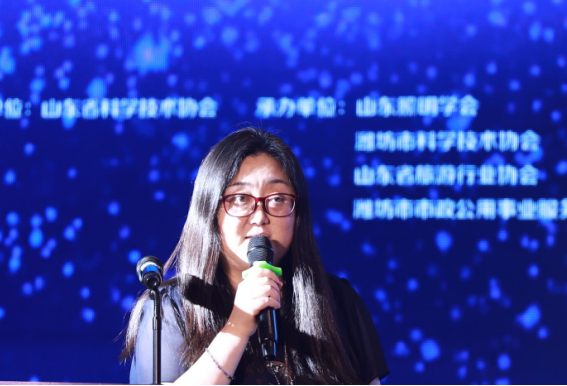
Professor Yu Hongxia
Professor Yu Hongxia from the School of Architecture and Urban-Rural Planning at Qingdao University of Technology, through studying the Government Work Report, clarified the significant meaning of "Urban Renewal" being included in the Government Work Report for the first time. She emphasized that the light environment is an important part of the healthy development of the overall urban environment. In the context of urban renewal, the block light environment, as a component of the urban living environment, also needs optimization and renewal. Leading students to conduct in-depth research on the nighttime light environments of different types of blocks, she proposed constructing block nighttime light environments from multiple perspectives including regional, cultural, artistic, ecological, functional, technical, and safety aspects. Based on the needs of different types of blocks for functional lighting, nightscape lighting, cultural tourism night tours, and light art, specific practices such as "Urban Micro-Renewal——Urban Glimmer" and "Micro-Nest", which are community public welfare construction projects, were carried out. This achieved spatial reconstruction and community activation, stimulated nighttime vitality in blocks, improved urban quality, and enhanced the happiness index of residents and city operation and maintenance personnel.
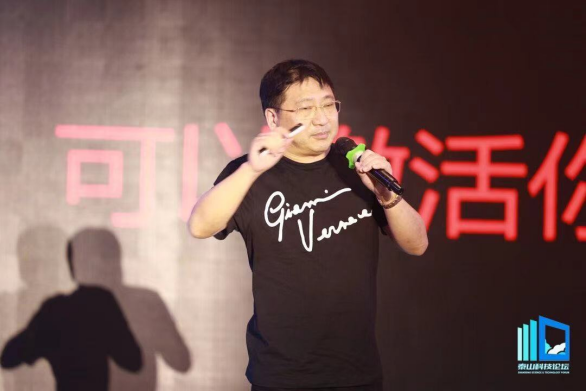
Shen Wei, Senior Engineer
Shen Wei, Senior Engineer, Deputy Director of Zhejiang Urban Construction Planning and Design Institute and Chairman of Hangzhou Urban Lighting Industry Association, through the Hangzhou Summit (Nightscape / Landscape lighting on both banks of the Qiantang River, Grand Canal night cruise, Three Islands of West Lake, etc.), lighting for the BRICS Summit in Fuzhou, lighting for the SCO meeting in Laoshan District, Qingdao, Ordos urban lighting, Qinhuangdao urban Nightscape / Landscape lighting, Wuxi urban lighting planning, Jinhua Sanjiang Liuan Lighting design, Night Book of This Life's Fate, Tonight Together at Xixi and other classic urban landscapes and cultural tourism projects.
Analysis and summary of lighting cases elucidate the significant importance, in the current environment where smart lighting and smart city initiatives are emerging, for lighting design professionals to adhere to landscape lighting + , bringing light into the city, weaving a light network, and integrating light with the urban fabric. It points out that the core competitiveness of lighting design lies in planning, implementation, and operation, requiring mastery of " + " . Night tour product design must keep pace with the times, proactively adapting to new situations, requirements, and changes, learning to introduce mature technologies from related disciplines into lighting design to facilitate cultural dialogue and achieve business format integration.
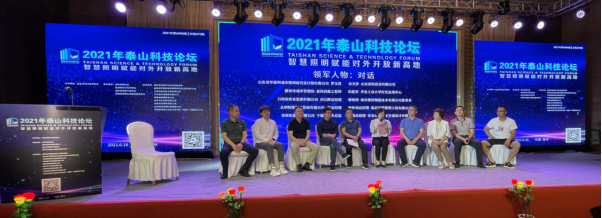
The dialogue session hosted by Luo Yuxia was captivating
Representatives from leading organizations, including the Tengzhou City Urban Management Bureau, Laixi Public Utility Service Center, Qilu University of Technology Lighting Application Center, Shandong Tsinghua Kangli Urban Lighting Research and Design Institute Co., Ltd., Wonderful Industrial Group Co., Ltd., Taiming Intelligent Technology Development Co., Ltd., Ausfu Group Co., Ltd., Shandong Caiwang Construction Co., Ltd., Nanjing Likong IoT Technology Co., Ltd., and Qingdao Rishang Urban Traffic Design Co., Ltd., participated in the dialogue among industry leaders at the forum. The dialogue focused on smart lighting empowering urban renewal, aiming to enhance innovation capabilities and achieve win-win cooperation among multiple parties. From the perspectives of government management, public utility services, product R&D, urban planning, and engineering design and construction, participants discussed new challenges, revealed new opportunities, and planned new measures, to create a smart nighttime light environment that is loved by the people, satisfies the government, and is environmentally friendly.
The Forum centered on Shandong Province's "Eight Major Development Strategies", focusing on how smart lighting empowers external service windows and the cultural tourism industry, improves the quality of urban night-time light environments, and drives the development of the night tourism economy. The Forum issued an initiative: "Colleagues from urban public utility services, urban lighting management, and lighting industry design, construction, and product R&D units are invited to jointly participate in the "Light Up the Red Journey" campaign, contributing to the realization of General Secretary Xi Jinping's "Carbon Peak and Carbon Neutrality" goals and building a Beautiful China."
China Light
The official website of the China Association of Lighting Industry and a full-media platform for the lighting sector. We provide authoritative and timely lighting information while striving to be a growth partner for businesses. From brand promotion and channel expansion to consulting, talent training and participation in standards development, we provide comprehensive professional services to help businesses improve quality and efficiency and jointly advance the high-quality development of the lighting industry.
Business Contacts
仇纯 (Ms.): 158 6155 3579
顾君 (Mr.): 137 7157 5253