
New large-scale vertical farm launched in Europe, powered entirely by wind energy
Whether it is autonomous tractors or weeding robots, the agricultural sector has undergone significant changes in recent years. However, this new vertical farm in Copenhagen is quite different. It relies entirely on wind power , and is expected to produce thousands of tons of pesticide-free, carbon-neutral products annually. The world is facing major challenges in sustainable development and population growth, so humanity needs to rethink the way food is produced.
Crops are harvested 15 times a year
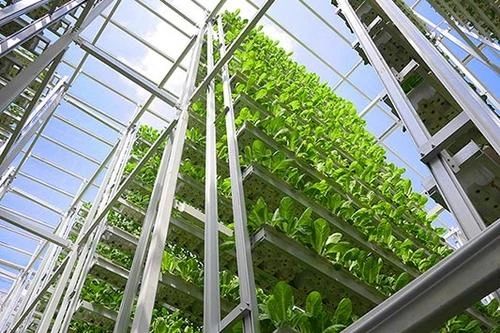
In this 7,000-square-meter massive warehouse used by the Danish startup "Nordic Harvest," there are 14 tiers of racks from floor to ceiling. The warehouse is about the size of 20 standard football fields, making it one of the largest vertical farms in Europe. On the farm, autonomous robots transport trays of seeds from one aisle to another, resulting in extremely low labor costs.
Although soil and sunlight are not visible, the agricultural products grown here will be harvested 15 times a year , far more than the usual 2 harvests in traditional agriculture. It is illuminated around the clock by 20,000 professional LED light bulbs , allowing lettuce and other leafy greens in the planting boxes to grow quickly, unaffected by extreme weather. Meanwhile, robotic systems monitor the growth progress of the plants.
Anders Riemann, founder and CEO of "Nordic Harvest," stated that approximately 200 tons of agricultural produce will be harvested in the first quarter of 2021, with annual output reaching 1,100 tons once the farm is fully operational by year-end. The farm currently grows basil, mint, cilantro, arugula, baby spinach, parsley, and oregano, with plans to produce berries in the coming years, followed by root vegetables.
"Vertical farms can create a more sustainable food system through local production, while offering higher quality and better taste experiences than conventionally grown food," said Riman.
Why not apply an organic label?
As expected, the concept of future farms has been met with a cold reception from farmers, who question its ability to feed the planet and criticize its massive electricity consumption. However, Riman emphasizes that his farm offers environmental benefits because produce is grown close to consumers and uses green electricity . A key feature of vertical farming is that it does not harm the environment by recycling all water and fertilizers.
However, the produce from "Nordic Harvest" is not labeled as organic. Ryman explains: "EU regulations state that the term 'organic' is related to 'soil', so if you remove soil from the equation, you can no longer call it organic. But our growing conditions are the same as those for organic food because we do not use pesticides ." He states that the controlled growth environment means the production process does not involve the use of nitrogen fertilizers and other toxic chemicals.
Denmark is a world leader in wind power generation, with approximately 40% of its domestic electricity consumption based on wind energy. "We use energy from wind turbines one hundred percent, which makes our carbon dioxide emissions neutral," Riemann added. Although reluctant to disclose the exact electricity costs for "Nordic Harvest," Riemann stated that his company's electricity is accompanied by "wind energy certificates" registered with the Danish Commodities Exchange. "These legal documents ensure that your annual electricity consumption corresponds to the power generated by specific offshore wind turbines."
Europe Accelerates "Vertical" Pace
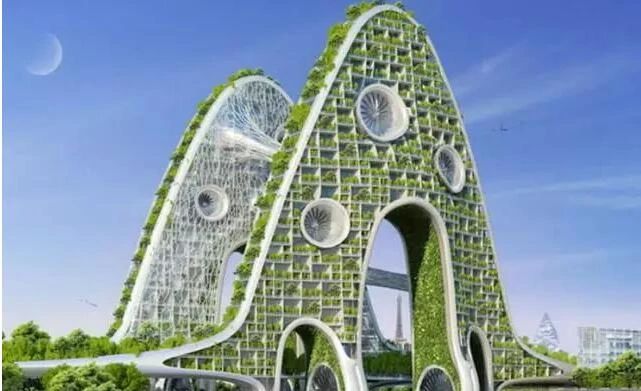
Vertical farming is hailed as a new vertical cultivation method that grows plants on shelves to maximize the use of urban space, meeting the world's growing food demand and producing food locally.
Vertical farming first emerged about a decade ago and has taken off in Asia and the United States, which is the world's largest birthplace of vertical farms. Today in Europe, the idea is slowly gaining popularity. Riemann says urban agriculture can even reforest land previously developed for monoculture farming. "Our vision can actually achieve this: bringing some food production back to cities, where you can grow crops in smaller, highly optimized spaces."
All organic seeds at the "Nordic Harvest" vertical farm germinate in gel until the roots take hold. Their nutrients come from "internal biofertilizer," made from fermented residues of previously harvested crops combined with added natural minerals. The water consumed is filtered and reused, helping the farm use far less water than traditional agriculture: one liter of water per kilogram of produce, which is one two-hundred-and-fiftieth of the water used for field crops.
According to a poll conducted by the Danish Farmers' Union, 95% of Danes are ready to change their consumption habits to protect the environment. Meanwhile, Carl-Otto Ottosen, Professor of Agriculture at Aarhus University, points out that Denmark "has no space issues," and companies like Leman are largely a novelty that does not threaten Denmark's agricultural traditions.
Ottosen said: "This works in Japan, where there is no space for cultivation, yet there is a desire for high-quality products." In fact, polls show that Danes still prefer to buy products based on "price rather than taste." Nordic Harvest expects its first products to hit regular supermarkets in early 2021, as well as be supplied to catering companies and hotels. Riemann estimates that 20 such farms could meet Denmark's total vegetable consumption. Currently, about two-thirds of Denmark's vegetables are imported.
The Future of Sustainable Agriculture
The COVID-19 pandemic has highlighted the vulnerability of the global food supply chain, forcing many countries to reconsider how to feed their populations and driving increased investment into vertical farming.
UK online grocery retailer Ocado Group increased its stake to approximately 70% in August 2020, after acquiring a 58% share in vertical farm operator Jones Food Company in November 2019.
InFarm, a vertical farming company headquartered in Berlin, Germany, announced in September 2020 that it raised $170 million in a funding round; meanwhile, another vertical farming company, Plus UnLimited Inc., secured $140 million in new financing. Last year, Singapore's Temasek Holdings and Bayer AG established a new company to develop seeds for vertical farms.
Forecasts indicate that the growing population is driving rising demand for food and agricultural products, while climate change is increasing uncertainty in agricultural yields. Agricultural experts believe that vertical farms "are the future of sustainable agriculture as we know it": powered entirely by renewable wind energy and causing zero environmental damage to nearby rivers, they are likely to prove a model for agriculture in the coming decades.
Since vertical farms are indoors, they can "perfectly fine-tune" all conditions, enabling year-round production of high-quality food without worrying about pests, frost, drought, or other issues that typically affect crops. In turn, this provides an opportunity to reforest agricultural land currently used for cultivation.
China Light
The official website of the China Association of Lighting Industry and a full-media platform for the lighting sector. We provide authoritative and timely lighting information while striving to be a growth partner for businesses. From brand promotion and channel expansion to consulting, talent training and participation in standards development, we provide comprehensive professional services to help businesses improve quality and efficiency and jointly advance the high-quality development of the lighting industry.
Business Contacts
仇纯 (Ms.): 158 6155 3579
顾君 (Mr.): 137 7157 5253