
Wen Qidong | Ups and Downs, Thriving in Adversity—Report on China's Lighting Industry Export in 2020
Author/Wen Qidong
China Association of Lighting Industry
Foreword:
根据海关总署数据显示,2020年12月我国货物贸易出口额按人民币计价1.86万亿元,同比增长10.9%;按美元计价为2819亿美元,同比增长达到18.1%。2020年全年,我国货物贸易进出口总值32.16万亿元人民币,同比增长1.9%;其中出口总额17.93万亿元,同比增长4.0%,按美元计价为2.59万亿美元,同比增长3.6%;贸易顺差达3.7万亿元,同比增长27.4%。进出口规模和国际市场份额双双创下历史新高,货物贸易全球第一大国地位进一步得到巩固。
Among them, exports of electromechanical products, including lighting, reached 10.66 trillion yuan, a Year-on-year (YoY) increase of 6.0%, with their share of total exports rising by 1.1 percentage points to 59.4%. Amid this general trend, our lighting industry has kept pace: industry-wide exports quickly recovered from the slump in the first quarter, and since the second half of the year have outperformed the broader market for six consecutive months, writing an inspiring story of turning the tide.
1. Annual exports hit a record high
1. Overall
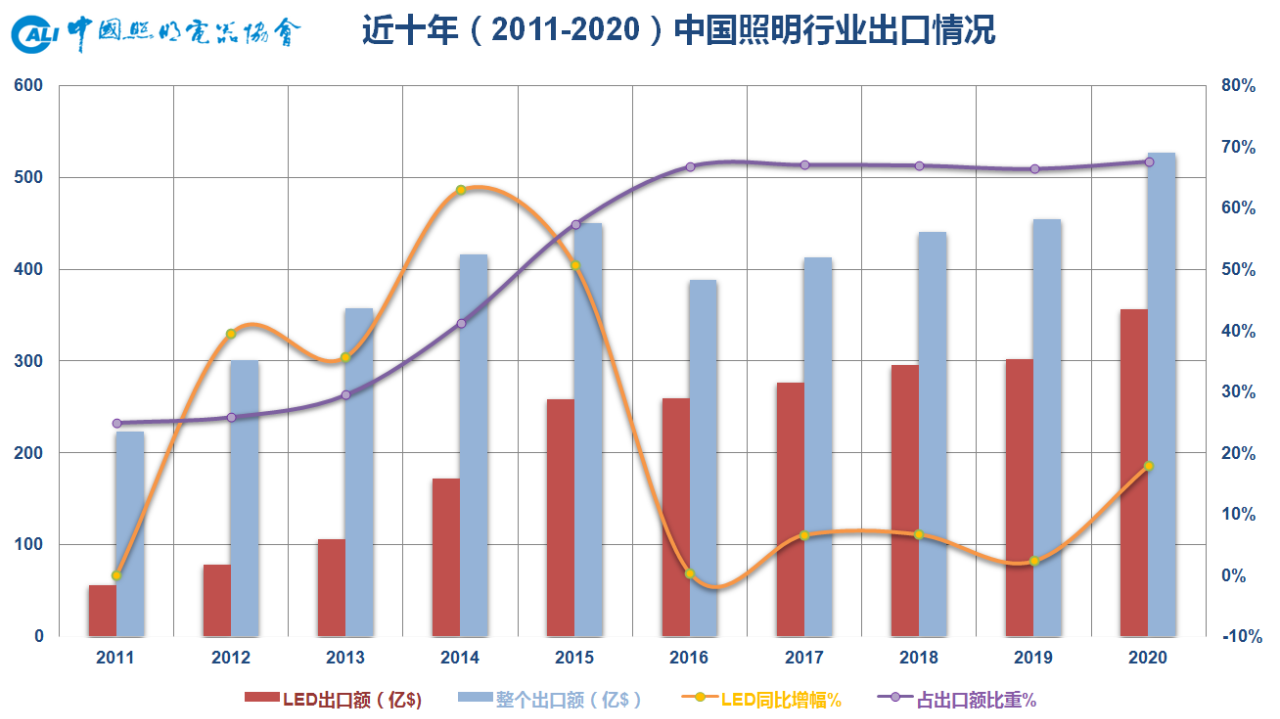
In 2020, facing the severe impact of the COVID-19 pandemic on the global market and an exceptionally complex international situation, and thanks to a series of extraordinary policies introduced by the state to stabilize foreign trade and promote innovation, as well as the concerted efforts of lighting export enterprises, China's lighting industry achieved counter-trend growth in exports. The total export value exceeded USD 50 billion for the first time, far surpassing expectations and setting a new historical record.
Q1 saw a sharp decline, hitting rock bottom; Q2 marked a strategic shift, building momentum; Q3 and Q4 witnessed a strong rebound, repeatedly hitting new highs, ultimately forging an inspiring "V"-shaped reversal.As the only major economy to comprehensively and systematically contain the pandemic, China further highlighted its position as the global manufacturing center and supply chain hub for the lighting industry, fully demonstrating the role of foreign trade in connecting domestic and international dual circulation.
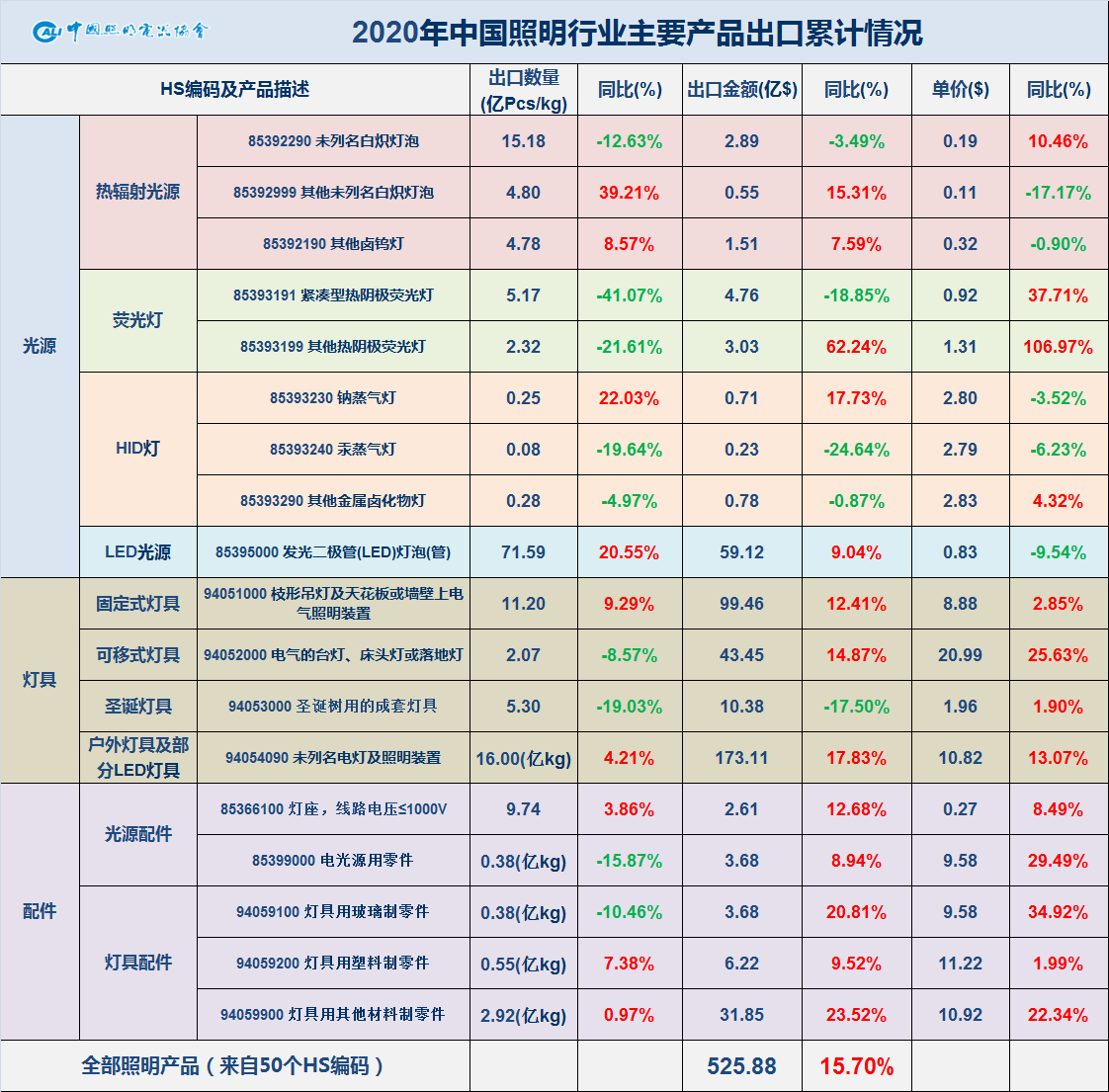
From January to December 2020, the total export value of China's lighting industry reached USD 52.588 billion, with a Year-on-year (YoY) increase of 15.7%. Among them, the total export value of LED lighting products was USD 35.594 billion, with a Year-on-year (YoY) increase of 17.9%. Both represent the largest growth since 2016.
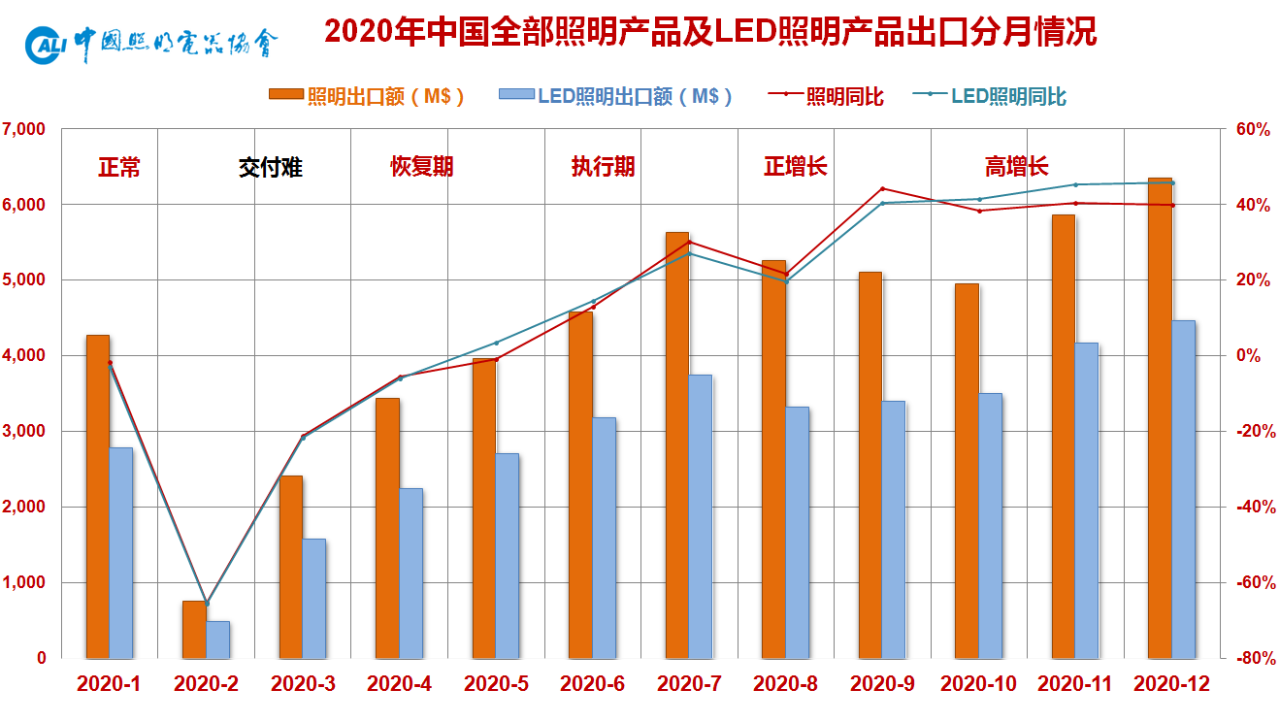
Monthly breakdown shows that exports in January were basically normal before the full outbreak of the epidemic; February was the most severe period of the domestic epidemic, with production and supply chains greatly hindered, characterized by orders but difficult delivery, causing data to hit rock bottom; after the domestic epidemic stabilized in March, enterprises resumed work and production one after another, leading to improvement, and the overall lighting export recovery trend was obvious; in April-May, production and supply chains further recovered, and previously backlogged orders entered the execution and release period, thus narrowing the decline further; subsequently, as the overseas epidemic spread, Chinese factories that quickly recovered from the epidemic further highlighted their production and supply chain advantages, timely filling the global supply gap caused by the epidemic, achieving double-digit growth for three consecutive months from June to August; As the substitution and transfer effect continued to amplify, the share of Chinese manufacturing in global exports further increased, with exports in the nearly four single months from September to December all achieving a substantial 40% growth.
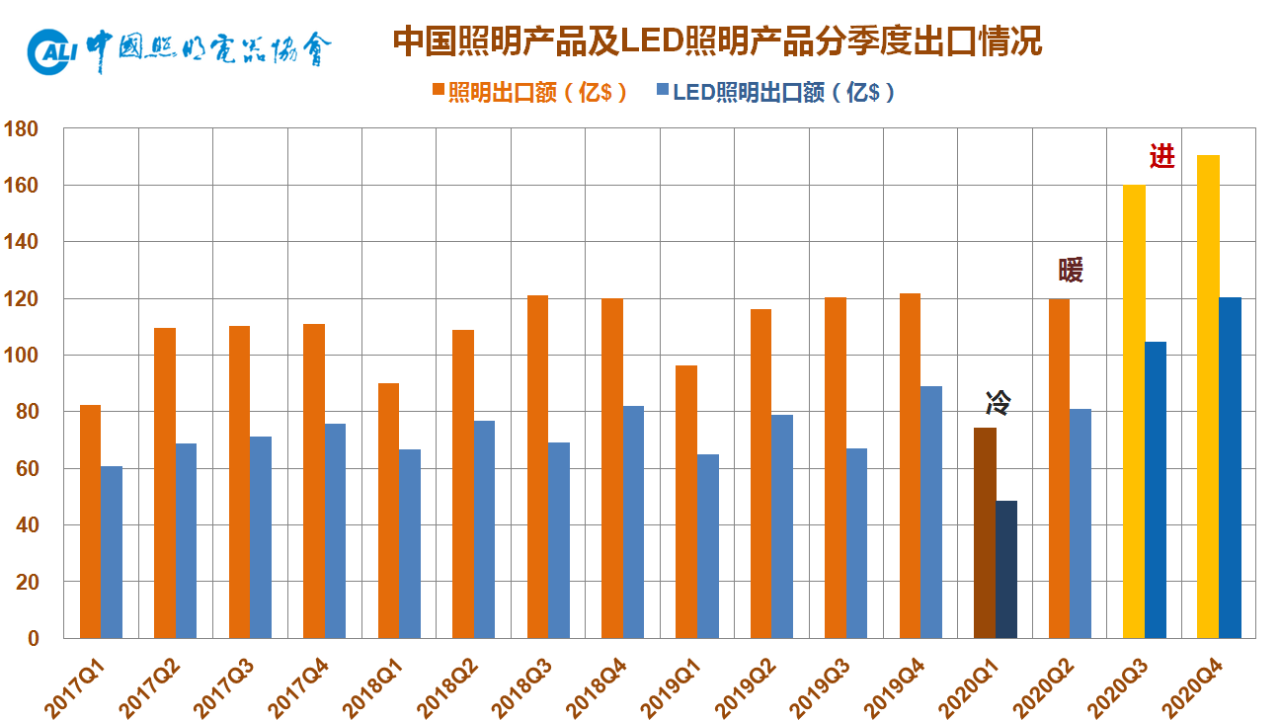
Looking at it by quarter, lighting exports overall showed a trend of "a dismal first quarter, recovery in the second quarter, rebound in the third quarter, and striving in the fourth quarter" . As the pandemic stabilized slightly, relevant export enterprises strengthened epidemic prevention measures, resumed production and work ahead of others, increased R&D investment, improved operational efficiency, and gradually released production capacity; they also adopted measures to adapt to the new normal of epidemic prevention, such as enhancing contactless communication with overseas customers. This not only drove the recovery of the upstream and downstream supply chains but also strongly supported the operation of international supply chains, meeting the demands of various countries during the pandemic and stabilizing international market share. The deficit from one quarter was made up in the second and third quarters, leaving the fourth quarter for pure growth.
Two, Discussion on Major Reasons for Growth
1. The resilience of essential demand for lighting products is evident
Firstly, the negative drag from general lighting products was lower than expected, reflecting the resilient essential demand for lighting products in basic national economic life. Overseas economies were severely damaged by the pandemic, and major economies such as the US, Japan, and Europe implemented significant monetary easing measures, keeping interest rates at low levels. In addition, residents received varying degrees of fiscal assistance from their respective governments, leading to relatively active transactions in overseas real estate markets, which to some extent boosted demand for real estate and home-related products such as lighting.
2. Pandemic prevention and stay-at-home economy products have become a boost
Since March 2020, overseas epidemics have occurred one after another. The export of products related to epidemic prevention and the stay-at-home economy has maintained a growth trend, providing a certain boost to the overall situation. In particular, lighting products related to epidemic prevention, such as lamps for scientific research and medical use, and ultraviolet lamps, as well as horticultural lighting products involving the concept of the stay-at-home economy, have all seen significant growth.
3. External demand is gradually improving
After entering the second half of 2020, the backlog of orders from the earlier period has entered the final stage of execution. For export enterprises, new orders are imminent. At this time, major economies in Europe and America have been under pressure to restart their economies. This restart, which is not due to controlling the pandemic but rather due to being at a loss against it, appears quite helpless. Nevertheless, external demand has marginally improved, and new orders are gradually recovering. Moreover, in a low-interest-rate monetary easing environment, overseas demand for daily consumer goods remains strong, thus providing sustained momentum for external demand in lighting.
4. Significant "substitution shift effect"
China's complete industrial system and comprehensive infrastructure have established its irreplaceable position as the global lighting manufacturing center and supply chain hub. Impacted by the ongoing pandemic, overseas supply chains have been disrupted and are difficult to restore in the short term. As the "world's factory" that has contained the outbreak, China has led global resumption of work and production. The rapid recovery of Chinese manufacturing has further highlighted its production and supply chain advantages, effectively filling the global supply gap caused by the pandemic amid supply-demand mismatches, and replacing other countries' export shares for a certain period.
According to data from relevant institutions, China's goods exports accounted for over 18% of the global export share this year, reaching a record high; in contrast, China's share of the global export market was approximately 13% in 2019.
Three, Characteristics of Export Products
1. Stable progress in light source replacement
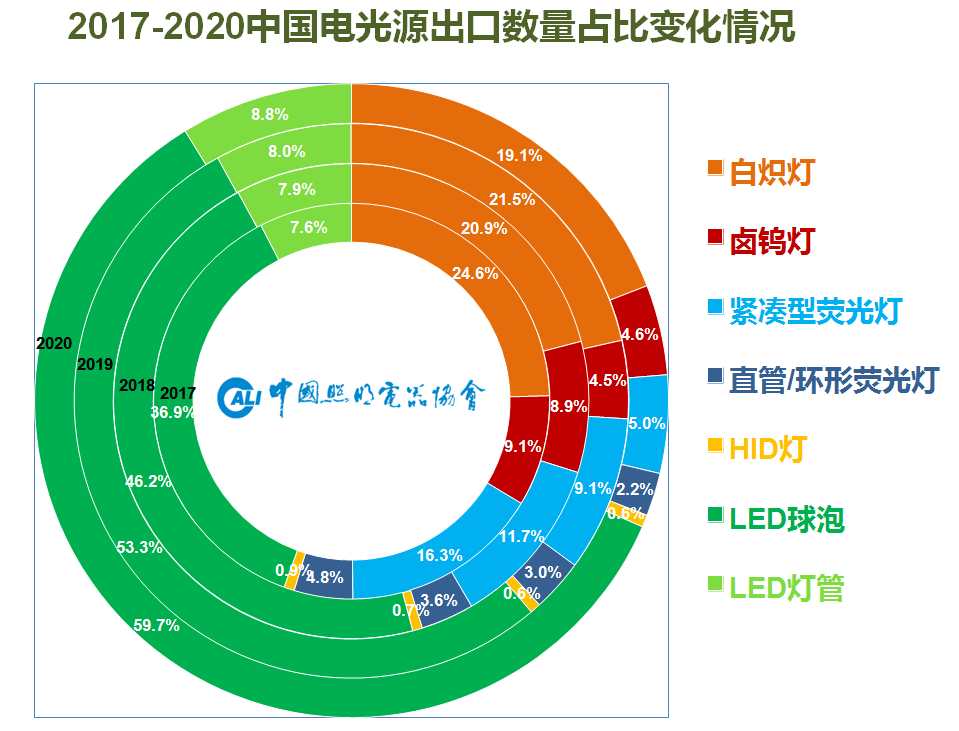
Judging from the trend in the proportion of light sources in recent years, the share of LED products in total light source exports has been rising year by year, currently exceeding two-thirds. This reflects that the replacement of traditional products by LED products continues to show a steady, gradual trend of one declining as the other rises. Regarding traditional light sources, the overall proportion of thermal radiation sources such as incandescent lamps and tungsten halogen lamps, as well as high-intensity discharge lamps including high-pressure mercury lamps, high-pressure sodium lamps (HPS), and metal halide lamps (MH), has not changed significantly. Relatively speaking, the more energy-intensive incandescent lamps and mercury lamps within these two categories are declining. Meanwhile, compact and linear/circular fluorescent lamps have been directly impacted by LED products with continuously improving cost-performance ratios, continuing their downward trend in recent years with a significant decrease in proportion.
2. LED light source prices continue to decline
It is worth noting that the average export price of LED light sources has continued its downward trend in recent years, dropping nearly 10% year-on-year (YoY) in 2020. Meanwhile, as prices for similar Fluorescent lamp products rose this year, a price inversion in average export prices even emerged between the two. This indicates that some relevant export enterprises, facing pandemic challenges and industry competition, have sacrificed profits to seize market share or ensure survival.
3. Significant increase in LED filament lamp shipments
It is understood that in 2020, the average monthly shipment volume of LED filament lamps in China reached 50 million units, representing a 40-50% increase compared to the same period last year, and there have already been enterprises with stable monthly shipments exceeding 10 million units.
4. Surge in exports of epidemic prevention products
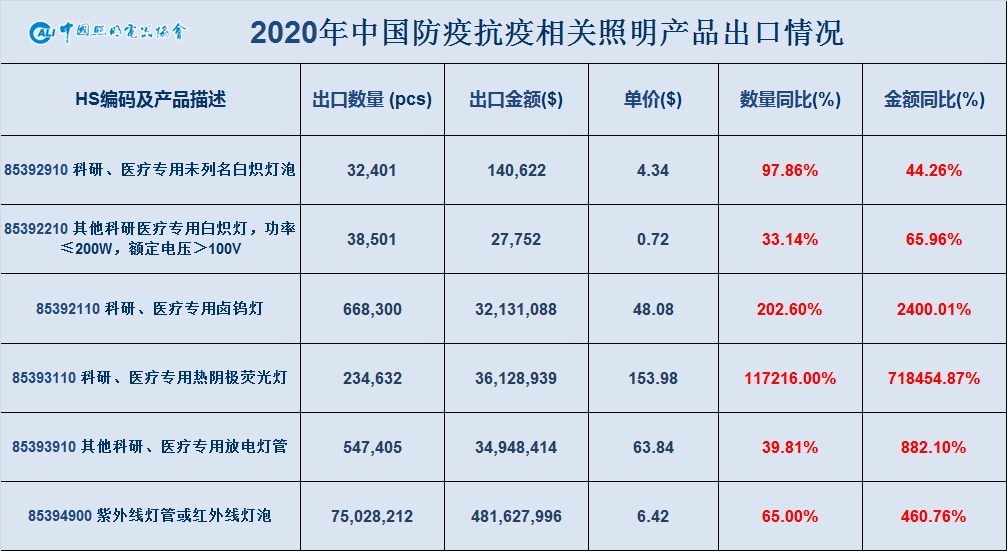
Related scientific research and medical lamps, ultraviolet lamps, and other epidemic prevention-related lighting products have experienced explosive growth against the backdrop of massive global demand triggered by the rampant pandemic. In 2020, the total export value of these related products reached 585 million US dollars, a year-on-year surge of 543%.
5. Horticultural lighting is developing rapidly
Driven by multiple factors including the legalization of commercial cannabis in North America, food and pharmaceutical supply shortages triggered by the global pandemic, and increased home confinement, Horticultural lighting product Export saw a significant Year-on-year (YoY) increase in 2020. While many leading Horticultural lighting companies doubled their performance, more new players entered the market. It is worth noting that the North American market remains the absolute mainstay of the Horticultural lighting market, accounting for over 70% of the share.
6. Consumer-end products are better than engineering-end products
Consumer-facing (C-end) products represent the basic daily needs of the national economy and have stronger rigid demand attributes. Amidst low interest rates, monetary easing in many overseas countries, and economic relief provided by local governments to residents, demand for daily consumer goods remains robust; on the other hand, the pandemic-induced stagnation or delay of overseas projects has directly impacted sales of project-oriented (B-end) products.
7. The proportion of smart products remains low
According to incomplete statistics, lighting products labeled with keywords such as "smart" and "dimming" in export products still account for a negligible proportion of the total export value. Due to the relatively high average price of related products, their share of export volume is even more insignificant. The author believes that this low figure is closely related to the current descriptions of declared products by relevant export manufacturers, but it also indeed reflects to some extent that the current proportion of smart products remains low. From another perspective, the market potential for lighting intelligence is still considerable.
Four , Changes in the Pattern of Export Destination Markets
Global COVID-19 Pandemic Situation
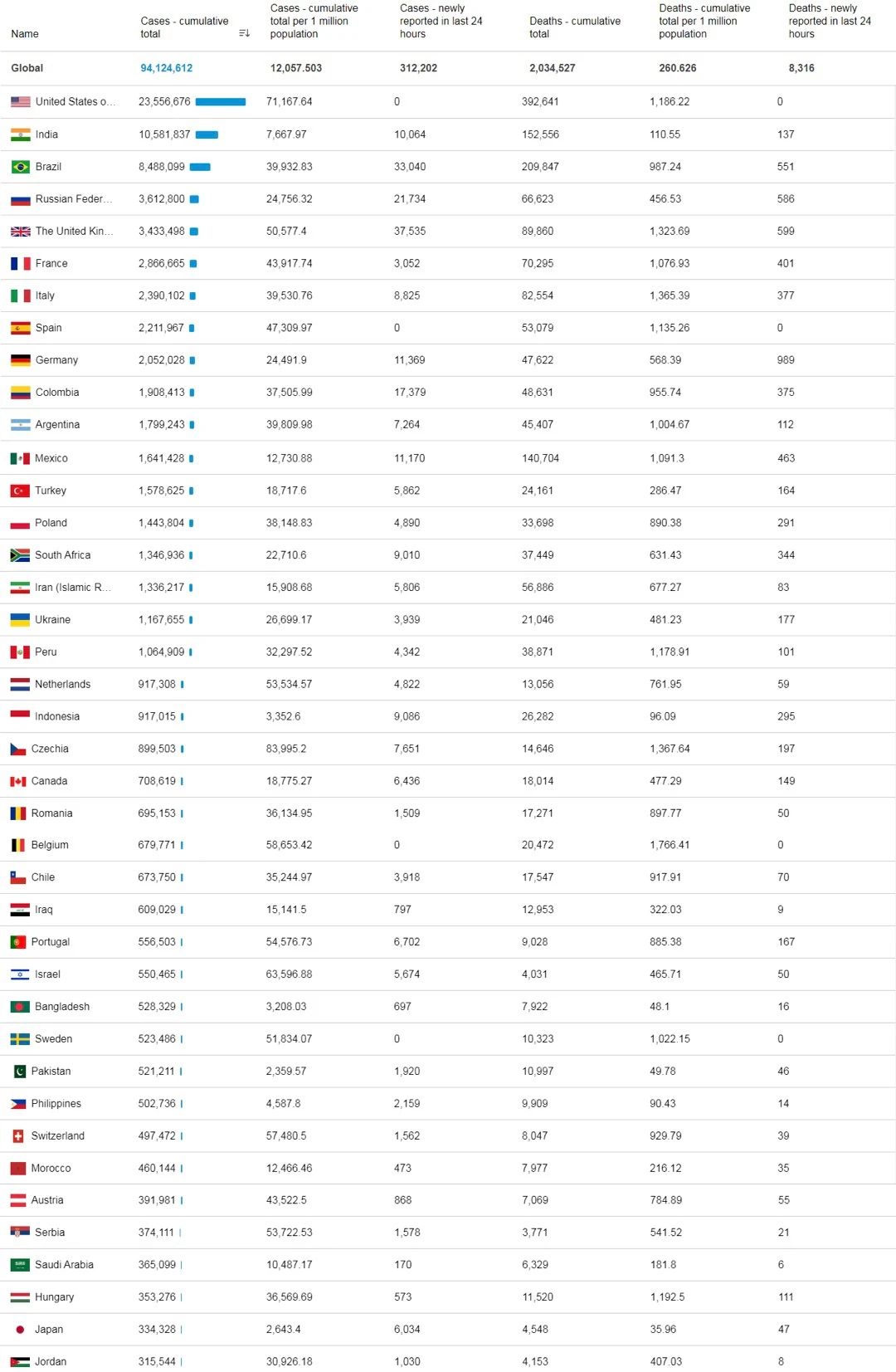
Currently, the global COVID-19 pandemic continues to spread and expand, with nearly hundreds of millions of confirmed cases and over 2 million deaths. Daily new cases still reach hundreds of thousands, with thousands of deaths, accompanied by a severe situation of significant resurgence in many countries worldwide. For nations currently at the epicenter of the pandemic, difficulties and challenges are just beginning. Even though some countries have seen the epidemic trend ease and are gradually lifting防疫封锁 measures, entering a positive phase of resuming social production and daily life, market recovery remains relatively slow. The lagging effects of the pandemic will also constrain the rapid rebound of exports. The International Monetary Fund (IMF) and the World Bank (IBRD) both highlighted the correlation between pandemic control and economic recovery in their annual economic reports, stating that the pandemic is the biggest instability factor hindering global economic stabilization, and eliminating this instability is crucial for future economic recovery.
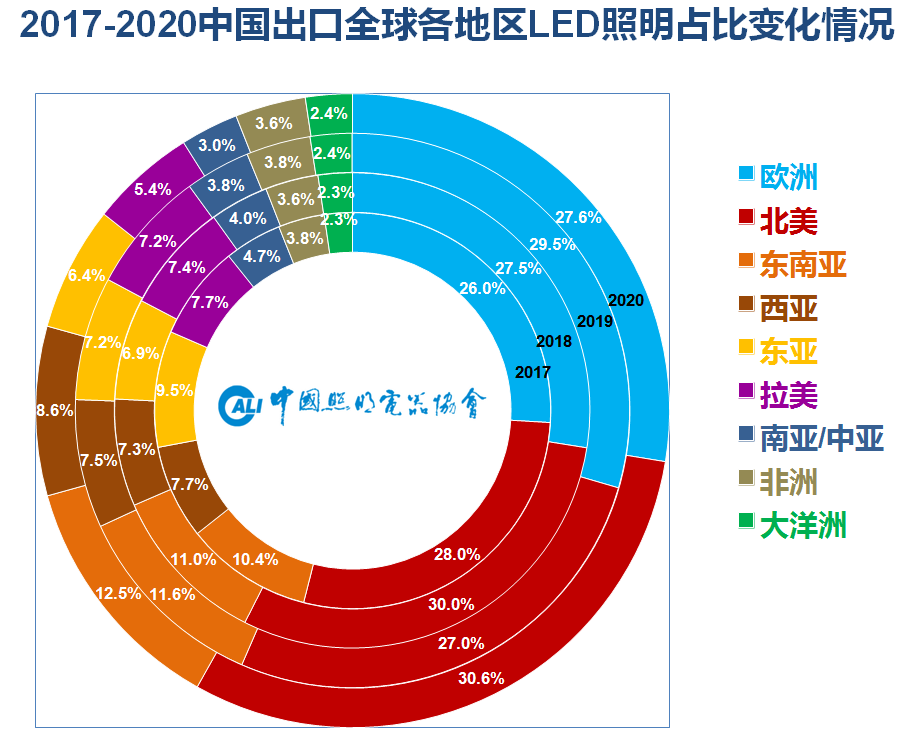
From a global regional perspective of LED lighting exports in 2020, the Asia-Pacific market, dominated by emerging economies, performed significantly better than the European and American markets, which are dominated by developed economies. Within the Asia-Pacific market, East Asia, West Asia, Southeast Asia, and Oceania all showed strong performance, but the South Asian market became a drag on the entire Asia-Pacific region due to a sharp decline in the Indian market. Among the European and American markets, the recovery in North America was stronger than in Europe and Latin America, with both Europe and Latin America seeing a drop of nearly two percentage points in their share.
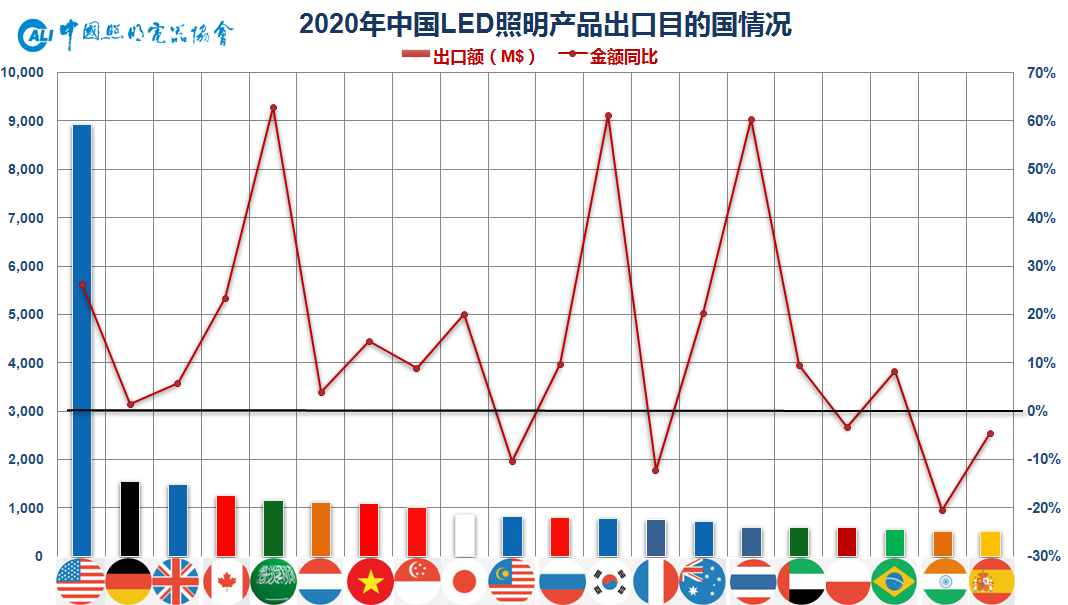
Looking at the country-specific LED lighting Export data for 2020, the markets in the United States and Canada showed a significant recovery compared to the first half of the year. Although major European economies such as Germany, the United Kingdom, the Netherlands, and France improved in the fourth quarter, their overall annual performance was lackluster, which also affected the overall performance of the European market. Meanwhile, Saudi Arabia, South Korea, and Thailand, representing West Asia, East Asia, and Southeast Asia respectively, still achieved ultra-high growth of over 60% despite the negative impact of the pandemic, reflecting the continued robust economic vitality of these regions. In 2020, the total value of LED lighting products exported from China to the top 20 countries and regions accounted for approximately 76% of the total LED lighting Export volume, indicating a high concentration in key markets.
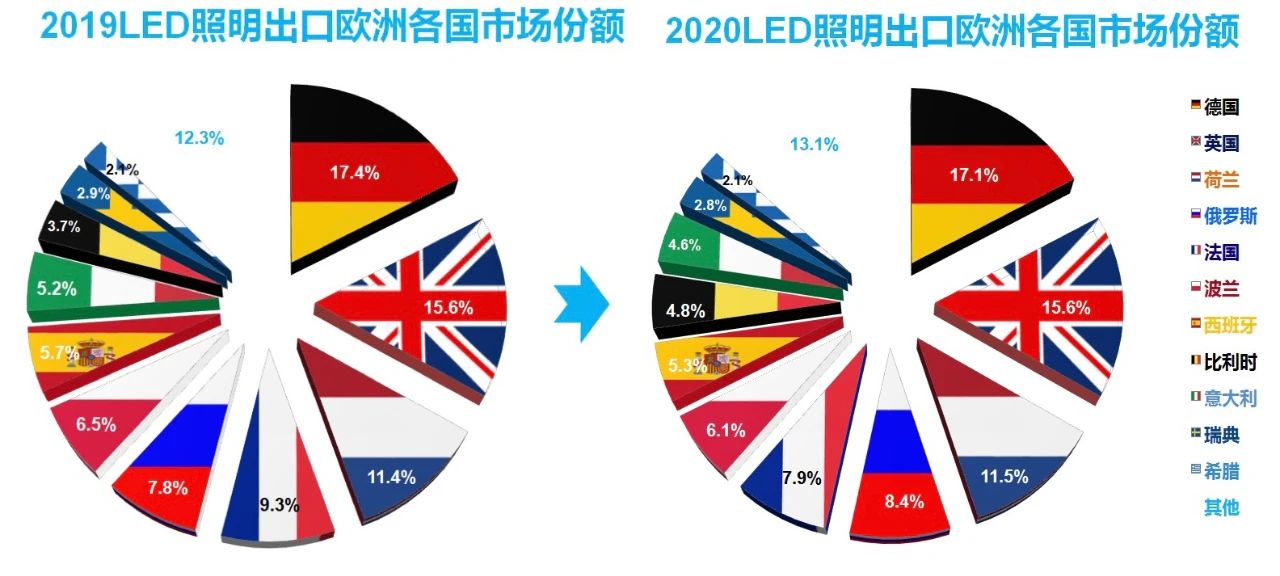
In 2020, the European market showed overall signs of recession due to the severe impact of the pandemic. Among the key markets, Germany, the UK, the Netherlands, and Russia turned their annual growth rates from negative to positive following a rebound in the fourth quarter, while France, Spain, and Italy along the Mediterranean remained relatively sluggish, with their shares declining.
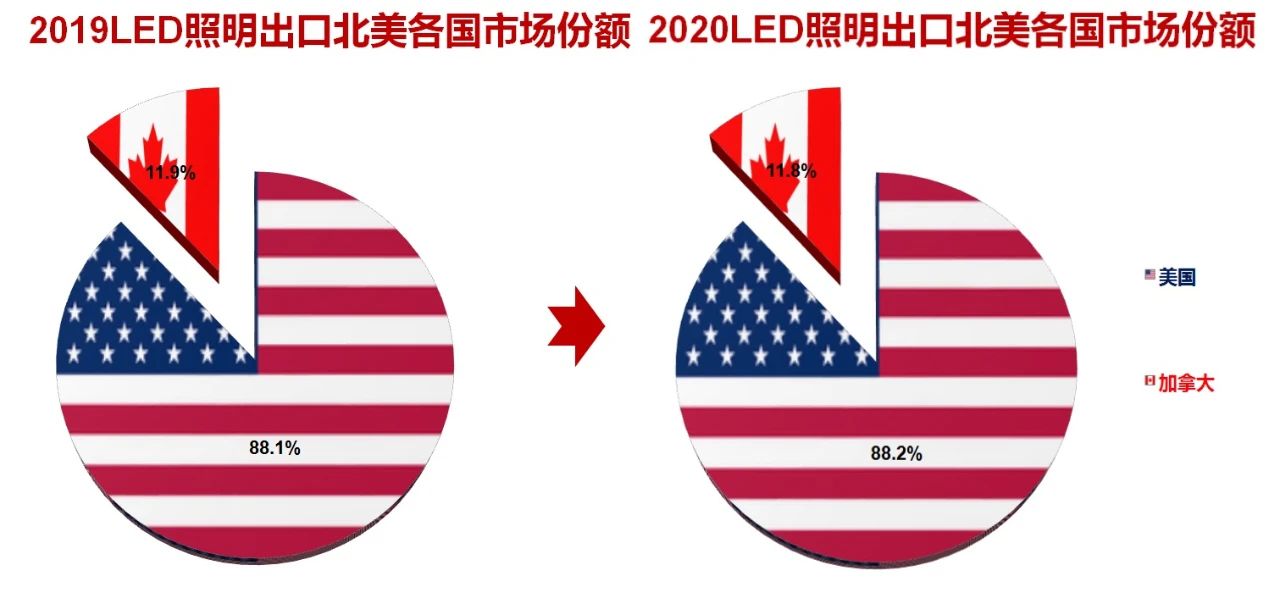
For a considerable period, the North American market was the largest export destination for lighting products. The US market was also the largest single overseas market for lighting. In 2019, affected by Sino-US trade friction, exports declined by nearly 10%, causing the share of the North American market to fall and be overtaken by the European market, dropping to second place. China and the US reached the Phase One Economic and Trade Agreement at the end of 2019 and gradually implemented it. Entering 2020, despite the dual impact of the pandemic and tariffs, US household purchasing power was supported by monetary and fiscal policy stimulus in the US. Coupled with the low base effect from 2019, exports to the US rebounded significantly Year-on-year (YoY) in 2020 to pre-trade friction levels.
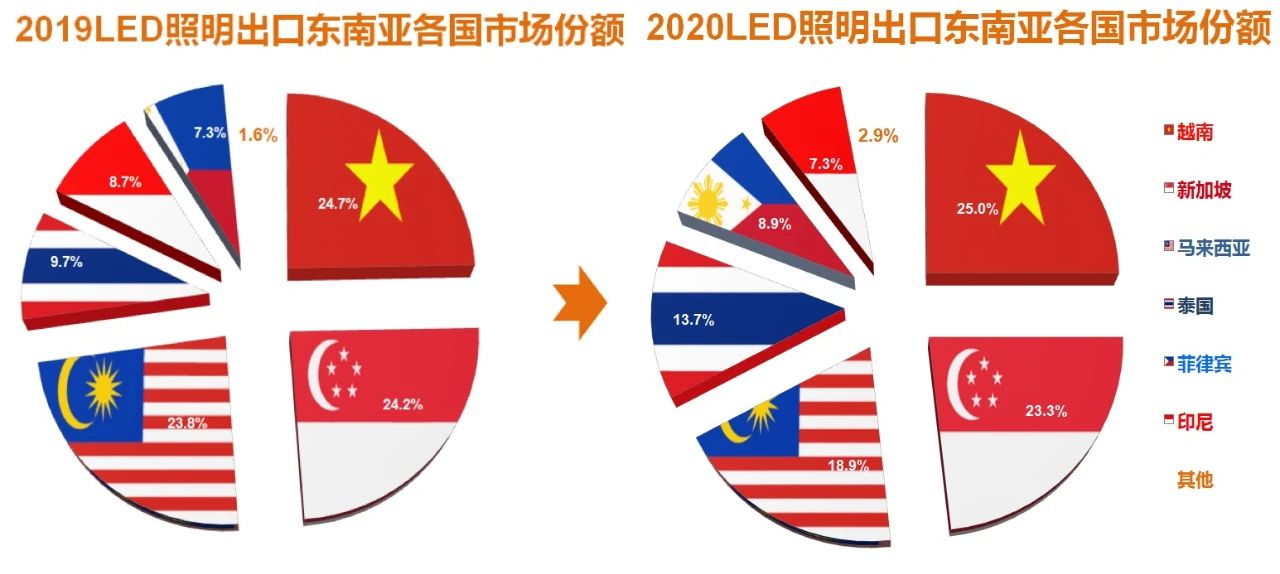
2020年已成为我国第一大外贸伙伴的东南亚/东盟市场是近年来的出口亮点市场。其中以越南、新加坡、马来西亚、印尼、菲律宾、泰国等市场为首,该六国即占据该地区LED照明市场超过97%的份额。这一区域本身也具备蓬勃的发展动力,作为我国“一带一路”战略的重要伙伴和一定规模中国制造业转移的承载地,未来前景也值得看好。另外相对于欧美国家,大部分地处热带的东南亚疫情扩散程度相对较轻,社会经济受到影响相对较小,地理上也为我国的近程市场,所以其LED照明市场的恢复程度相对好于大盘。内部格局也相对稳定,2020年除马来西亚和印尼略有下降之外,越南、新加坡增势稳定,泰国、菲律宾录得高增。
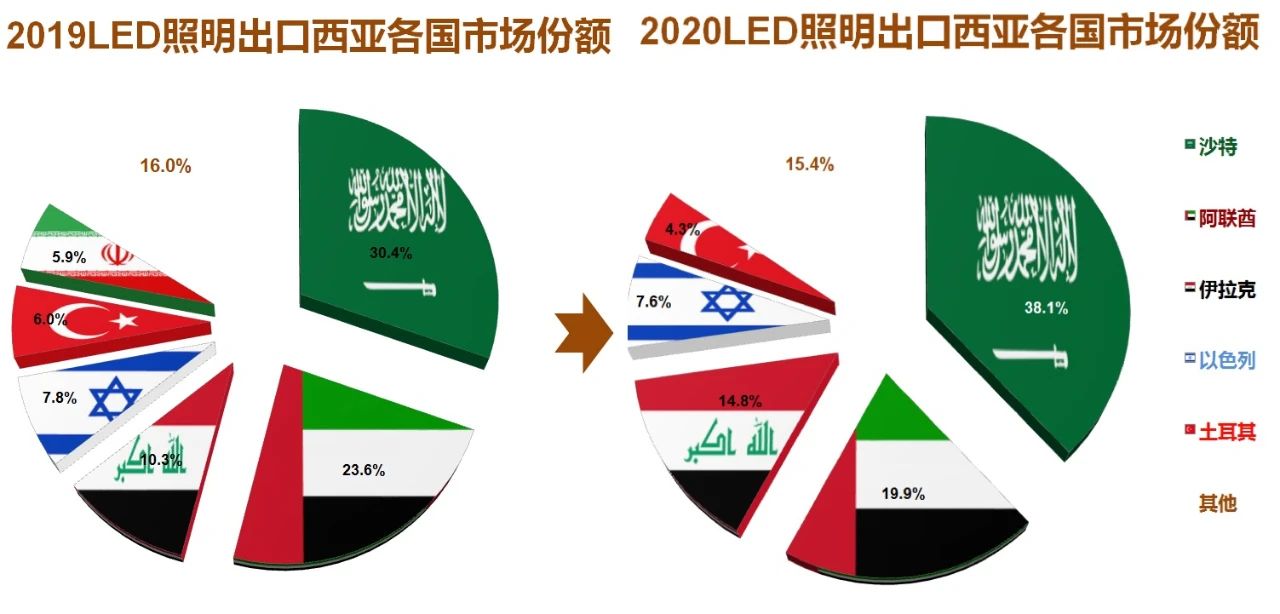
In the West Asia market, Saudi Arabia continued its strong performance from the first half of the year, achieving ultra-high growth and further consolidating its leading position; Iran was once a lighting market comparable in scale to Saudi Arabia, but this year, due to Western sanctions and the impact of the pandemic, its difficulties intensified, shrinking by 60% Year-on-year (YoY); in addition, Iraq, undergoing post-war reconstruction, also bears the important responsibility of delivering humanitarian supplies to its neighbor Iran under US sanctions, showing significant growth and a substantial increase in share; the UAE and Turkey remain regional re-export hubs.
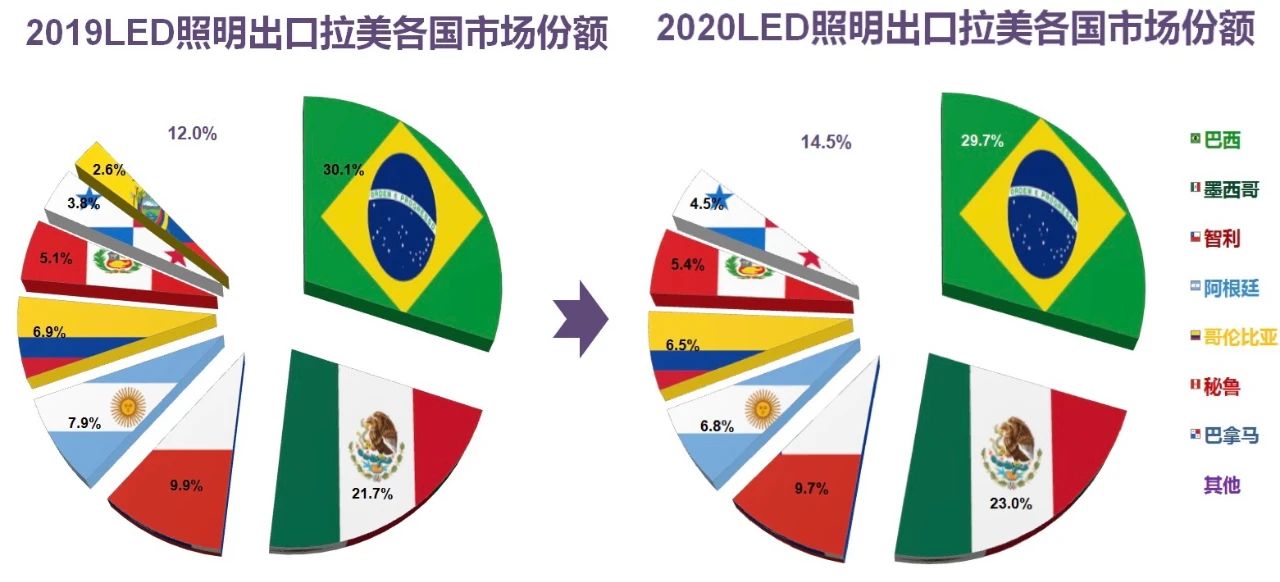
拉美市场因大多数国家深受“中等收入国家陷阱”困扰,政局动荡,经济低迷,近年来就呈现下滑态势。加之拉美多国处于疫情的风暴中心,可谓“屋漏偏逢连阴雨”,市场份额萎缩已成定数,愈发呈现积重难返之势。头部代表巴西贵为“金砖国家”,实际上近年来经济状况同样不容乐观,2020年除了众所周知的糟糕的防疫状况,国内严峻的通货膨胀也是其经济衰退的重要因素之一,官方货币雷亚尔的离岸汇率在一年时间内贬值了三成。拉美经济火车头尚且如此,整体情况可想而知,LED照明整体市场需求衰退也是大势所趋。
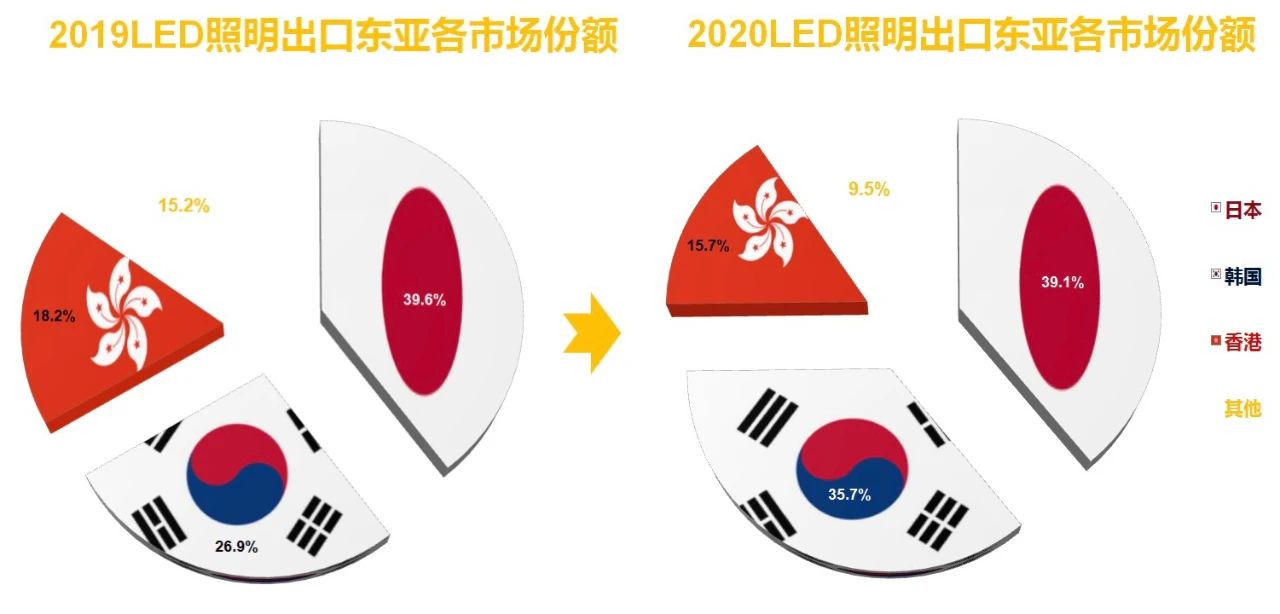
The LED lighting markets in Japan and South Korea within East Asia started early and are relatively mature. Due to effective epidemic prevention measures, they maintained basically normal social production and daily life, resulting in stable performance. Hong Kong serves as an important transit hub for the Export of products from mainland China, ensuring stable output. Together, these three account for approximately 90% of the market share in the region, with their proportion further increasing in 2020, highlighting their significant importance.
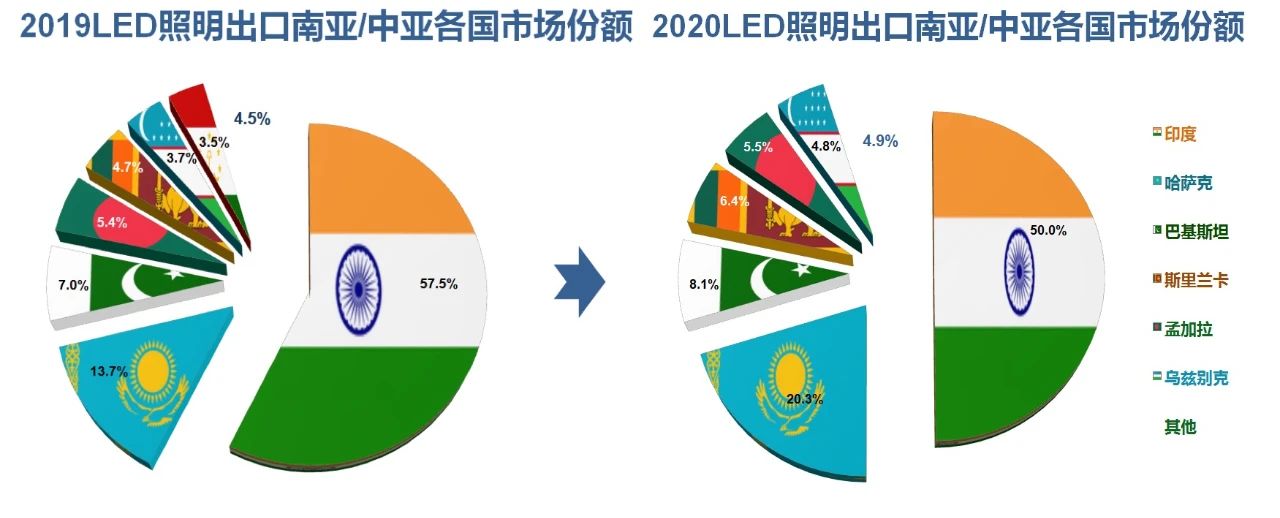
In recent years, South Asian countries represented by India have seen a decline in finished lighting product volumes due to the prevalence of SKD/CKD parts trade, which has also triggered a year-on-year decrease in this market share. As the focal point of the South/Central Asian market, India once accounted for 60% of this market, but by 2020, its share had dropped to just half. According to IMF estimates, India's economy contracted significantly by 10.3% in 2020; similarly, the IBRD reported a decline of 9.6%. Under such a severe economic recession, it is not surprising that its market share for LED lighting products has shrunk considerably.
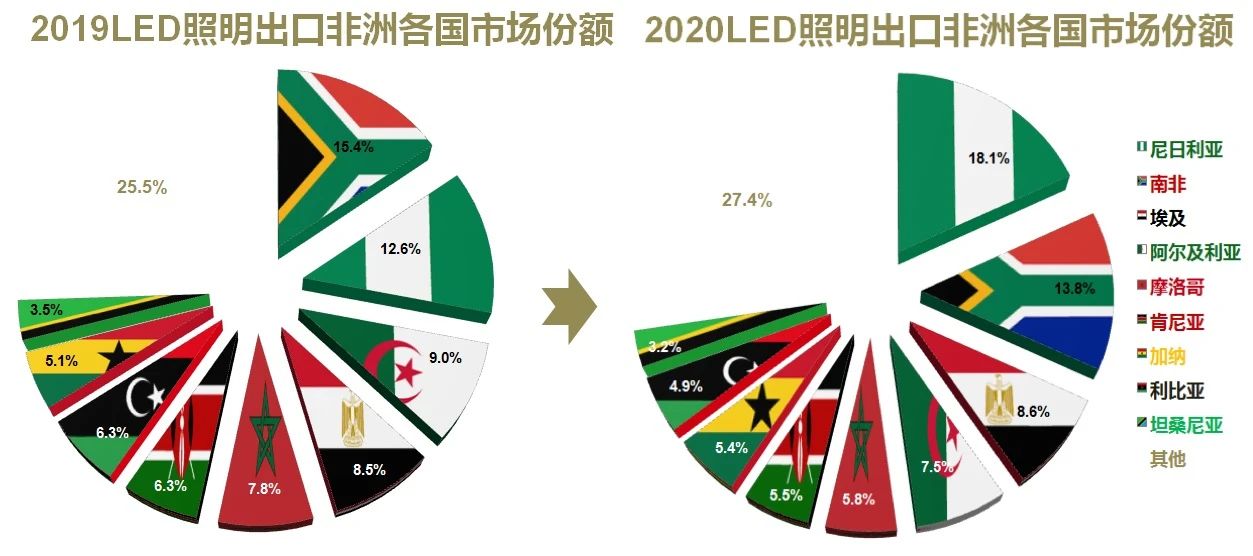
The African markethas maintained an upward trend, but due to the current state of its overall social and economic development, it remains in an early stage with a relatively fragmented market distribution. Meanwhile, the severe outbreak in South Africa and the resurgence of cases in key countries such as Egypt, Nigeria, Algeria, and Morocco have added uncertainty to the market's future prospects.
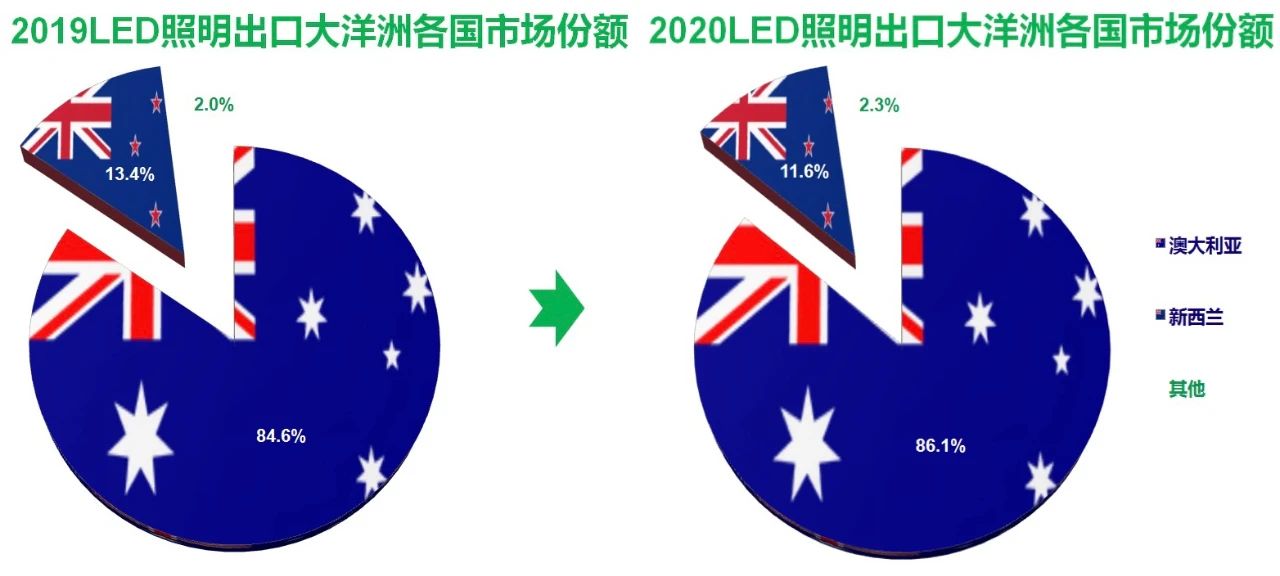
The Oceania market is highly concentrated, with Australia and New Zealand accounting for 98%. It shows steady growth and a stable landscape.
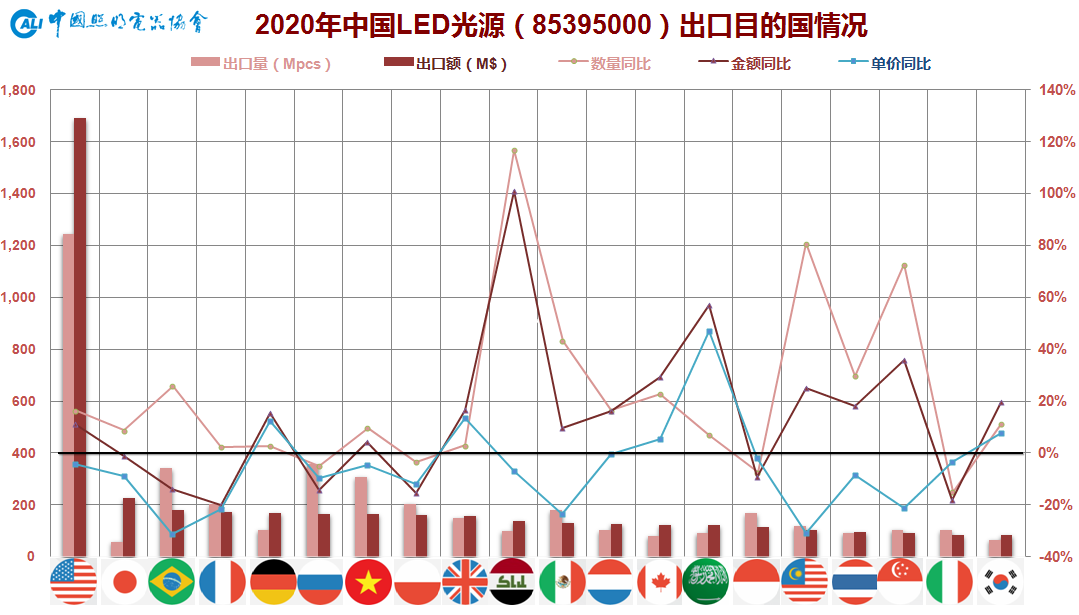
From the perspective of LED light source product exports, the total export volume to the top 20 destinations reached 4.18 billion units, an increase of 180 million units compared to the same period last year. However, their share of the total export volume decreased by 3 percentage points to 60%. The total export value amounted to USD 4.31 billion, an increase of USD 270 million year-on-year, but its proportion of the total export value dropped by nearly 2 percentage points to 73%. The pandemic has made the LED light source market more fragmented. On the other hand, looking at the average export price, more than two-thirds of the destination markets experienced varying degrees of decline, confirming the fierce price competition in the LED light source export market.
V. Current Practical Difficulties
While exports continue to hit record highs, attention must also be paid to the practical difficulties faced by export enterprises, particularly since the fourth quarter of 2020. These include:
1. Price Issue
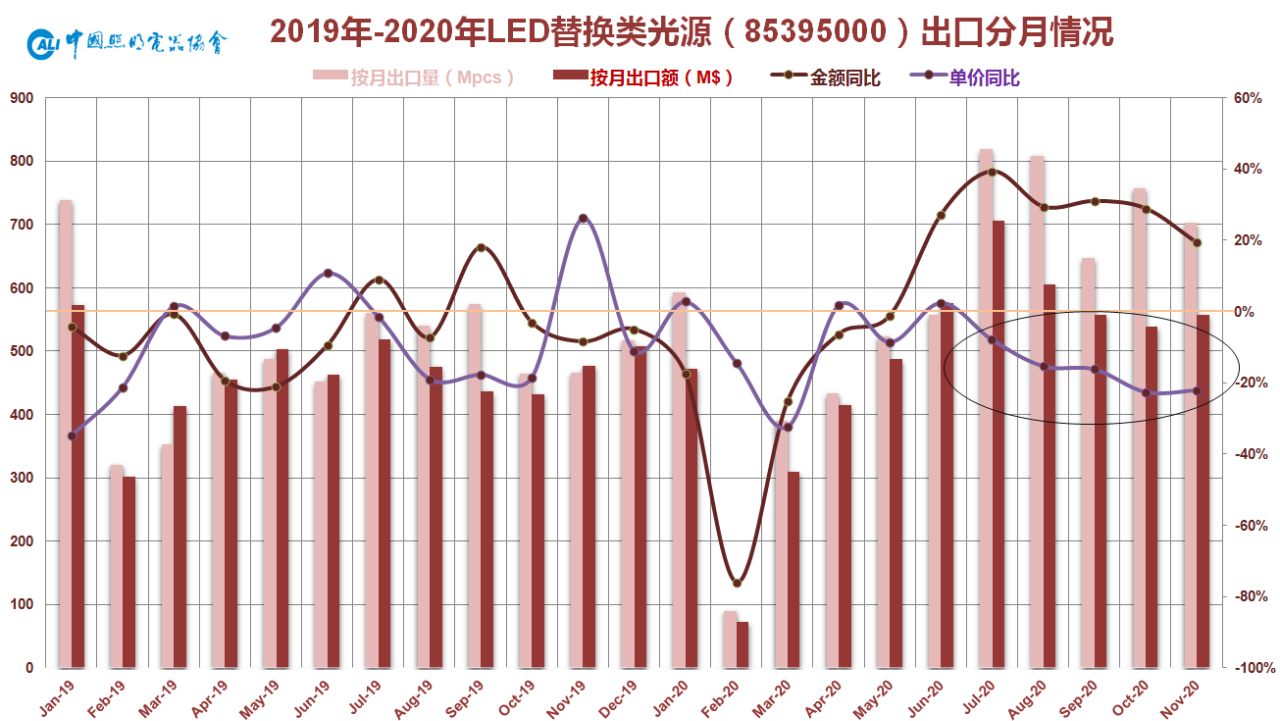
Price competition remains intense, further squeezing thin profit margins. In particular, for LED light source products, the average export price has fallen below that of comparable Fluorescent lamp products. Since the second half of the year, the average export price has declined rapidly, leading to a situation where volume increased significantly while value saw only slight growth, resulting in declining profits.
2. Exchange Rate Issues
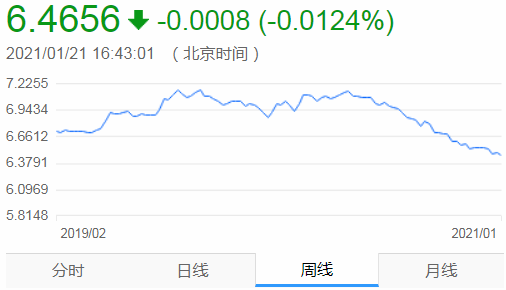
Significant exchange rate fluctuations throughout the year have seen the USD/CNY rate drop sharply from briefly breaking above 7 in the first half of the year to around 6.4 currently, greatly increasing foreign exchange pressure on export enterprises and severely impacting their profits.
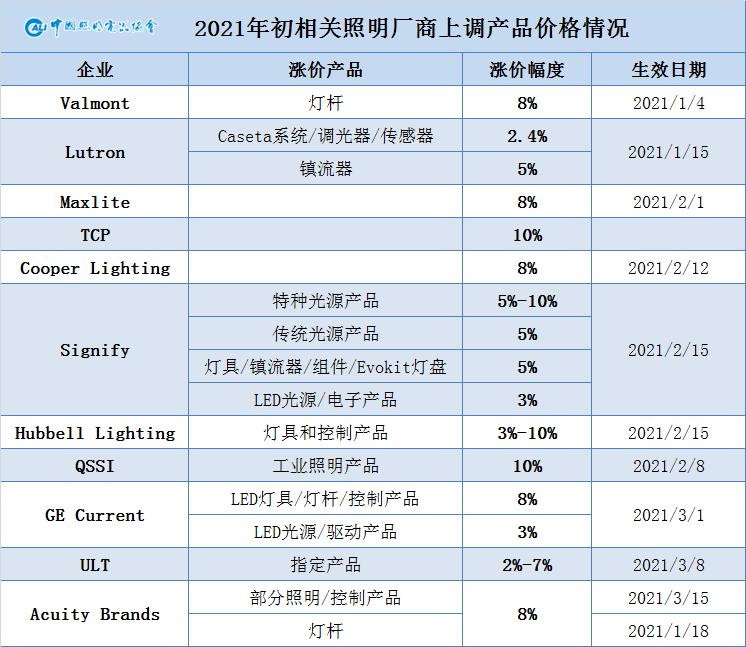
Soaring international commodity prices, coupled with the concentration of manufacturing in China, have led to significant price increases and shortages of raw materials and components such as copper-clad laminates, aluminum substrates, PCBs, IC chips, and passive components. This is particularly true for general-purpose components used in the automotive and consumer electronics industries. The lighting industry must compete with other sectors for production capacity. Recently, numerous notifications of price hikes for various raw materials and components have arrived, putting considerable pressure on the production capacity and profits of related export enterprises.
Recently, it is worth noting that in response to the significant price increases of raw materials and components, North American lighting companies have frequently raised finished product prices. The last concentrated price adjustment occurred in 2018 amid the mutual tariff impositions during the China-US trade friction.
4. Logistics Issues
As the manufacturing industry gradually recovers from the pandemic, the shipping industry has also experienced a rollercoaster: work resumption in March, no cargo in April, vessel reductions in May and June, price hikes in July, container shortages in August, space crunches in September, rolled containers in October, and even greater "container scarcity" in November and December. Driven by the pandemic-induced surge in global demand for Chinese products, the phenomena of rising freight rates, space crunches, and container shortages in the shipping industry have intensified. The inability to ship produced goods has become another major challenge facing export enterprises recently.
5. Energy Issues
Recently, due to the southward shift of the polar vortex and La Niña phenomena causing an unusually cold winter and a busy manufacturing sector, some southern provinces such as Jiangxi, Hunan, and Zhejiang have implemented power outage and rationing measures due to tight electricity supply or to meet annual energy saving targets, which has had a certain impact on the production capacity of some lighting manufacturing enterprises.
VI. Challenges to be faced in 2021
While the current state of exports is encouraging, we should not be blindly optimistic about the overall situation, as uncertainties regarding its prospects remain. The global pandemic threat has not been eliminated and continues to flare up; restoring global mobility for both people and goods remains a long and arduous task. The major challenges facing exports this year include:
1. The high growth in exports of epidemic prevention materials is difficult to sustain in the long term
Currently, external demand orders for products other than those related to epidemic prevention and the stay-at-home economy remain under pressure, with exports of labor-intensive products still sluggish. Exports of supplies related to epidemic prevention and the stay-at-home economy are directly linked to the progression of the overseas pandemic. If the global pandemic is gradually brought under effective control in 2021, it is expected that exports of pandemic-related products will also slow down, and their contribution to boosting total export volume will decline.
2. The sustainability of the "substitution effect" remains to be observed
In the future, as vaccines are gradually rolled out and other lighting manufacturing countries pass the peak of the pandemic and gradually resume production and work, their supply capacity will gradually recover. The substitution effect of China's exports to other countries will inevitably weaken, and the export market share will return to normal levels, thereby weakening support for overall export growth.
3. Global economic recession leads to declining external demand
According to the IMF report, the global economy contracted by approximately 4.4% in 2020, meaning global GDP decreased by about $3.91 trillion, a figure equivalent to the entire 2019 GDP of Germany. Similarly, the IBRD estimated a 4.3% decline in the global economy for 2020. Meanwhile, the World Trade Organization (WTO) stated that global trade volume fell by 9.2% in 2020. Entering 2021, the global pandemic continued with waves far more severe than previous ones, and the risk of a global financial crisis triggered by the pandemic remains. The recovery of the world economy still faces significant challenges. In this context, external demand will continue to face substantial downward pressure due to economic contraction.
4. The risk of supply chain spillover still exists
Against the backdrop of a confirmed global economic downturn, escalating US-China trade friction, and undercurrents of de-sinification in the global supply chain, the lighting industry / supply chain faces certain spillover risks. In the previous operating system, supply chains prioritized efficiency and cost-effectiveness; however, overseas clients are likely to prioritize supply chain security in the future, making it inevitable that some orders will be diverted to manufacturing countries such as Southeast Asia, Mexico, and India.
5. Continuous decline in profits increases pressure on corporate survival
As the rigid costs essential to manufacturing—such as labor, land, energy, and raw materials—continue to rise, export product prices keep declining amid increasingly fierce competition, further squeezing the already thin profit margins of the lighting industry. Against the backdrop of simultaneous growth in both export volume and value, companies are doing more work but earning less profit. This has significantly compressed the survival space for relevant export enterprises, especially small and micro enterprises, which is detrimental to the sustainable development of the industry.
6. The base for comparison of growth has expanded
Given the low export base in Q1 2020, exports are expected to maintain strong growth in Q1 this year. As vaccines are gradually rolled out and implemented, production in other overseas economies will recover, easing supply-side gaps. However, due to the high base effect from the significant growth in 2020, full-year continued growth will face considerable pressure. It is predicted that the export growth rate this year will show a trend of being higher in the first half and lower in the second half , and negative growth in the later period cannot be ruled out.
7. Increased uncertainty in the outlook
The uncertainty brought by the pandemic and weak demand have led to a decline in corporate investment willingness and a deterioration in asset-liability ratios, which will, to some extent, constrain the recovery process of external demand. Uncertain factors such as the global economic situation, China-US trade friction, and RMB exchange rates still exist. The superposition of various uncertainties makes decision-making and planning extremely difficult for relevant export enterprises.
8. View the lighting industry's "export to domestic sales" with caution
Not long ago, the Politburo meeting set the tone that the dual circulation strategy, with domestic circulation as the mainstay, will become the underlying logic of China's economic landscape during the 14th Five-Year Plan period. The correct understanding of this should be to ultimately facilitate dual circulation and enhance the international competitiveness of Chinese manufacturing, rather than simple involution.
Applied to our lighting industry, the dual circulation model has long been realized. More than half of our production value is exported to over 200 countries and regions worldwide, while nearly the other half supplies the domestic market. Thus, the domestic lighting market is already quite saturated. Export-oriented enterprises that blindly enter the domestic sales market will face barriers in branding, (Sales) channel, products, services, teams, and even culture. This will also exacerbate existing contradictions such as structural overcapacity, low-price competition, and product homogenization. The likely outcome is: "You fail to succeed yourself, and drag others down with you."
Therefore, the implementation of the dual circulation strategy must also consider industry-specific characteristics. The path for the lighting industry to shift from export to domestic sales is fraught with challenges and is not suitable for all enterprises. Companies need to clearly define their positioning, adapt to local conditions, and proceed with caution.
Summary
Despite the pandemic storm in 2020, lighting exports still achieved encouraging figures. While this is commendable, we need to pay attention to and address the current difficulties on one hand, and make plans and preparations for 2021 on the other. As one of the few major economies in the world to have fully contained the epidemic, China's annual GDP exceeded 100 trillion yuan, with a growth rate of 2.3%. While economic data turned from negative to positive, society has basically returned to normal. We should be full of expectations for the development prospects of Made in China; however, since the world shares the same fate, we cannot remain unaffected at this moment, and we still need to be sufficiently vigilant about the profound changes in the global situation under the impact of the epidemic. The epidemic is not just a crisis; how to eliminate dangers and seize opportunities is an issue that our entire industry, and even the whole society, needs to consider. Countless facts and data in the past have fully demonstrated the rigid demand resilience of lighting products and the irreplaceable position of China as the global lighting manufacturing center and supply chain hub. Therefore, at this stage, the vast majority of lighting export enterprises should primarily strengthen their confidence, focus on their core business, and forge ahead.
All because "Life is like a journey against the current, sailing with a single reed; where the heart directs, one walks with simple steps."
China Light
The official website of the China Association of Lighting Industry and a full-media platform for the lighting sector. We provide authoritative and timely lighting information while striving to be a growth partner for businesses. From brand promotion and channel expansion to consulting, talent training and participation in standards development, we provide comprehensive professional services to help businesses improve quality and efficiency and jointly advance the high-quality development of the lighting industry.
Business Contacts
仇纯 (Ms.): 158 6155 3579
顾君 (Mr.): 137 7157 5253