
Important Notice! The Ministry of Housing and Urban-Rural Development has officially issued new qualification reforms, bringing further changes to qualifications in the lighting sector!
Recently, the Ministry of Housing and Urban-Rural Development issued the "Notice on Printing and Distributing the Reform Plan for the Qualification Management System of Construction Engineering Enterprises".
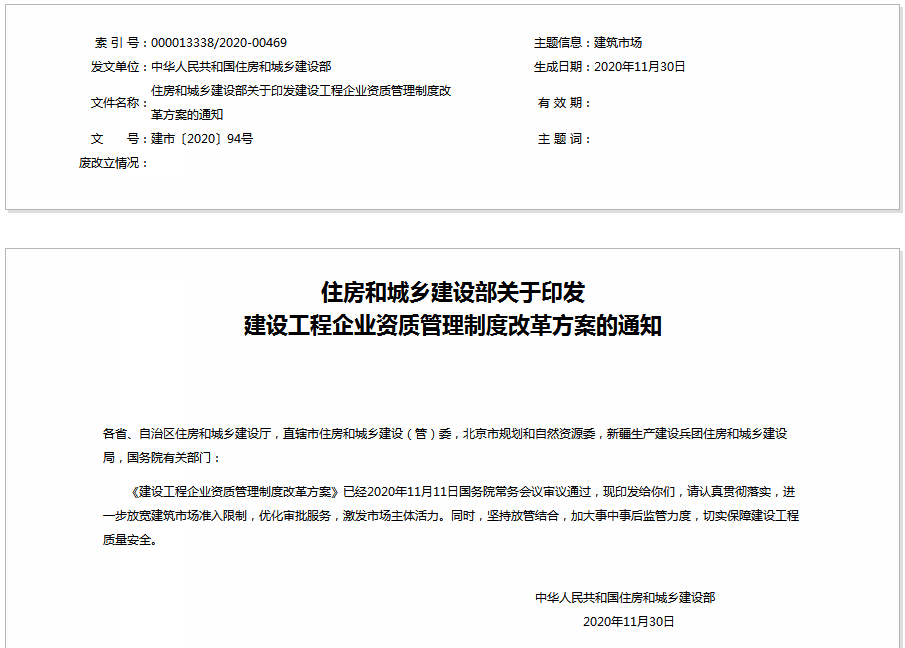
The notice points out that the "Reform Plan for the Qualification Management System of Construction Engineering Enterprises" was reviewed and approved at the State Council executive meeting on November 11, 2020. Please implement it conscientiously, further relax market access restrictions in the construction industry, optimize approval services, and stimulate the vitality of market entities. At the same time, adhere to the combination of deregulation and supervision, strengthen interim and ex-post oversight, and effectively ensure the quality and safety of construction projects.
"Reform Plan for the Qualification Management System of Construction Engineering Enterprises" shows that after the reform:
Engineering survey qualifications are divided into comprehensive qualifications and professional qualifications; Engineering design qualifications are divided into comprehensive qualifications, industry qualifications, professional qualifications, and firm qualifications; Construction qualifications are divided into comprehensive qualifications, general construction contracting qualifications, specialized contracting qualifications, and specialized labor qualifications; Engineering supervision qualifications are divided into comprehensive qualifications and professional qualifications.
Qualification levels are, in principle, reduced to two tiers: Grade A and Grade B (some qualifications are designated as Grade A only or are ungraded). Following this reduction, the scope of business that small and medium-sized enterprises (SMEs) can undertake will be further expanded, which is conducive to promoting the development of SMEs.
The document also mentions carrying out the revision of qualification standards and certificate renewal work to ensure a smooth transition. A one-year transition period is set, after which simple certificate renewal will be implemented, meaning new qualification certificates will be issued directly according to the correspondence between old and new qualifications, without re-verification of qualifications.
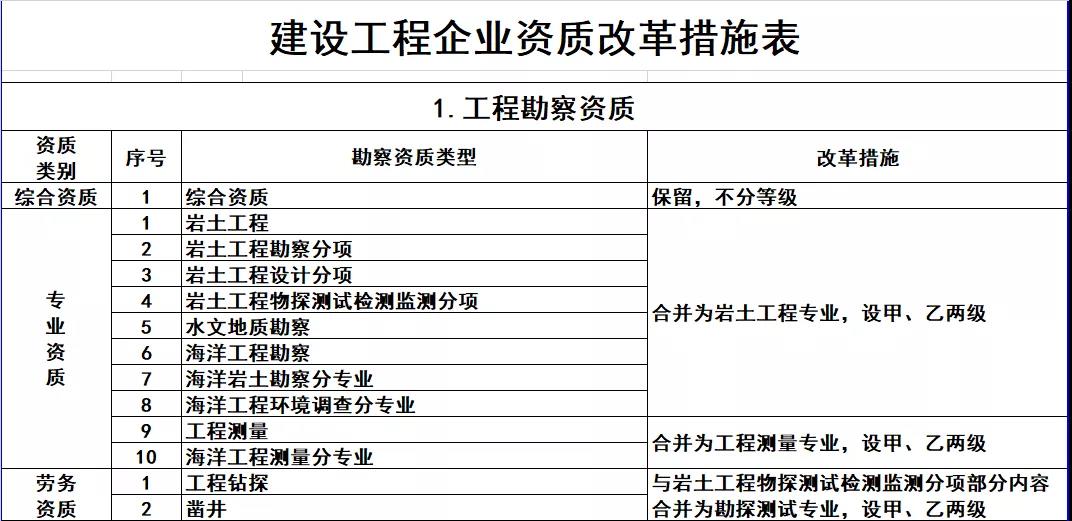
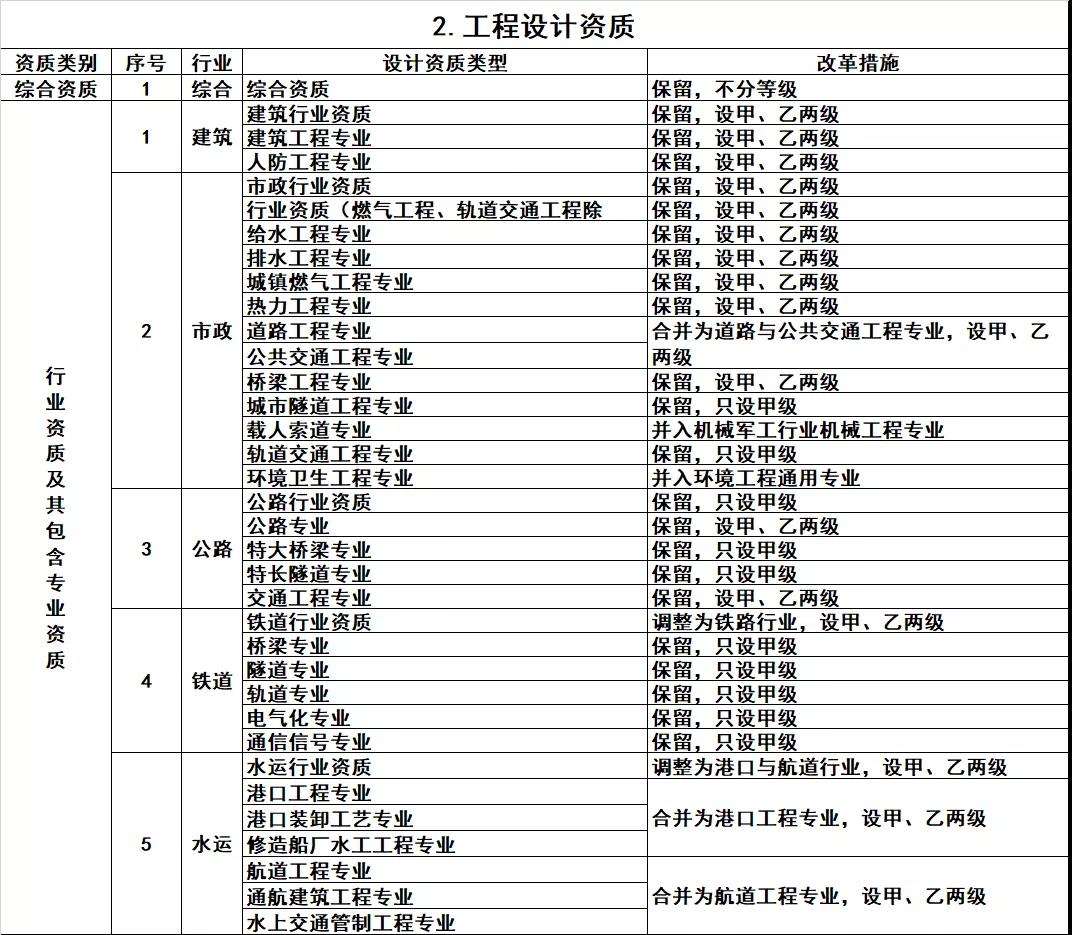
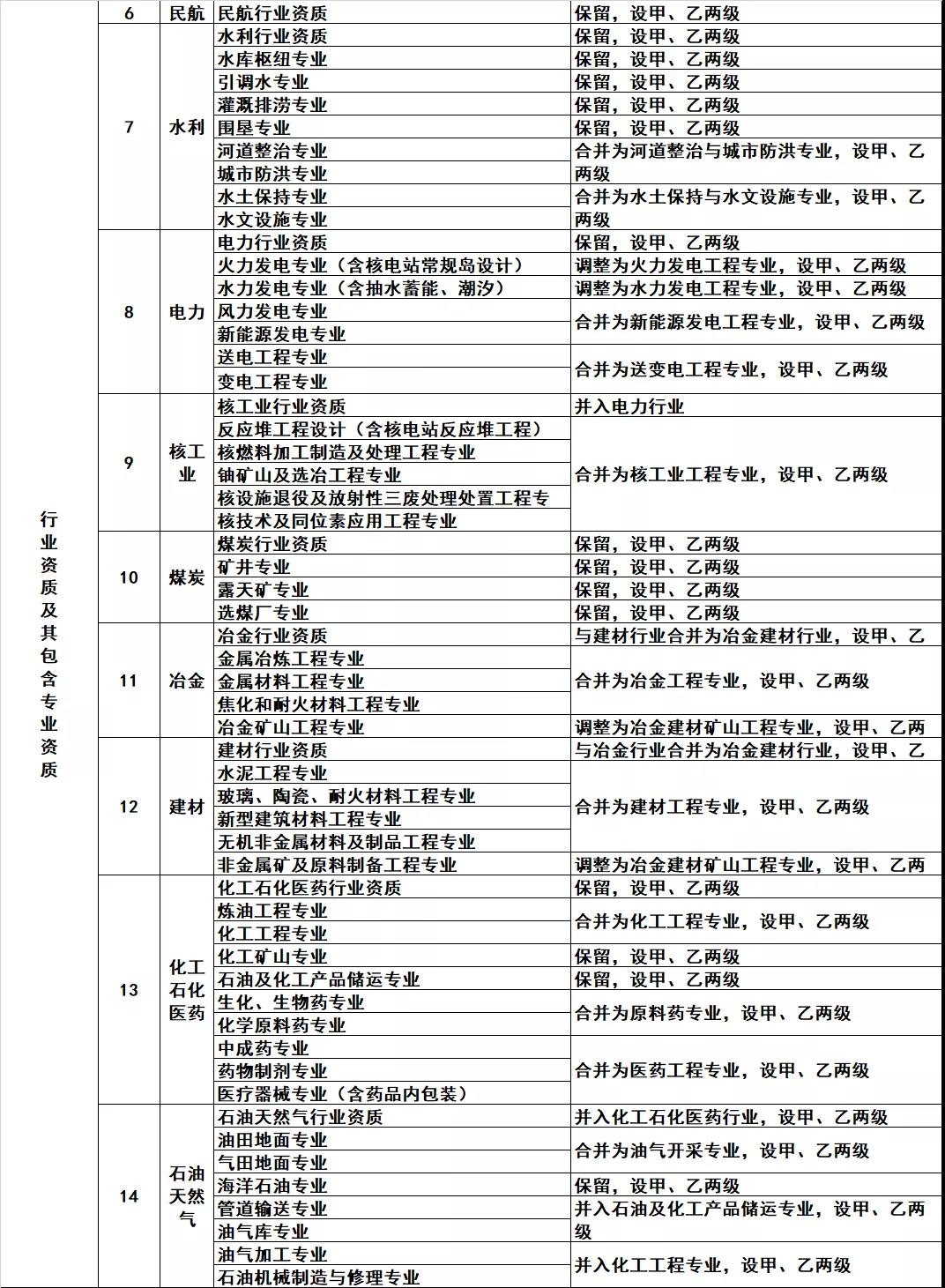
Among them, according to the "Reform Measures Table for Qualifications of Construction Engineering Enterprises", the changes in qualifications related to lighting engineering and smart street light pole projects are as follows (different from those described in the previous draft for comments):
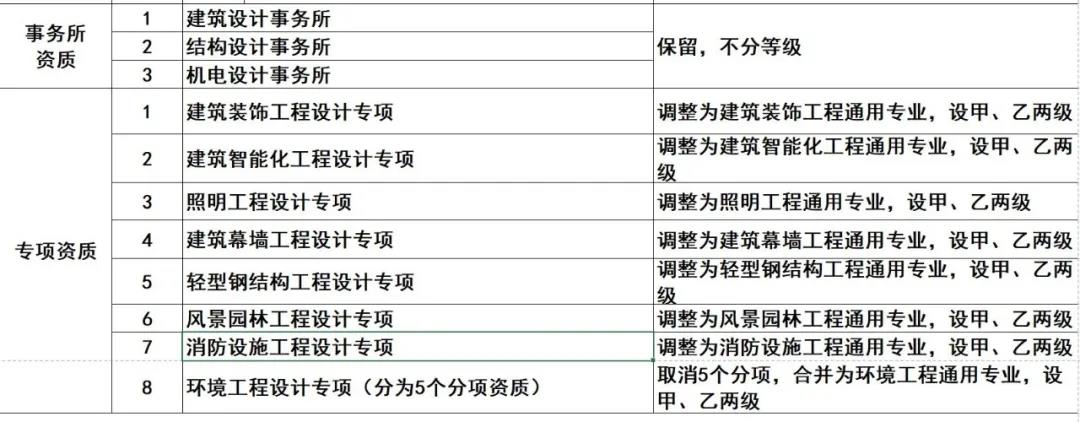
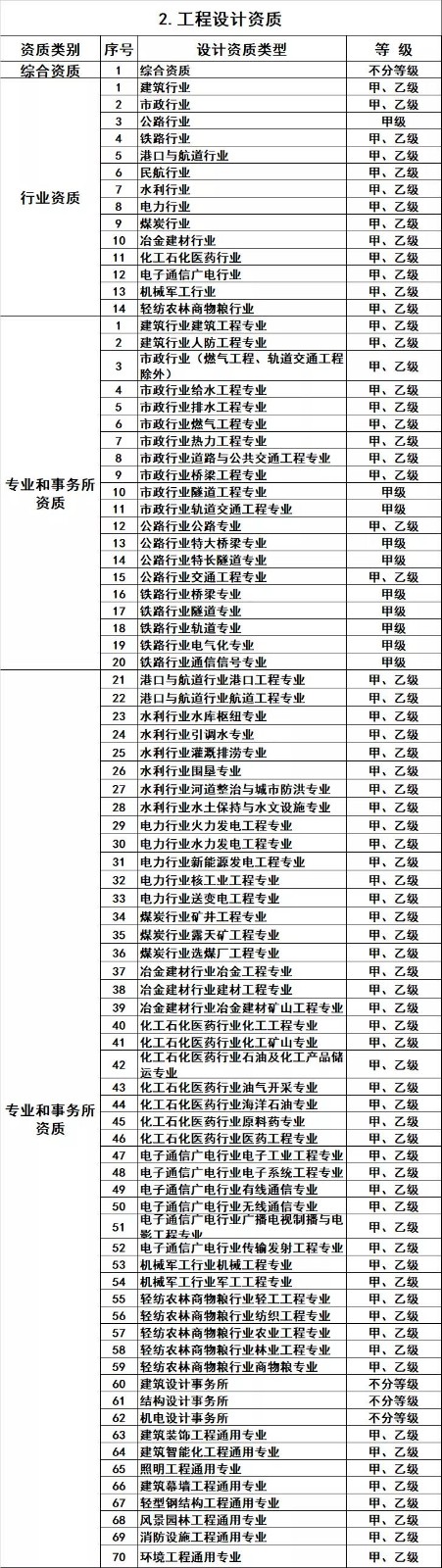
Special Qualification for Lighting Engineering Design adjusted to General Professional Qualification for Lighting Engineering, with Grade A and Grade B levels;
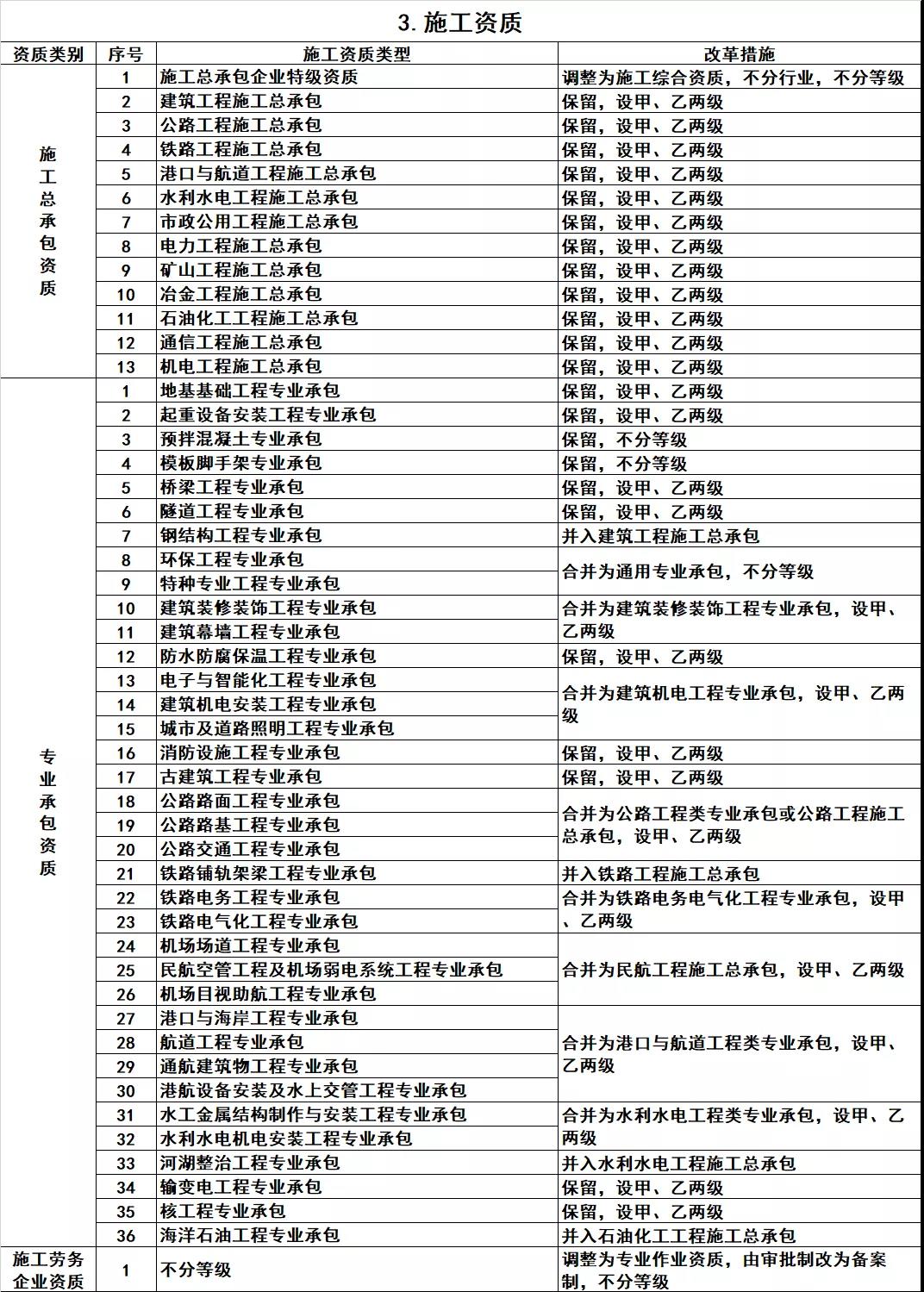
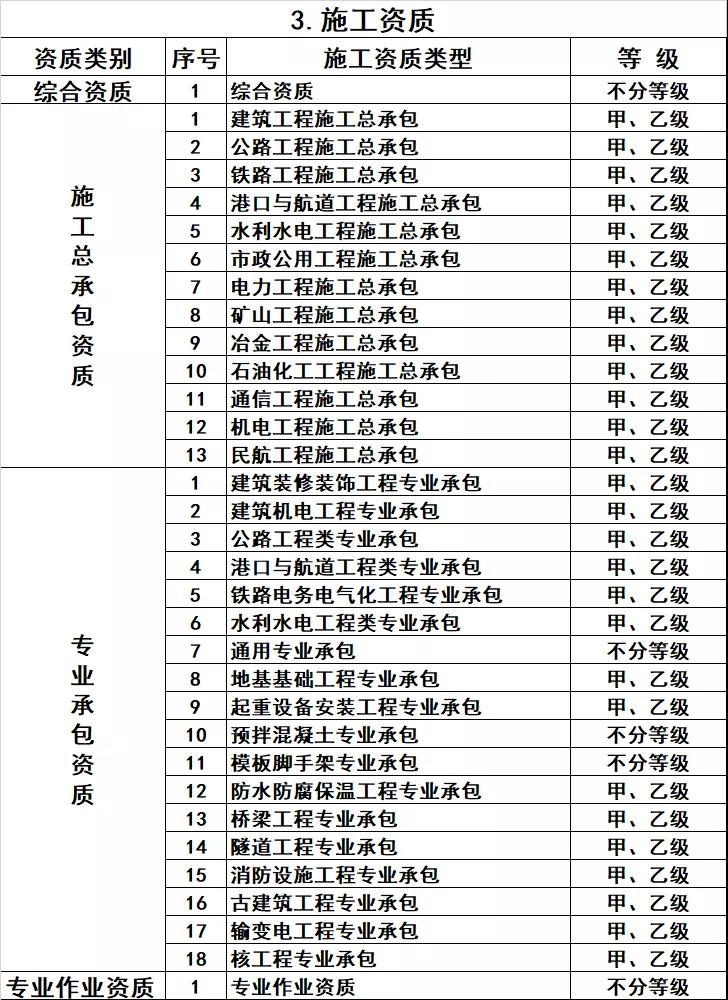
城市及道路照明工程专业承包、建筑机电安装工程专业承包和电子与智能化工程专业承包资质合并为建筑机电工程专业承包资质,设甲、乙两级;
Qualification for General Contracting of Municipal Public Works Construction is retained, with two levels: Grade A and Grade B;
Qualification for General Contracting of Communication Engineering Construction is retained, with two levels: Grade A and Grade B;
General Contracting Qualification for Electromechanical Engineering Construction retained, with two levels: Grade A and Grade B;
The professional contracting qualification for steel structure engineering is merged into the general contracting qualification for building construction. The general contracting qualification for building construction is divided into two levels: Grade A and Grade B.
To implement the spirit of the 2019 national teleconference on deepening the reform of “delegating power, improving regulation, and upgrading services” to optimize the business environment, as well as the important instructions of Premier Li Keqiang, and in accordance with the requirements of the “Notice of the General Office of the State Council on Printing and Distributing the Plan for Division of Key Tasks of the National Teleconference on Deepening the Reform of ‘Delegating Power, Improving Regulation, and Upgrading Services’ to Optimize the Business Environment” (Guo Ban Fa [2019] No. 39), we are deepening the reform of “delegating power, improving regulation, and upgrading services” in the construction industry. To effectively reduce the items involved in the qualification recognition of construction engineering enterprises (including qualifications for engineering survey, design, construction, and supervision enterprises, hereinafter collectively referred to as enterprise qualifications), the following reform plan is hereby formulated.
I. Guiding Principles
Guided by Xi Jinping Thought on Socialism with Chinese Characteristics for a New Era, implement the spirit of the 19th National Congress of the Communist Party of China and its Second, Third, Fourth, and Fifth Plenary Sessions. Fully leverage the decisive role of the market in resource allocation and better utilize the role of the government. Adhere to advancing supply-side structural reform in the construction industry as the main line. In accordance with the State Council's deployment requirements for deepening the "delegation, regulation, and service" reforms, continuously optimize the business environment, significantly streamline enterprise qualification categories, consolidate grade settings, simplify qualification standards, optimize approval methods, further relax market access restrictions in the construction sector, reduce institutional transaction costs, remove unreasonable constraints hindering enterprise development, continuously stimulate the vitality of market entities, promote employment and entrepreneurship, accelerate the transformation and upgrading of the construction industry, and achieve high-quality development.
II. Main Content
(I) Streamline qualification categories and consolidate grade settings. To effectively carry out the "Six Stability" work and implement the "Six Guarantees" tasks under normalized epidemic prevention and control conditions, further optimize the business environment in the construction market, ensure a smooth transition between old and new qualifications, and guarantee engineering quality and safety, we will actively and steadily advance the reform of the enterprise qualification management system for construction projects in accordance with the principle of seeking progress while maintaining stability. Enterprise qualification categories with overly detailed professional divisions, similar business scopes, and limited market demand will be merged, and qualification grades with excessive hierarchical levels will be consolidated. After the reform, engineering survey qualifications will be divided into comprehensive qualifications and professional qualifications; engineering design qualifications will be divided into comprehensive qualifications, industry qualifications, professional qualifications, and firm qualifications; construction qualifications will be divided into comprehensive qualifications, general contracting qualifications, specialized contracting qualifications, and specialized labor service qualifications; and engineering supervision qualifications will be divided into comprehensive qualifications and professional qualifications. Qualification grades will generally be reduced to two levels: Grade A and Grade B (some qualifications will only have Grade A or no grade distinction). Following the reduction in qualification grades, the scope of business that small and medium-sized enterprises can undertake will be further broadened, which is conducive to promoting the development of small and medium-sized enterprises. The specific reductions are as follows:
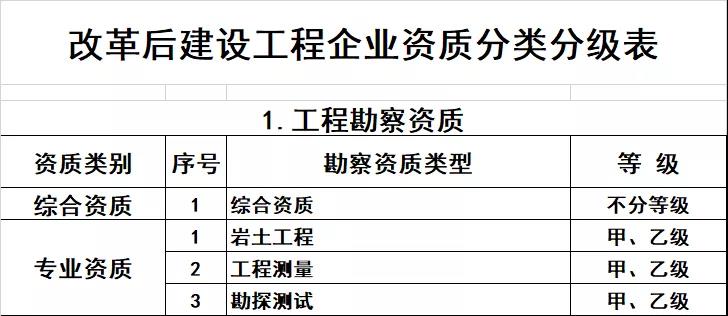
1. Engineering survey qualifications. Retain comprehensive qualifications; integrate four types of professional qualifications and labor qualifications into three categories: geotechnical engineering, engineering surveying, and exploration testing. Comprehensive qualifications are not graded, while professional qualifications are reduced to two levels: Grade A and Grade B.
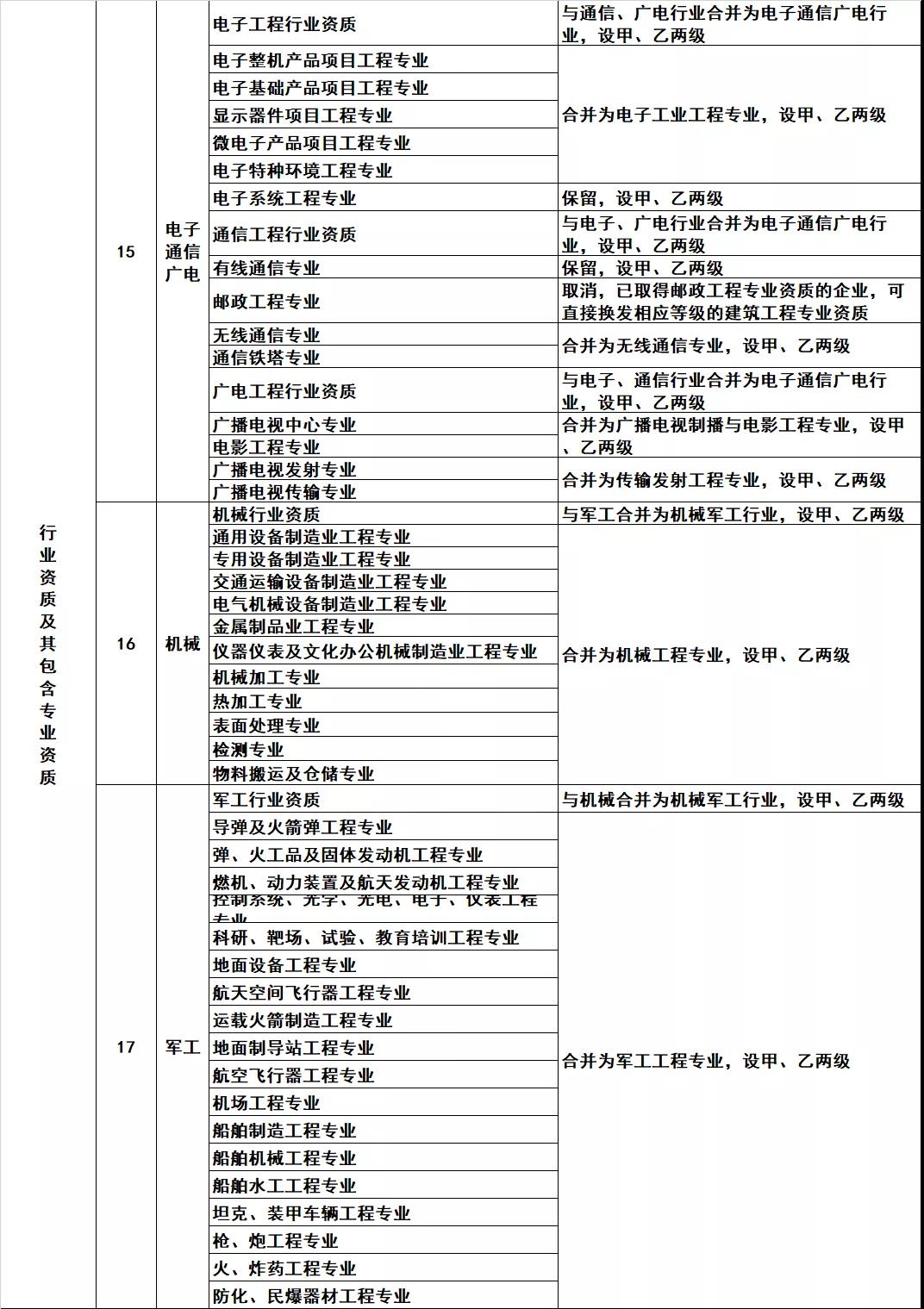
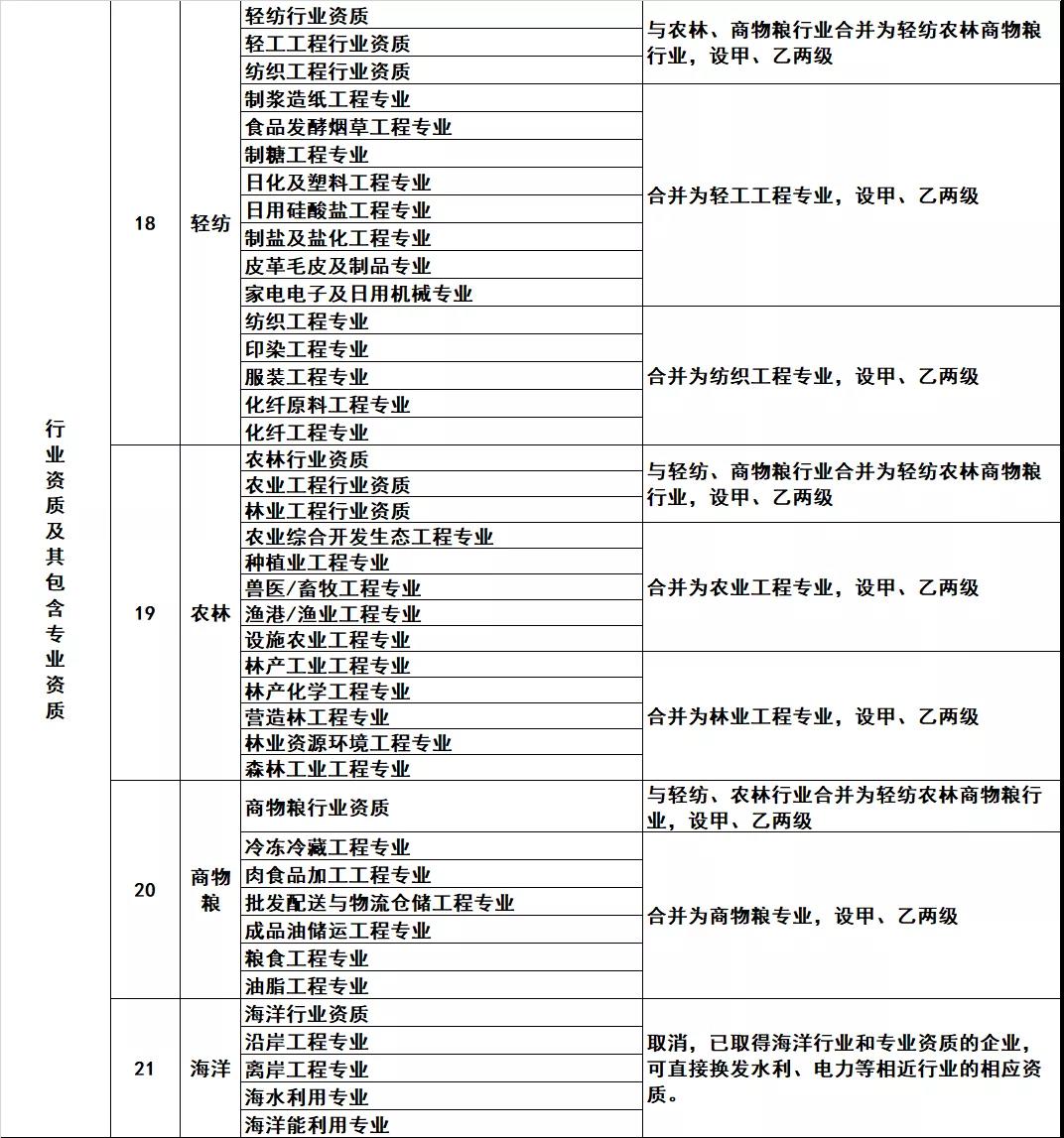
2. Engineering design qualifications. Retain comprehensive qualifications; consolidate 21 industry qualification categories into 14; consolidate 151 professional qualification categories, 8 special qualification categories, and 3 firm qualification categories into 70 professional and firm qualification categories. Comprehensive qualifications and firm qualifications are not graded; industry and professional qualification levels are generally reduced to Grade A and Grade B (some qualifications only have Grade A).
3. Construction qualifications. The special-grade qualification for 10 categories of general construction contracting enterprises is adjusted to a comprehensive construction qualification, allowing them to undertake general construction contracting business across all industries and at all levels; the 12 categories of general construction contracting qualifications are retained, and the professional contracting qualification for civil aviation engineering is integrated into the general construction contracting qualification; the 36 categories of professional contracting qualifications are consolidated into 18 categories; the qualification for construction labor service enterprises is changed to professional work qualification, shifting from an approval system to a registration system. Comprehensive qualifications and professional work qualifications are not graded; the grades for general construction contracting qualifications and professional contracting qualifications are in principle reduced to two levels: Grade A and Grade B (some professional contracting qualifications are not graded), among which, enterprises with Grade A general construction contracting qualification are not restricted in the scale of business they can undertake within their industry.
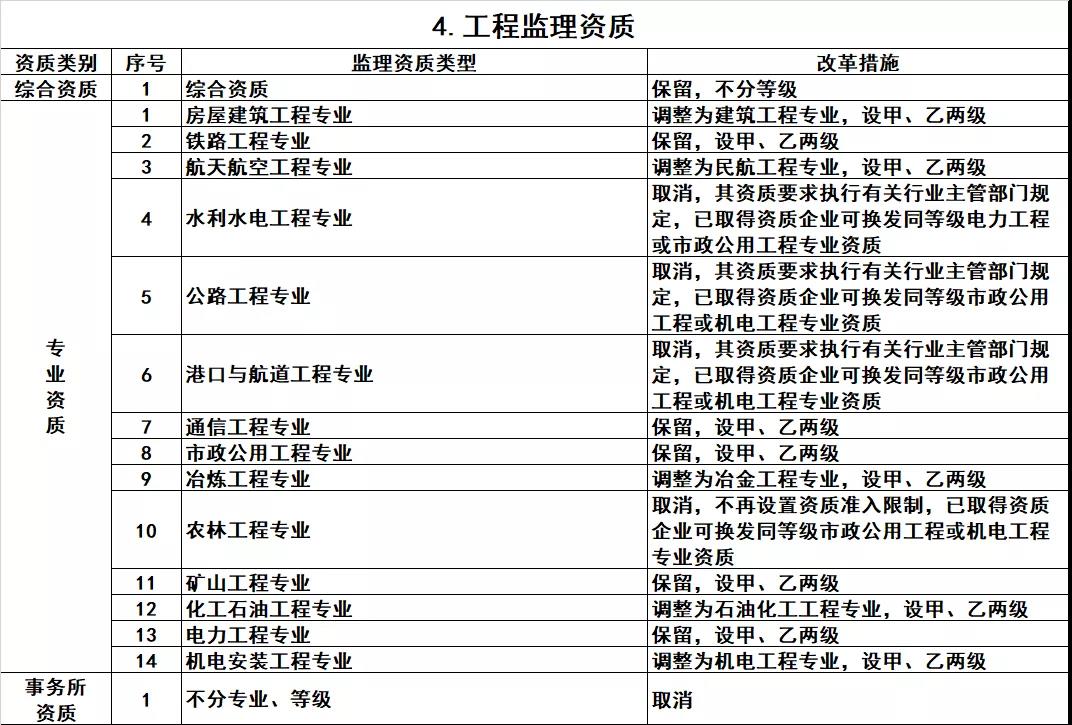
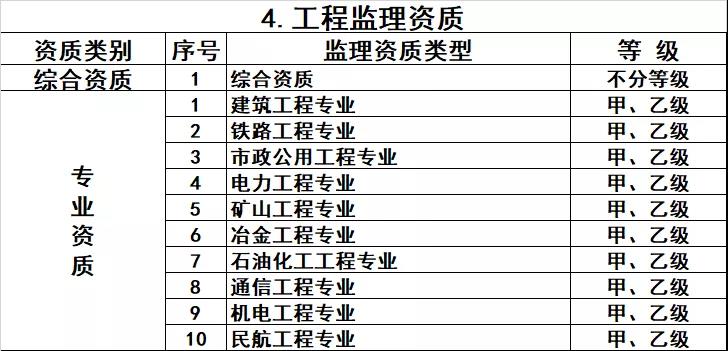
4. Engineering supervision qualifications. Retain the comprehensive qualification; cancel professional qualifications for water resources and hydropower engineering, highway engineering, port and waterway engineering, and agriculture and forestry engineering, while retaining the remaining 10 categories of professional qualifications; cancel firm qualifications. The comprehensive qualification has no grades, and professional qualifications are reduced to two levels: Grade A and Grade B.
(II) Relax market entry restrictions to stimulate enterprise vitality. The Ministry of Housing and Urban-Rural Development, in conjunction with relevant departments of the State Council, will formulate unified enterprise qualification standards, significantly streamline approval conditions, and relax assessment requirements regarding corporate capital, key personnel, project performance, and technical equipment. Appropriately raise the upper limit on the scale of business that can be undertaken under certain qualifications; where multiple qualifications are merged, the scope of business for the new qualification shall be expanded accordingly to cover the businesses permitted under each pre-integration qualification, minimizing direct government intervention in micro-level activities of the construction market and fully leveraging the decisive role of the market in resource allocation.
(3) Decentralize approval authority to facilitate enterprise operations. Further intensify decentralization efforts by selecting regions with solid foundational work and specific qualification categories to pilot the delegation of enterprise qualification approval authority, delegating the approval of all qualification levels except comprehensive qualifications to provincial-level and lower relevant competent authorities (wherein, the approval authority for qualifications involving highways, water transport, water resources, communications, railways, and civil aviation shall be determined by the housing and urban-rural development department of the State Council in conjunction with other relevant departments of the State Council based on actual conditions), thereby enabling enterprises to handle matters locally. Pilot regions must designate specialized agencies and personnel responsible for enterprise qualification approval, and formulate relevant management regulations for enterprise qualification approval to ensure that local authorities can effectively assume and manage the delegated approval powers. Enterprise qualifications are valid nationwide; it is strictly prohibited for any industry or region to impose restrictive measures. Strictly investigate and punish acts such as disguised establishment of market entry barriers and irregular restrictions on enterprises undertaking business across regions or industries, so as to maintain a unified and standardized construction market.
(4) Optimize approval services and implement the notification-commitment system. Deepen "Internet + Government Services", accelerate the online handling of enterprise qualification approvals, implement full-process online application and approval, gradually promote electronic qualification certificates, achieve "one-network processing" for enterprise qualification approvals, and publicly release enterprise qualification information on the National Construction Market Supervision Public Service Platform. Simplify various certification items; any supporting materials that can be obtained through information sharing among government departments will no longer be required from enterprises. Accelerate the implementation of the notification-commitment system for enterprise qualification approvals, further expand its scope of application, clarify approval standards, and gradually improve the standardization and convenience of enterprise qualification approvals.
(5) Strengthen in-process and ex-post supervision to ensure engineering quality and safety.Adhere to the combination of deregulation and supervision, increase dynamic supervision after qualification approval, innovate supervision methods and means, comprehensively implement the "double random, one public" supervision method and the "Internet + supervision" model, strengthen the implementation of main responsibilities of all parties involved in engineering construction, increase efforts to investigate and deal with illegal and irregular activities such as subcontracting, illegal subcontracting, and qualification affiliation, strengthen ex-post accountability, and strictly pursue legal liability against enterprises and personnel responsible for engineering quality and safety accidents in accordance with the law.
III. Safeguard Measures
(1) Improve the engineering bidding system and guide construction units to reasonably select enterprises. Continuously deepen the reform of the engineering bidding system, improve the qualification review system for engineering tenders, optimize and adjust the setting of tender conditions for engineering projects, and guide construction units to conduct comprehensive evaluations based on enterprise strength, technical capabilities, and management experience, so as to independently select enterprises that meet engineering construction requirements. Actively cultivate whole-process engineering consulting service agencies to provide professional services for owners in selecting qualified enterprises. Vigorously promote engineering general contracting and guide enterprises to subcontract in accordance with the law.
(II) Improve the professional qualification management system and implement the responsibilities of registered personnel. Accelerate the revision and improvement of the professional qualification management system for registered personnel, further clarify the rights, obligations, and responsibilities of registered personnel in engineering construction activities, promote the establishment of a personal practice liability insurance system, continuously regulate professional conduct, implement the lifelong responsibility system for engineering quality, and provide strong support for improving project quality and ensuring safe production.
(3) Strengthen supervision and guidance to ensure the implementation of reform measures. Formulate explanatory notes on the indicators for enterprise qualification standards in construction projects, further refine approval standards and requirements, strengthen training for local approval personnel, and enhance the capability and level of qualification approval services. Conduct irregular spot checks on local qualification approval work, seriously handle violations of approval regulations, publicly expose them, and in serious cases, revoke the pilot qualification for decentralizing enterprise qualification approval authority.
(4) Improve the credit system and leverage market mechanisms. Further improve the construction market credit system, strengthen the application of credit information in all stages of engineering construction, improve the "blacklist" system, and increase penalties for dishonest behavior. Accelerate the implementation of engineering guarantee and insurance systems, further leverage market mechanisms, regulate the behavior of all parties involved in engineering construction, and effectively control engineering risks.
(5) Carry out the revision of qualification standards and certificate renewal to ensure a smooth transition. Conduct revisions to regulations, standards, etc., for enterprise qualifications in construction projects, and reasonably adjust enterprise qualification assessment indicators. Establish a 1-year transition period. Upon expiration, implement simplified certificate renewal, i.e., directly issue new qualification certificates according to the correspondence between old and new qualifications, without re-verifying qualifications.
(6) Strengthen policy publicity and interpretation to reasonably guide public expectations. Increase efforts in publicizing and interpreting reform policies, promptly address doubts and questions, ensure market entities fully understand all reform measures for reducing qualification categories and levels, and enhance policy transparency. Strengthen public opinion guidance, proactively respond to hot issues raised by market entities, and create a favorable public opinion environment.
Attachment: Table of Reform Measures for Qualifications of Construction Engineering Enterprises
2. Classification and Grading Table for Qualifications of Construction Engineering Enterprises after Reform
China Light
The official website of the China Association of Lighting Industry and a full-media platform for the lighting sector. We provide authoritative and timely lighting information while striving to be a growth partner for businesses. From brand promotion and channel expansion to consulting, talent training and participation in standards development, we provide comprehensive professional services to help businesses improve quality and efficiency and jointly advance the high-quality development of the lighting industry.
Business Contacts
仇纯 (Ms.): 158 6155 3579
顾君 (Mr.): 137 7157 5253