
In-Depth Analysis | 2.25 Billion: MLS’s Capital Decisions During the Profit-Recovery Window
Mulin森 disclosed on November 21 (Announcement No. 2026-034) that it plans to invest in and build a semiconductor chip packaging, testing, and encapsulation project in the Ji'an Jinggangshan Economic Development Zone. The total investment is expected to reach 2.25 billion yuan by the end of 2028, funded by internal and self-raised capital. The products will target packaging and testing for lighting power management chips, lighting control driver chips, and Mini/Micro LED devices.
The announcement states that the project will commence construction within 75 days of signing relevant contracts, with equipment installation and commissioning completed and production starting within 12 months; cumulative equipment investment from start-up through 2028 will be no less than 2 billion yuan. The project will utilize existing vacant factory buildings and idle land, without establishing a new company or requiring shareholder approval. The announcement cautions that both the total investment amount and construction period are estimates and do not constitute profit forecasts or commitments.
In 2025, Mulin森 reported a net profit attributable to owners of the parent company of -1.477 billion yuan, yet operating cash flow remained positive at 937 million yuan. In the first three quarters of 2026, net profit attributable to owners reached 894 million yuan, non-recurring net profit was 635 million yuan, and operating cash flow stood at 1.507 billion yuan, up 209% year-on-year (YoY). The 2.25 billion yuan capital expenditure was made during a window when profits and cash flow were simultaneously recovering.
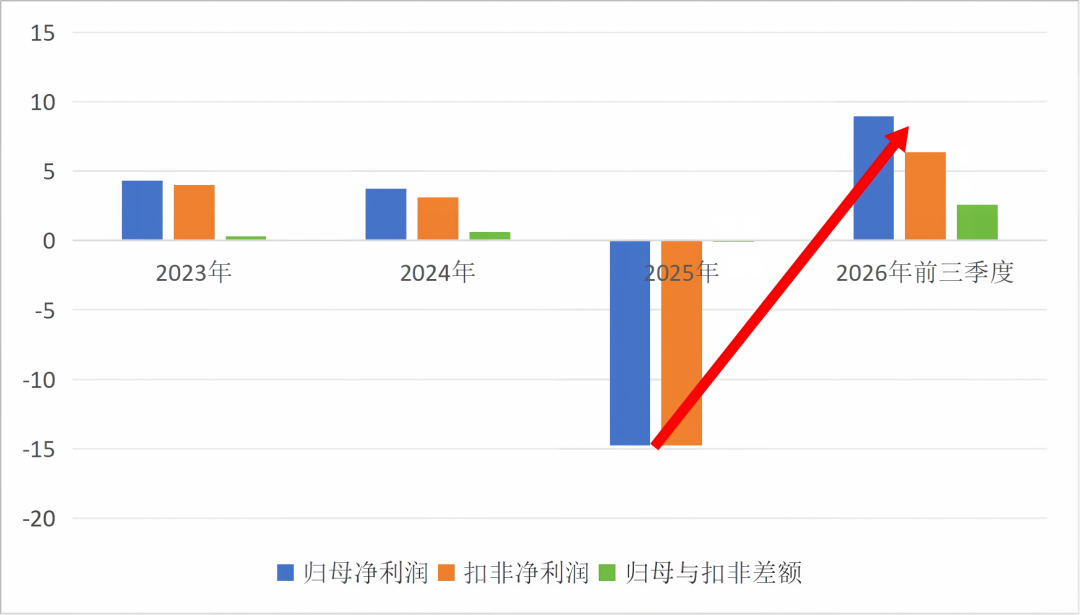
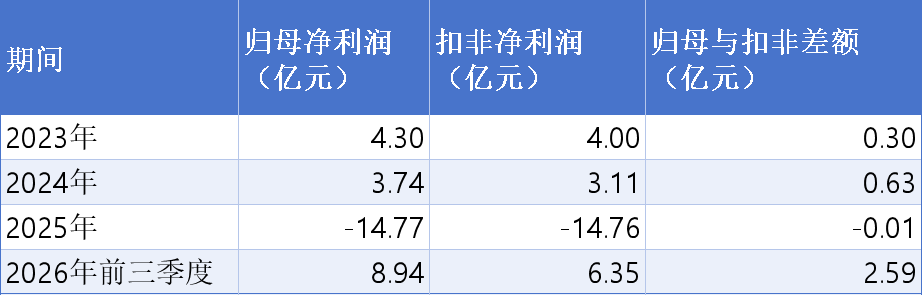
▲Mulin森’s net profit data from 2023–2025 and the first three quarters of 2026
Note: The 2025 loss contrasts sharply with the profits recorded in 2023, 2024, and the first three quarters of 2026. The core reason was not a collapse in revenue but an asset impairment charge of 1.503 billion yuan recognized that year.
No.01 A portion of the profit recovery did not come from operations
Of the 894 million yuan net profit attributable to owners in the first three quarters, approximately 259 million yuan represented non-recurring gains or losses. After excluding these items, 635 million yuan was operational profit. This 259 million yuan primarily stemmed not from cash generated by asset sales, but rather from book gains arising when PuRui Optoelectronics transitioned from an associate to a subsidiary, with previously held equity remeasured at fair value. The same acquisition also added about 690 million yuan in goodwill. The Q3 report shows goodwill increased by 84.99% compared to the beginning of the period, while short-term borrowings rose by 113.22%. Profits are recovering, but liabilities are rising in tandem.
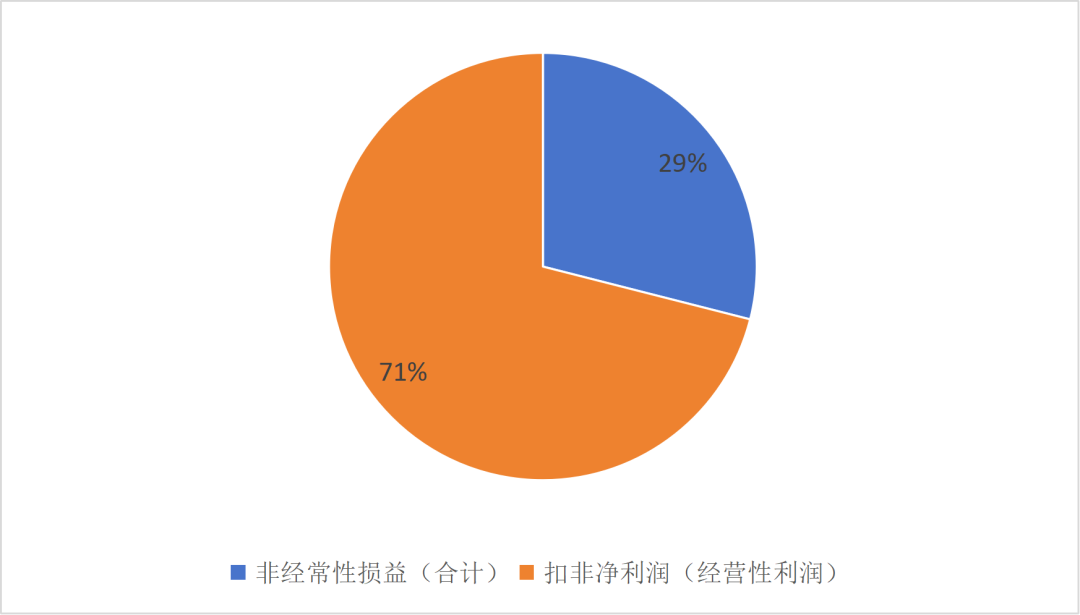
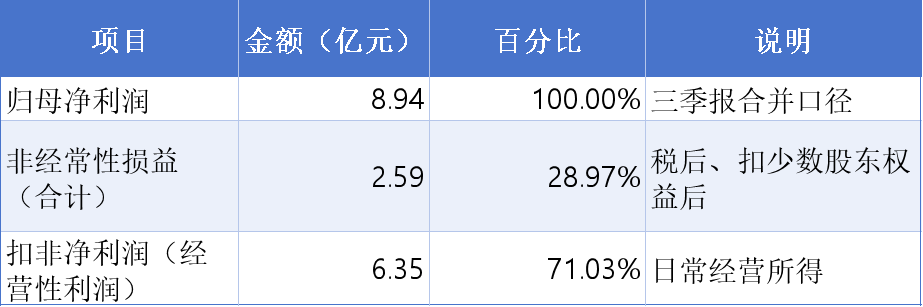
▲Breakdown of Mulin森’s net profit composition for the first three quarters of 2026
Mulin森’s operating cash flow net amount for the first three quarters of 2026 was 1.507 billion yuan, roughly 1.5 times its 2.25 billion yuan investment. According to the announcement, this “does not affect cash flow health,” with funding sourced from “internal and self-raised capital.”
No.02 The packaging segment is not dominant; Mulin森 benefits from its integrated model
In 2026, price hikes swept across the LED industry chain, with increases becoming more pronounced closer to the device level. Chip and epitaxial wafer segments wielded strong pricing power; packaging firms lacked bargaining leverage upstream and could only partially pass costs downstream; finished lamp manufacturers found it even harder to shift burdens. Packaging was not a strong beneficiary within the industry chain.
Mulin森’s profit recovery was evident, driven not by packaging pricing power but by the integrated layout completed in early 2026: Self-supply of chips reduced external procurement costs, while rising industry concentration gave leading packaging companies greater room to raise prices compared to smaller players. Gross margin for Q3 2026 reached approximately 29.11%, up 2.25 percentage points YoY—this improvement reflected Mulin森’s relative cost and market share position versus peers, rather than universal bargaining strength across the packaging segment.
Meanwhile, the drivers behind price increases originated in upstream metal costs and insufficient supply elasticity, rather than a systemic rebound in end-demand. Downstream lighting application margins remain under pressure. Mulin森’s profit recovery resulted from standing on the beneficiary side of structural cost pressures through its integrated layout.
No.03 Historical reference: Follow-up to the 2017–2018 capacity expansion wave
In 2017, LED chips faced acute shortages. Major manufacturers including Sanan, HC SemiLight, and Aoyang Shunchang decided to expand capacity that year, placing orders for equipment sequentially, with capacity release concentrated in 2018. Subsequently, capacity growth outpaced demand, inventories swelled, and chip prices continued to fall.
The aftermath of this expansion wave was not “everyone lost.” Companies like Sanan, HC SemiLight, Aoyang Shunchang, and Qianzh照 survived thanks to scale and cost advantages after expanding; the real exit was Dehao Runda—which had already cut production and cleared inventory by Q4 2018, posting negative gross margins. In July 2019, it authorized plant closure, completing workforce layoffs and equipment sealing by late September 2019, halting production entirely. This corresponded to a 2.911 billion yuan impairment charge on LED chip assets, retroactively reducing 2018 total profit. The impairment was booked in 2018, while plant closure occurred in 2019—“losses incurred in one year, withdrawal in the next”—mirroring how expansion effects in a profit recovery phase only fully clear during the subsequent downturn.
However, this does not mean that capacity expansion during profit recovery was a misguided decision; the core reason for Dehao Runda’s failure was lacking cost curve advantages and customer structure suitable for expansion.
In contrast, Mulin森’s 2.25 billion yuan investment targets chip packaging and testing—a step extending further into manufacturing and product categories after acquiring PuRui Optoelectronics in early 2026 to fill gaps in epitaxial wafers, chip manufacturing, and high-end Phosphor segments.
Additional Information
Mulin森’s announcement states that both the amount and timeline of the aforementioned investment may change. On the same day, the company issued a resignation notice for Executive General Manager Tang Guoqing, whose original term extended until August 2028 and who did not hold shares in the company.
Source: China Lighting Appliance Magazine
China Light
The official website of the China Association of Lighting Industry and a full-media platform for the lighting sector. We provide authoritative and timely lighting information while striving to be a growth partner for businesses. From brand promotion and channel expansion to consulting, talent training and participation in standards development, we provide comprehensive professional services to help businesses improve quality and efficiency and jointly advance the high-quality development of the lighting industry.
Business Contacts
仇纯 (Ms.): 158 6155 3579
顾君 (Mr.): 137 7157 5253