
A Comprehensive Breakdown of Building Lighting Energy Saving: A Full-Path Guide from Scenario Selection to Practical Implementation
On the evening of May 11, the "Light of Fudan" salon was successfully held, guided by the Fudan University Alumni Association Lighting Classmates Club, hosted by China Light Network · Ming Classroom, and supported by Zhejiang Qicheng Electric Appliance Co., Ltd. Following the previous episode [Lighting Energy Saving is Timely] with the underground parking lot theme, this salon brings the [Building Chapter], focusing on broader building lighting energy saving scenarios. Zhou Xiang, founder of Desui Lighting Technology and alumnus of the Fudan Physics Department, served again as the keynote speaker.
Click to review: Highlights of [Lighting Energy Saving is Timely ── Underground Parking Lot Chapter]
Sharing Guest: Zhou Xiang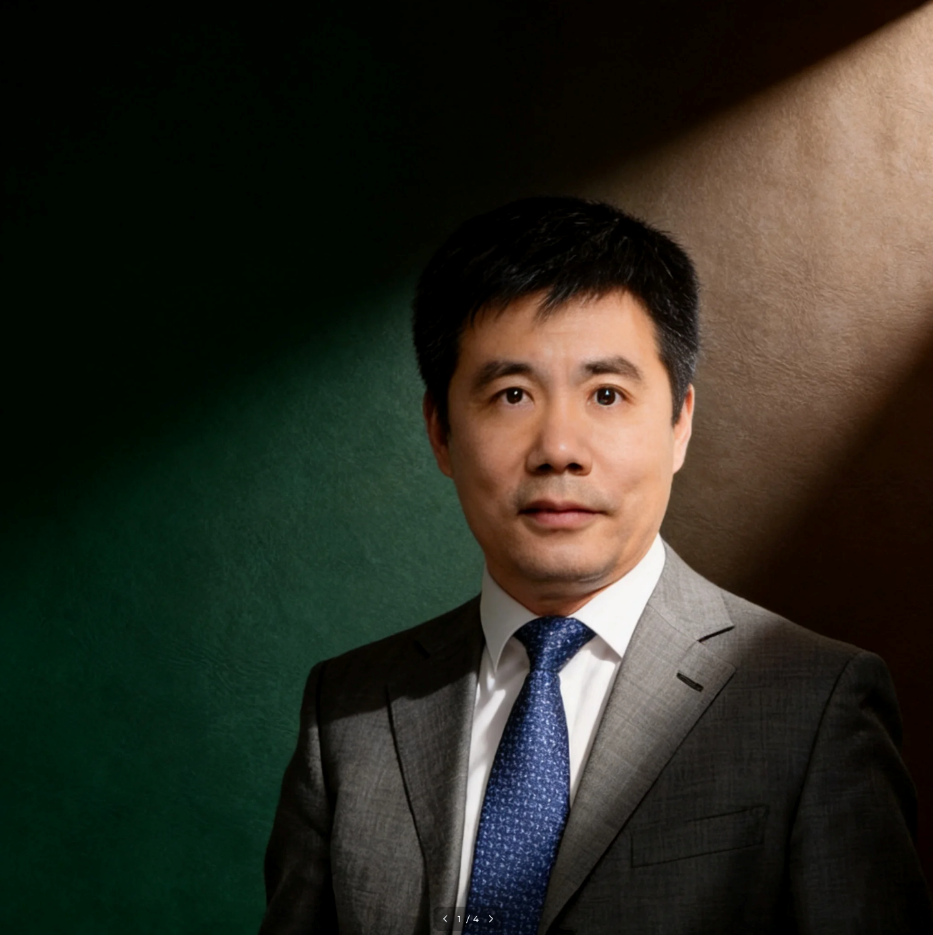
Systematically explains the energy-saving retrofit logic, technical solutions, and practical experience for five major building scenarios: factories, hospitals, offices, commercial complexes, and warehousing/logistics, providing industry practitioners with an actionable framework for lighting energy saving implementation.
Why is now the best time for lighting energy saving?
At the beginning of the sharing, Zhou Xiang reiterated the core judgment that "it is the right time for lighting energy saving," a conclusion derived from three key opportunities: 1. Technology maturity enters the sweet spot of cost-effectiveness : Current high-luminous-efficacy LED, radar sensing, Bluetooth communication and other technologies have achieved breakthroughs, with prices dropping significantly compared to previous years, creating conditions for large-scale implementation of both product energy saving and management energy saving. 2. Explosion of retrofit demand in the existing market : LED luminaires began to be fully promoted starting in 2015-2016. Given the long lifespan of LED luminaires, many have been in use for over five years and generally suffer from severe lumen depreciation. Some luminaires now have a luminous efficacy of only 30~40 lm/W, far below the current technological level of 180-200 lm/W, making replacement urgent. 3. Superposition of Economic Environment and Dual Carbon Goals: Currently, enterprises have an urgent need to reduce costs. Energy saving retrofits can directly lower operating costs while aligning with the policy direction of the national Dual Carbon strategy, offering both economic and social benefits. Teacher Zhou Xiang stated that the core logic of lighting energy saving is always driven by the dual wheels of "Product Energy Saving + Management Energy Saving": on one hand, reducing power consumption for the same luminance by improving luminous efficacy; on the other hand, achieving on-demand lighting through intelligent control. The combination of both can achieve a comprehensive energy saving rate of 60%-90%, with a typical investment payback period of 1-2 years.
Energy Saving Retrofit Logic for Five Core Building Scenarios 周详老师提出,判断一个场景是否适合做节能改造,核心看三个指标:灯具功率不要太低、灯具规格不要太多、点灯时长不要太短,三者共同决定了节能改造的投入产出比是否划算。 Based on this standard, factories, hospitals, offices, commercial complexes, and warehousing and logistics are currently the five building scenarios with the greatest retrofit value.
01 Factory: The scenario with the most significant energy-saving potential Factories fully meet the three major retrofit criteria: production demands result in long lighting hours (generally over 12 hours, with three-shift factories operating 24 hours), concentrated luminaire specifications (mainly high-bay lights, T8 tubes, and panel lights), and high illuminance requirements leading to significant overall energy consumption.
1. The luminous efficacy of traditional metal halide luminaires is only about 60 lm/W, whereas current high-efficacy high-bay lights can achieve 200 lm/W. Product replacement alone can realize an electricity saving rate of over 50%; 2. Standard T8 tubes can be reduced from 18W to 9W. By narrowing the beam angle to optimize light distribution, it is even possible in extreme cases to use a 6W tube to achieve the same desktop illuminance as the original 18W tube; 3. The luminous efficacy of conventional panel lights is mostly 80-85 lm/W, while high-efficacy panel lights can achieve 175-180 lm/W. A conventional 36W panel light requires only 20W to achieve the same luminance. According to Teacher Zhou Xiang's calculations, a standard factory of 10,000 m² (operating 12 hours per day, 26 days per month) can save approximately 60,000 yuan in electricity costs annually, while factories operating on three shifts can save up to 150,000 yuan per year.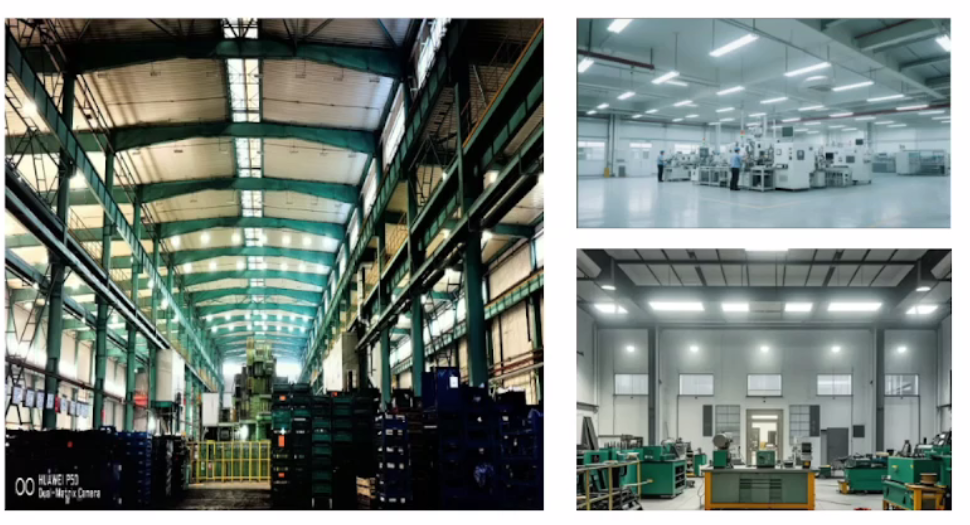
02 Hospitals: An Underrated Excellent Retrofit Scenario Hospitals are a key focus area for Teacher Zhou Xiang recently, and their retrofit value is very prominent: The Zhouxiang team is currently implementing a hospital project in Beijing, where lighting retrofitting alone saves the hospital 1 million yuan in electricity costs annually, with an investment payback period of less than 2 years, earning high recognition from the client. In addition, the new version of LED product energy efficiency standards to be implemented in September 2027 will further drive the demand for replacing existing low-energy-efficiency luminaires.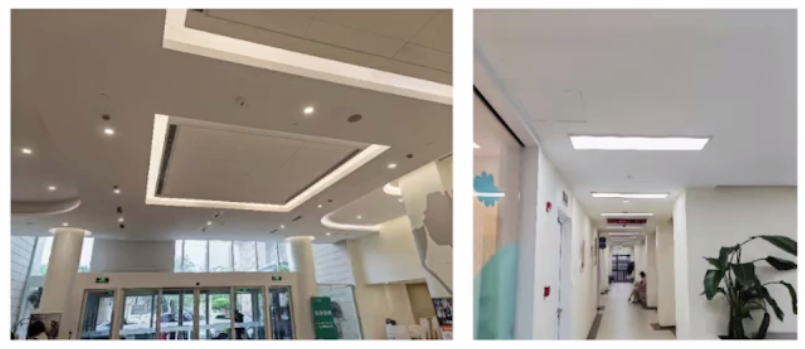
03 Commercial Complexes: Public Area Retrofitting is Core The focus of retrofitting commercial complexes lies in public areas (public zones), as tenant areas involve complex luminaire specifications and electricity costs are borne by tenants, making retrofitting relatively more difficult. Public area retrofitting needs to balance energy saving and customer experience: 1. Shopping mall public areas need to maintain sufficient illuminance to create a comfortable shopping environment. The focus is on improving luminous efficacy without compromising lighting quality. For example, downlights with wall-washing effects can achieve 130 lm/W, balancing light spot effects and energy saving goals; 2. Common areas in office buildings can combine smart sensors to turn lights on when people arrive and dim them when they leave, further reducing energy consumption during off-peak hours.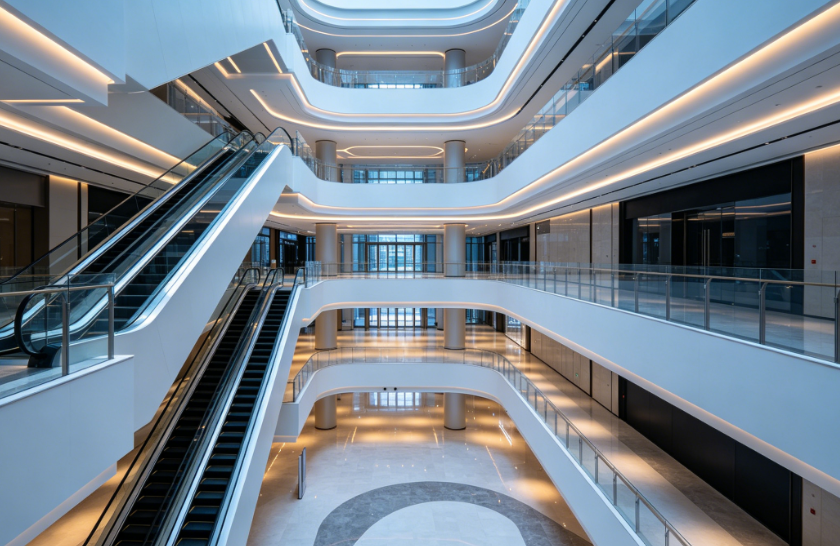
04 Office scenarios: Intelligence is the core direction Energy saving in office scenarios relies more on refined intelligent control: 1. Adaptation to overtime scenarios: Large offices can achieve zoned lighting, maintaining normal brightness only in occupied areas while dimming or turning off lights in other areas; 2. Constant illuminance control: Areas near windows can automatically adjust light power based on natural light intensity, reducing luminaire output when sunlight is sufficient during the day; 3. Multi-system linkage: Can link with air conditioning, curtains, and other systems to automatically turn on devices when people are present and turn them off when absent, while supporting one-click mode switching for different scenarios such as conference rooms and open office areas.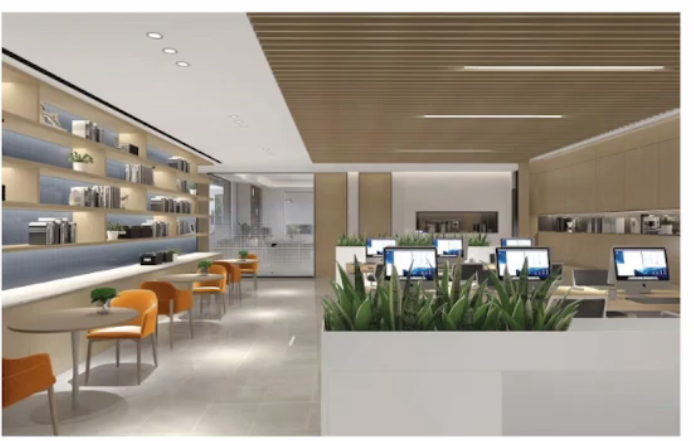
05 Warehousing and logistics: High cost-performance retrofit scenarios Warehousing and logistics scenarios also have extremely high retrofit value: 1. Stable lighting demand: Warehouses are mostly enclosed spaces that require continuous lighting regardless of day or night, with lighting hours generally ranging from 12 to 24 hours; 2. Simple luminaire specifications: Mainly high-power industrial luminaires and T8 tubes, with low replacement costs; 3. Significant potential for energy saving management: Warehouses have highly predictable personnel movement patterns. Radar sensors can automatically illuminate cargo access areas while maintaining low luminance in unoccupied zones, further improving electricity savings. Teacher Zhou Xiang stated that after retrofitting warehouse scenarios, the electricity savings rate generally reaches over 70%, making it one of the scenarios with the highest return on investment.
Project Implementation Practice: Full Process from Survey to Delivery
Teacher Zhou Xiang shared the standardized implementation path for energy-saving retrofit projects:
1 Site Survey Fill out the information collection form, recording the installation location, brand, power, dimensions, color temperature, average daily operating hours, electricity tariff, and other details for each type of luminaire. Take photos of the luminaires and nameplate parameters to preliminarily assess project feasibility. 2 Solution Design Conduct performance tests on the existing luminaires, match them with corresponding high-efficacy/smart replacement products, calculate the energy-saving rate, annual energy savings, and payback period for each luminaire type, and develop a complete retrofit plan. 3 Validation Testing Select a small area for pilot testing to verify energy saving effects and lighting experience, and promote it comprehensively after gaining customer approval. 4 Long-term O&M Provides a warranty of more than 5 years, achieves remote equipment monitoring, fault warning, and functional iteration through the cloud platform, ensuring long-term stable system operation and continuous optimization of product experience.
Currently, this solution has been implemented in projects such as Mercedes-Benz factories, state-owned commercial complexes, and large chain malls, with an average energy saving rate of up to 60% and an investment payback period generally within 2 years.
Interactive Q&A During the Q&A session, Mr. Zhou Xiang provided detailed answers to questions of concern to the audience: Q: Is replacing lamps enough for building lighting energy saving? Can ordinary lamp manufacturers do it? A: It is far more than just replacing lamps. Behind lamp replacement lies the need for comprehensive integrated service capabilities: First, conduct on-site surveys to determine if the scenario is suitable for retrofitting and which products to use; second, perform optical design and adaptation to ensure that illuminance and light quality meet usage requirements after replacement; smart solutions also require joint debugging of sensors, communication, cloud platforms, and software; during the construction phase, customized adapter brackets and other adaptation solutions may be needed; the subsequent Energy performance contracting (EPC / EMC) model also requires 5-10 years of long-term operation and maintenance and product upgrade support, which ordinary lamp manufacturers cannot accomplish independently. Q: Can current technology ensure that the luminaire service life reaches 5 years? A: Absolutely. High luminous efficacy is essentially "using a large horse to pull a small cart" — driving high-spec LEDs with low current reduces power consumption, heat generation, and component load significantly, thereby extending lifespan. Our entire product line is designed and verified with a 5-year warranty. Q: What special capabilities are required to engage in lighting energy saving business? A: First, a complete product matrix, covering light sources, downlights/spots, panels, industrial lights, linear lights, etc., for rapid response; second, strong technical integration, understanding sensors, communication, cloud platforms, and system linkage; third, project and communication skills, to handle night construction, multi-department coordination, and acceptance standards; fourth, solid lighting expertise, ensuring compliance with illuminance, uniformity, and glare regulations. Q: What are the differences in solutions for different scenarios such as factories, hospitals, offices, and commercial spaces? A: Each scenario has industry standards and usage habit differences: factories prioritize illuminance and durability, hospitals prioritize stability and longevity, commercial spaces prioritize light spots and experience, and offices prioritize intelligence and convenience. Lighting design must be done first, followed by luminaire design; one solution does not fit all.